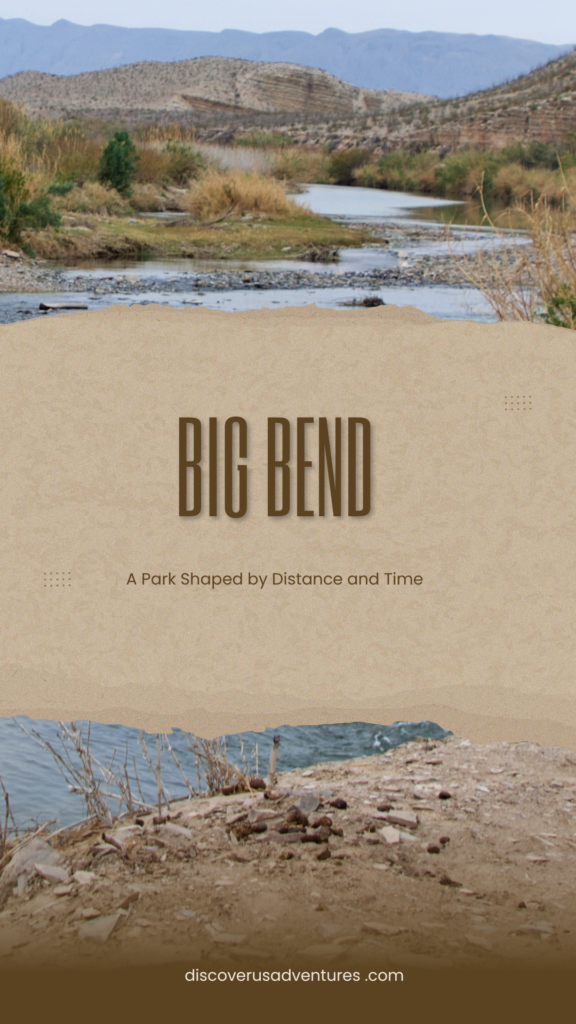
Big Bend National Park is a place that changes how you move through it. Distance matters here. Silence matters. The land unfolds slowly, and the experience rewards those willing to give it time.
Covering more than 800,000 acres along a remote stretch of the Texas–Mexico border, Big Bend is defined by scale. Desert lowlands stretch outward, rugged mountain peaks rise unexpectedly from the horizon, and the Rio Grande carves a winding boundary that shapes both geography and history. It’s a landscape that resists haste and invites attention.
A Landscape Written Deeper In Time
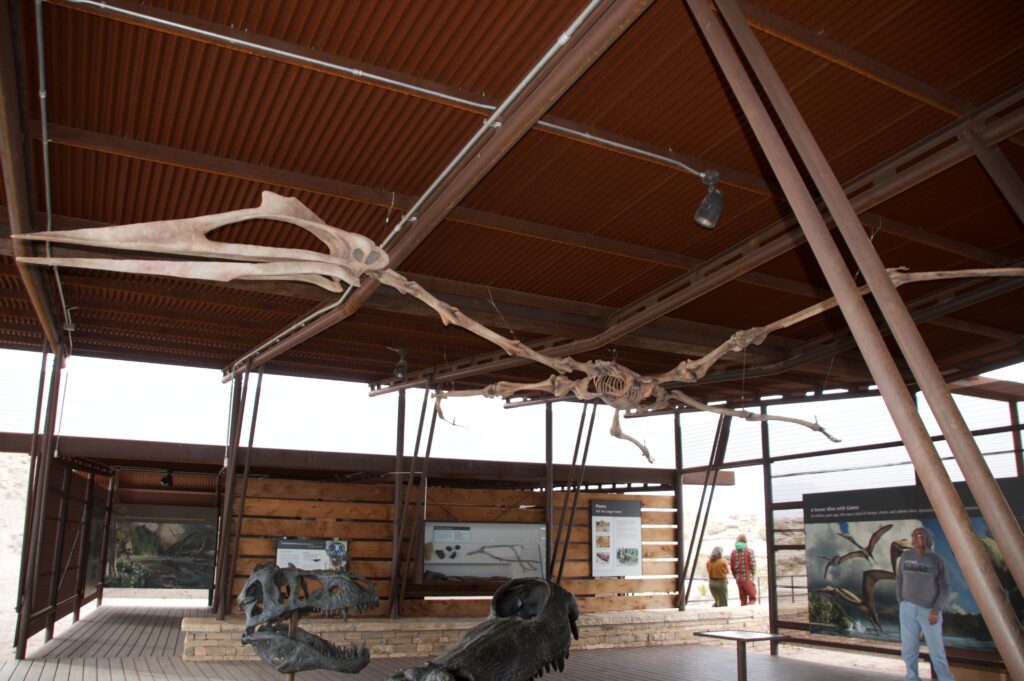
Before the road even reaches the park boundary, Big Bend starts making its case for scale—not just geographic, but chronological. Along the highway near the entrance, the Fossil Discovery Exhibit displays a full-scale reconstruction of Quetzalcoatlus, the largest flying animal ever known to have existed, its wings stretching nearly 40 feet across the open-air pavilion.
Quetzalcoatlus soared here millions of years before there was a river to name.
Alongside it, skulls and casts from creatures that once moved through this same ground—long before there was a river, a border, or a name for any of it—make the eventual arrival at the park feel less like a beginning and more like a continuation.
Distance and time, it turns out, start working on you before you’ve even parked the car.
Moving Through Big Bend
Past the entrance, the road splits three ways, and the choice shapes however much of the park you see that day: east toward Rio Grande Village and the river corridor, up into the Chisos Basin where desert gives way to mountains, or west along Ross Maxwell Scenic Drive toward the canyon country on the park’s far side.
The climb into the Chisos Basin provides a striking contrast to the desert lowlands below. As the road rises, the environment shifts noticeably, with cooler air and tighter mountain views replacing the broad openness of the drive in.
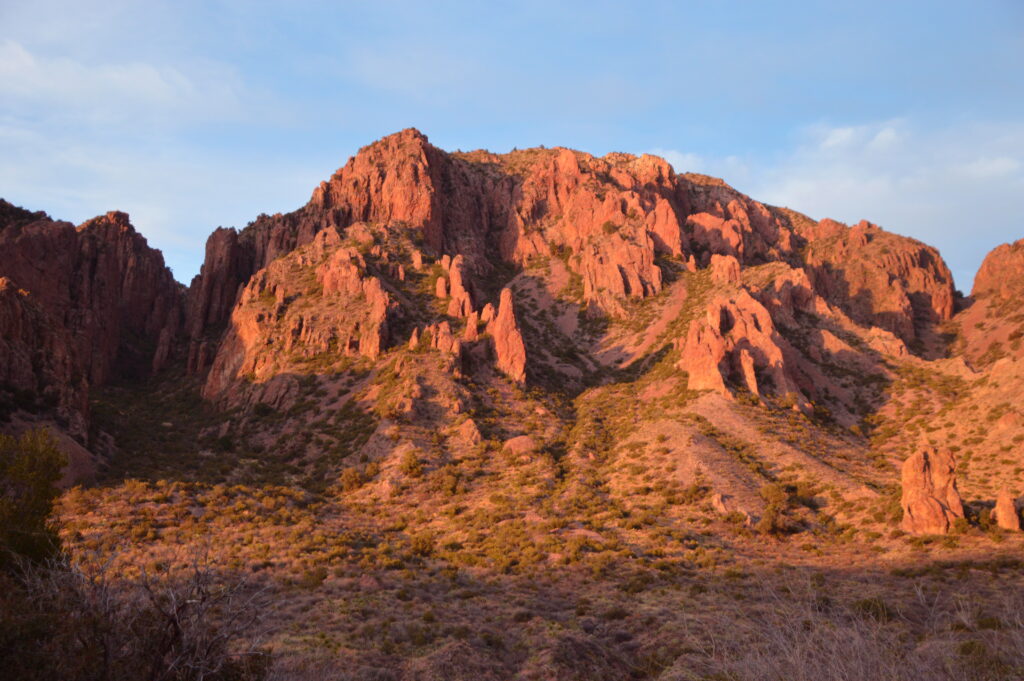
We camped here for a few nights, and evening arrived first as a lesson in patience rewarded—the ridgelines that looked distant and flat from the desert floor caught the last light and turned red, close enough by then to feel their scale.
This is the view we camped under in the Chisos Basin — by evening, the ridgelines that looked distant from the desert floor were close enough to feel their scale, lit up red as the sun dropped.
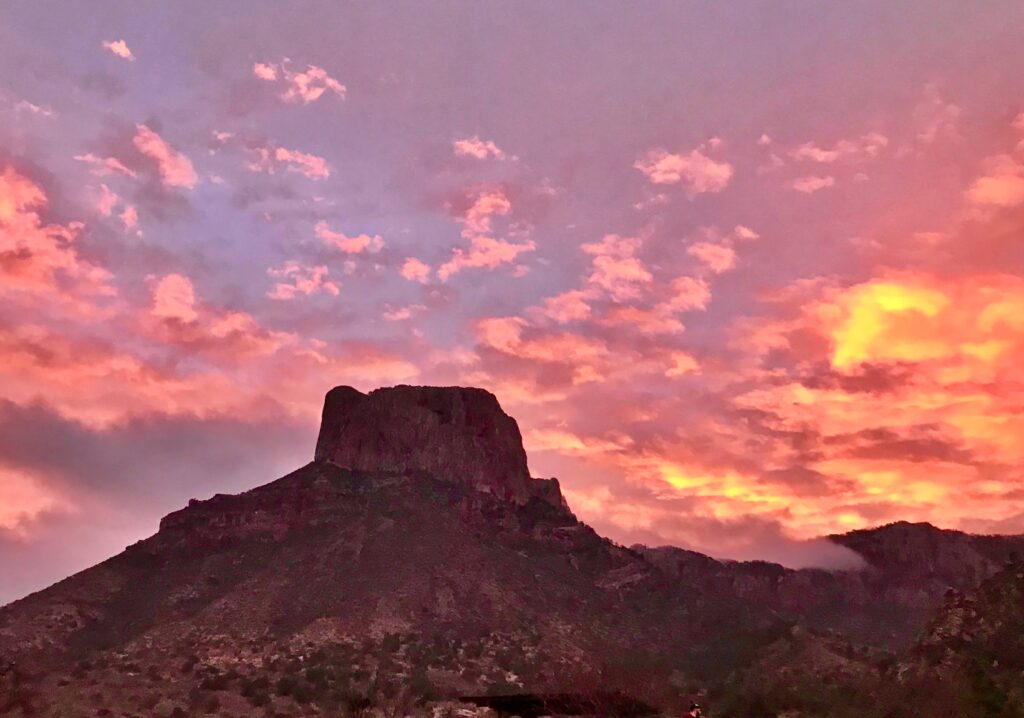
Sunrise here usually arrives gradually and quietly, light spreading across the mountains slowly, revealing texture and contour more than spectacle. But not always. One morning the sky ignited instead, clouds catching color the peaks themselves couldn’t take credit for—proof that even a place defined by slowness can still surprise you.
Not every Chisos morning is quiet — this one lit up in shades of pink and orange, Casa Grande standing dark against a sky that stole the whole scene.
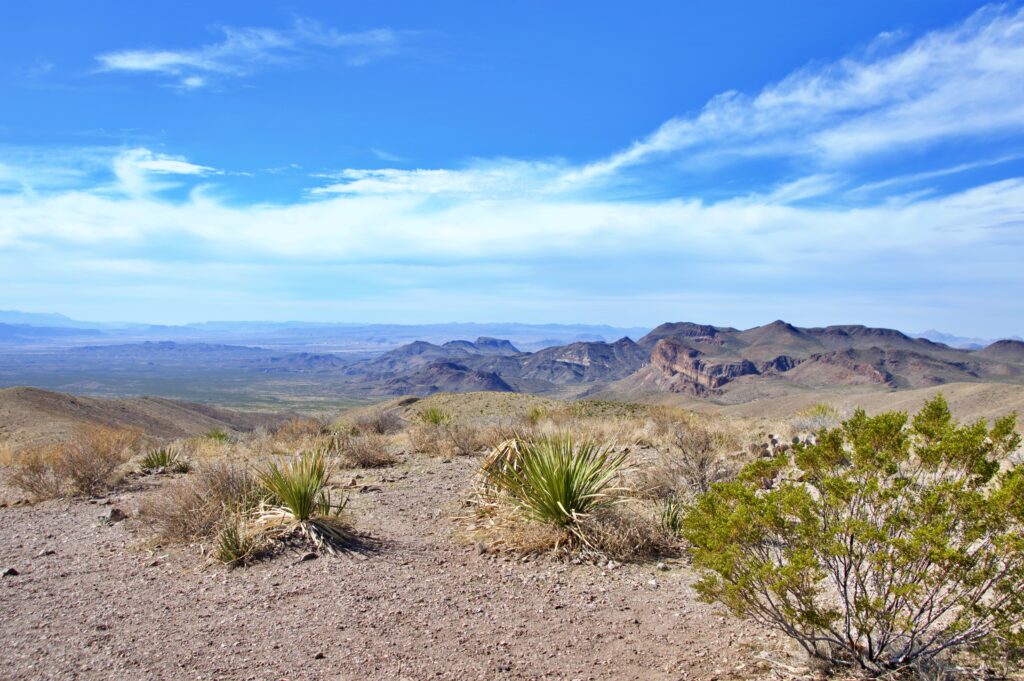
Ross Maxwell Scenic Drive heads the opposite direction, tracing the park’s low desert terrain west, with pullouts where it’s easy to stop without an agenda.
Sotol Vista, one of the easy pullouts along Ross Maxwell Scenic Drive — the kind of stop that asks nothing of you but a few minutes and a place to stand still.
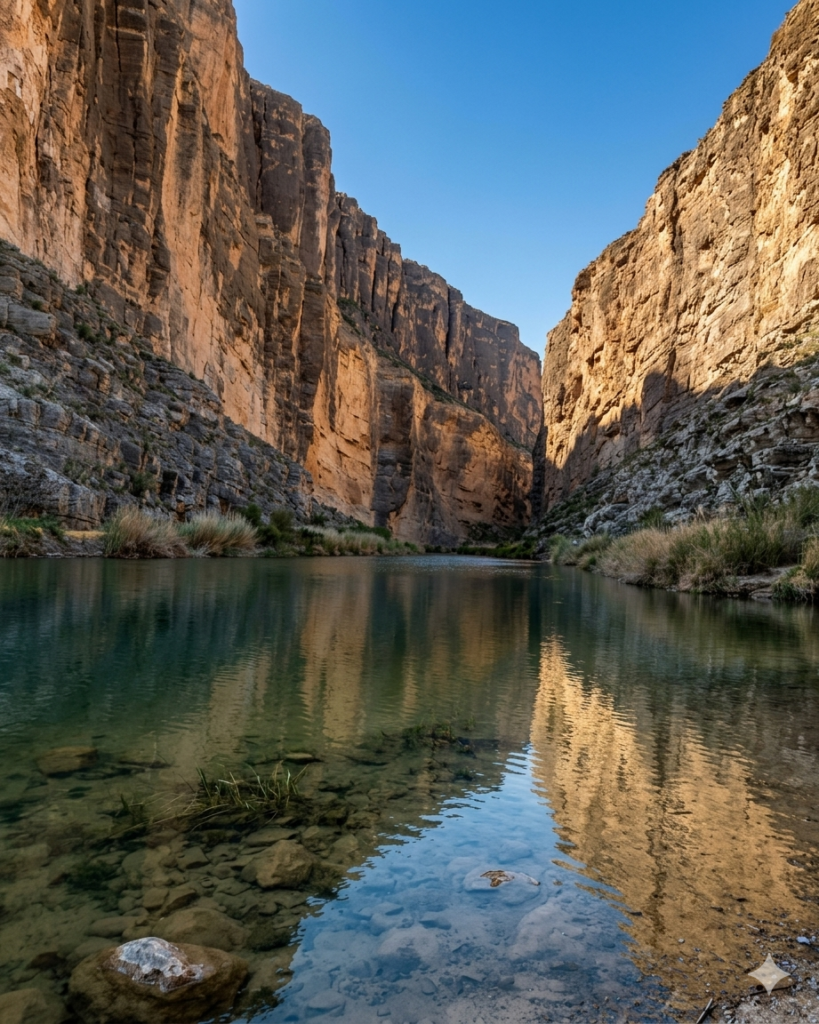
Ross Maxwell Scenic Drive eventually delivers its own reward at road’s end: Santa Elena Canyon, where the Rio Grande has cut nearly 1,500 feet through solid rock, the walls rising so close together it feels less like a canyon and more like a doorway. A short trail crosses Terlingua Creek and climbs a set of switchbacks into the canyon mouth itself, offering a rare vantage point where Mexico is close enough to see in detail rather than imagine in the distance.
The end point of Ross Maxwell Scenic Drive, and one of the most dramatic views in the park.
For travelers who want practical details on routes, fuel planning, short walks, and places to stay, those notes live separately in a Big Bend Travel Guide, leaving this story free to focus on how the landscape feels rather than how quickly to move through it.
Small Walks In A Vast Park
Short walks like the Rio Grande Village Nature Trail or the Window View Overlook Trail don’t ask much in terms of commitment. Instead, they offer space to observe—quiet paths where you can notice desert plants up close, shifting light against canyon walls, or distant mountain silhouettes without the pressure of a full-day hike.
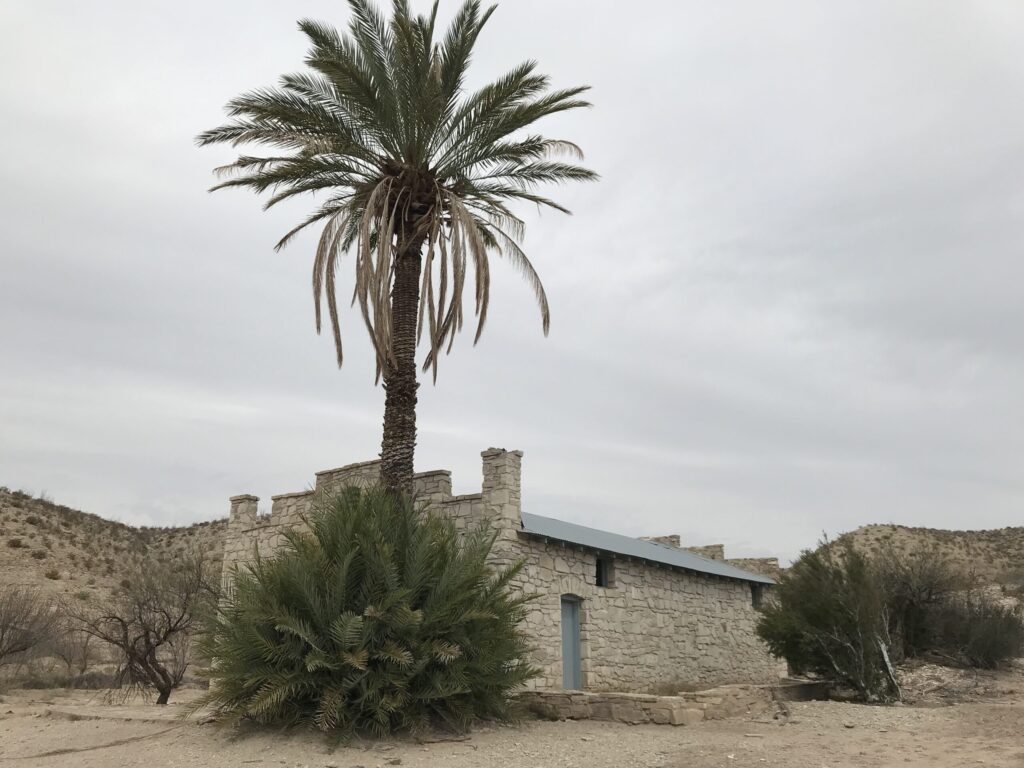
The Hot Springs Trail, tracing the Rio Grande along an easy, mostly flat path, turned out to be one of those walks that kept revealing more than it promised. It starts at the old resort itself—the low stone foundation of a bathhouse J.O. Langford built in the early 1900s, when he ran a small health resort here promising cures in the warm mineral water, and the weathered post office and store still standing nearby.
One of the last structures left from the era when this was a health resort rather than a national park.
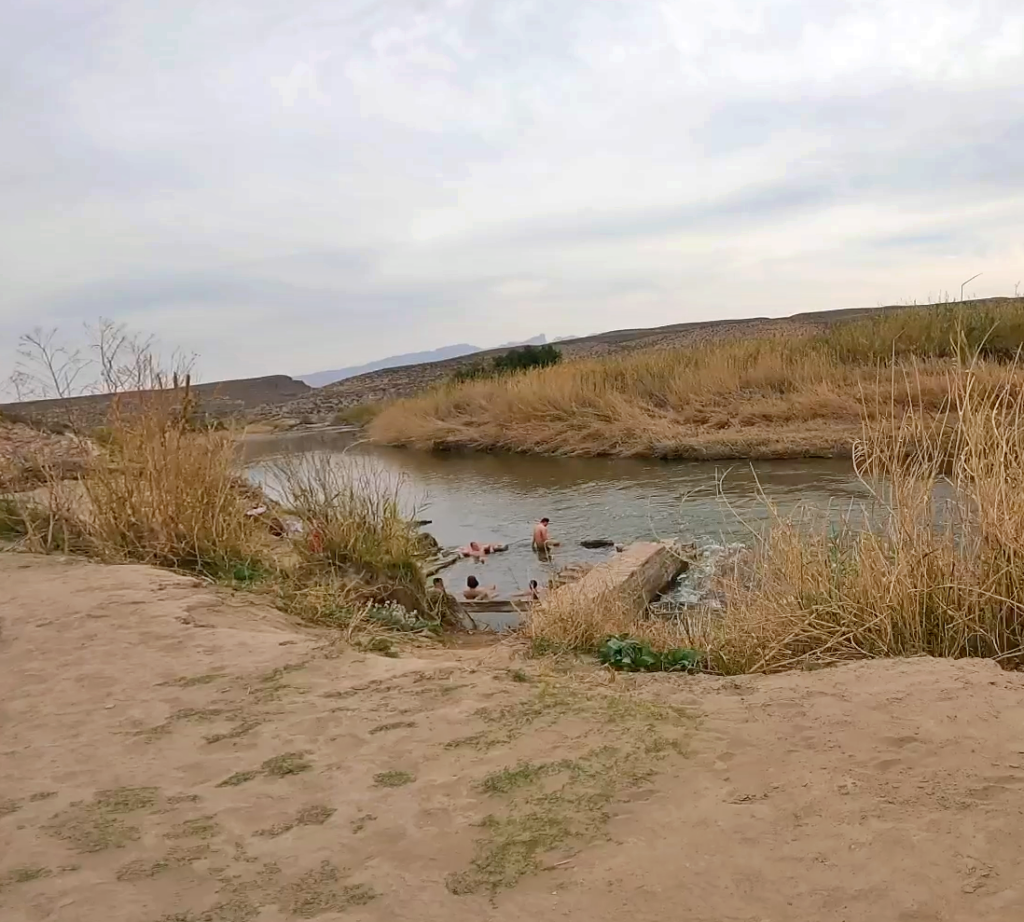
The water is still warm enough to sit in today, right alongside the river—one of the rare spots in Big Bend where you can be submerged in 105-degree spring water and looking at Mexico across the water at the same time.
One of the few places in the park where you can soak in 105-degree water with Mexico just across the river.
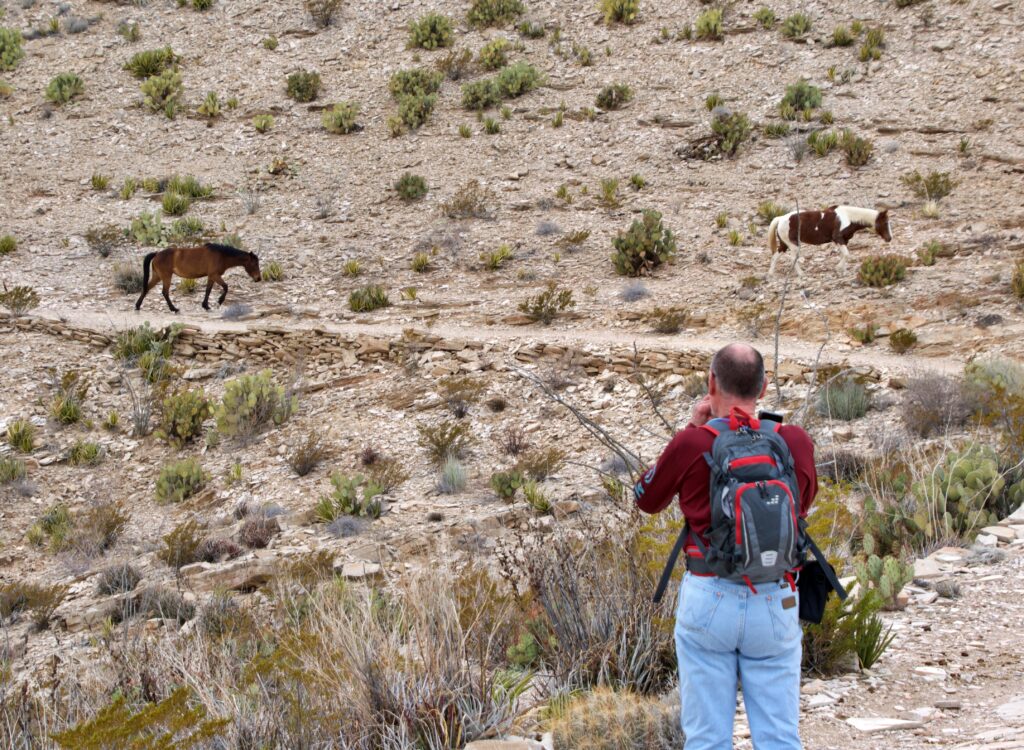
From there, the trail climbs away from the river into the surrounding hills, and what began as a quiet historical stop turned into something else entirely when we came across two wild horses grazing on the hillside above the path—a paint and a bay, unbothered by our presence.
Along the Hot Springs Trail, we came across two wild horses that a park ranger later said had likely wandered across the river from Mexico — not an unusual sight here, just an unexpected one.
A ranger later told us it happens more than people expect; horses and burros sometimes wander across the river from Mexico, drawn by the same water and grazing that shape everything else here. It was a reminder that Big Bend’s border isn’t just a line on a map—it’s porous in ways the wildlife understands better than we do.
Stargazing and Nightfall
As daylight fades, Big Bend undergoes one of its most memorable transformations. The desert cools, sounds diminish, and the sky takes on a presence of its own.
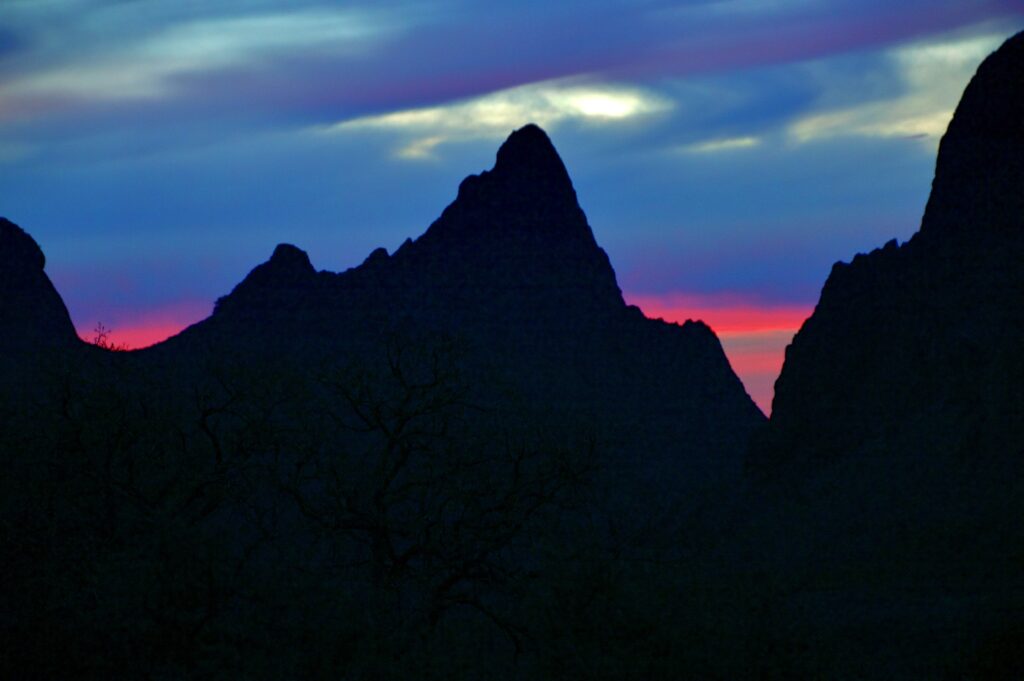
The Window catches the last color of the day — the kind of dusk in the Chisos Basin that makes you stop what you’re doing and just watch it happen.
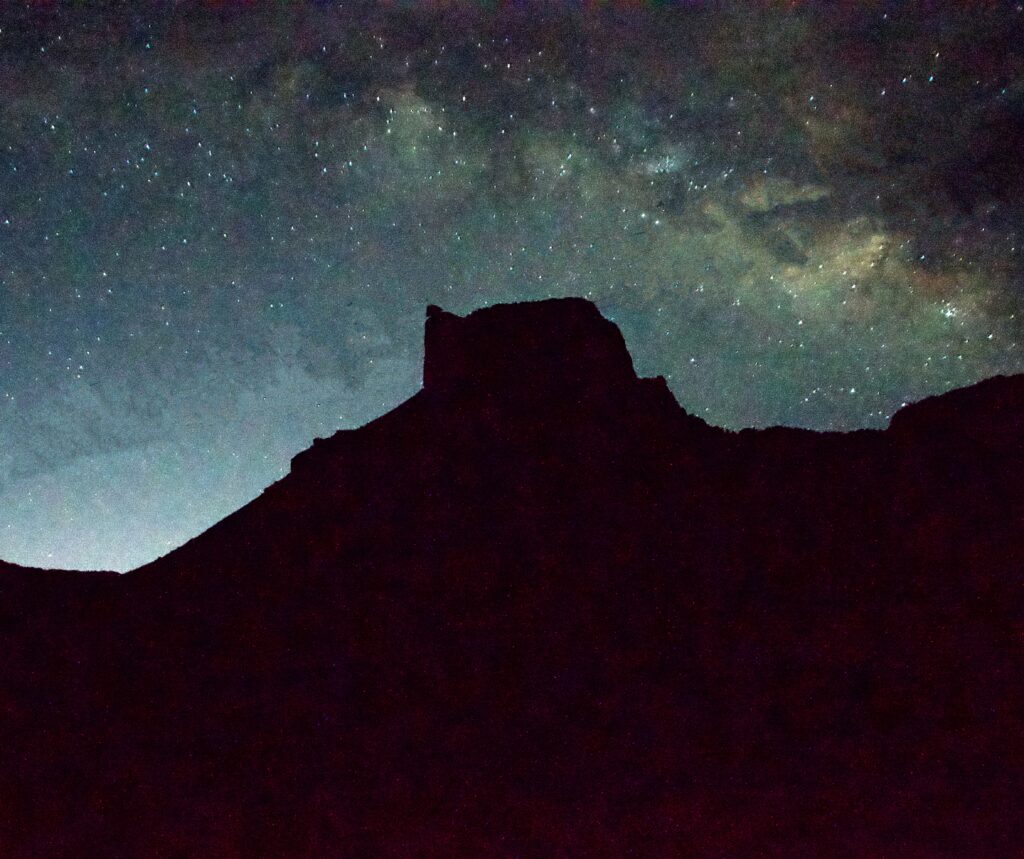
Recognized as one of the darkest night-sky parks in the United States, Big Bend offers conditions where stars emerge quickly and in great numbers. Constellations sharpen, and on clear nights, the Milky Way becomes visible without optical aids.
Casa Grande against the Milky Way — no equipment needed, just a clear night in the Chisos Basin and a few minutes for your eyes to adjust before the sky starts to reveal itself.
Stargazing here doesn’t require preparation or equipment. Many visitors simply step outside after sunset, allowing their eyes to adjust as the sky gradually reveals itself. Open areas near Rio Grande Village and the Chisos Basin provide accessible vantage points where the night sky feels expansive rather than distant.
Nightfall at Big Bend is less about spectacle and more about stillness. It’s a moment when attention shifts upward, and the park reminds you how small—and connected—you are.
Wildlife
Wildlife encounters in Big Bend tend to arrive quietly. Rather than dramatic sightings, the park offers subtle moments—movement at the edge of vision, tracks crossing a trail, birds silhouetted against the sky.
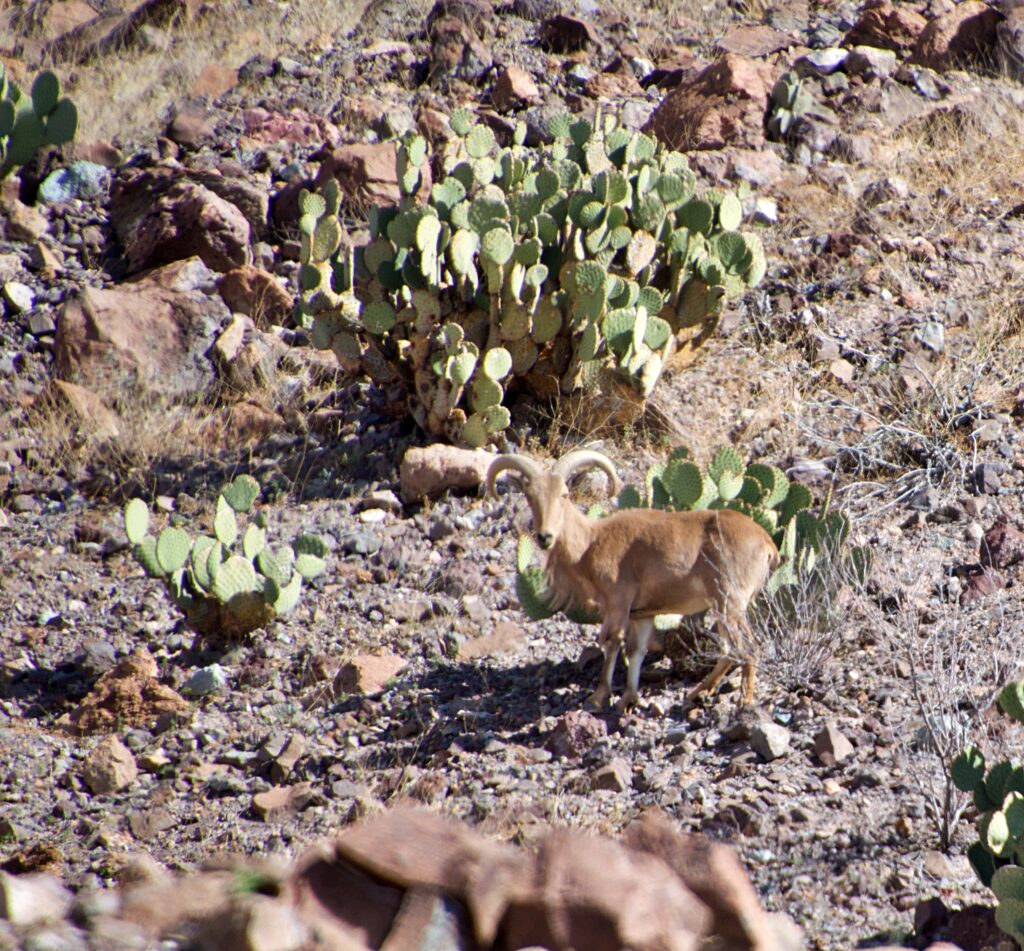
A desert bighorn ram along Ross Maxwell Scenic Drive — the kind of sighting that arrives without warning and disappears just as fast if you hesitate too long to look.
Desert bighorn sheep, mule deer, and javelinas move through the landscape unobtrusively, though where you find them often depends on which version of Big Bend you’re standing in.
Desert bighorn favor the open, rocky lowlands—the same terrain that defines much of Ross Maxwell Scenic Drive—while mule deer turn up with surprising regularity in the Chisos Basin itself, drawn to the cooler air and thicker vegetation that set the mountains apart from the desert floor below.
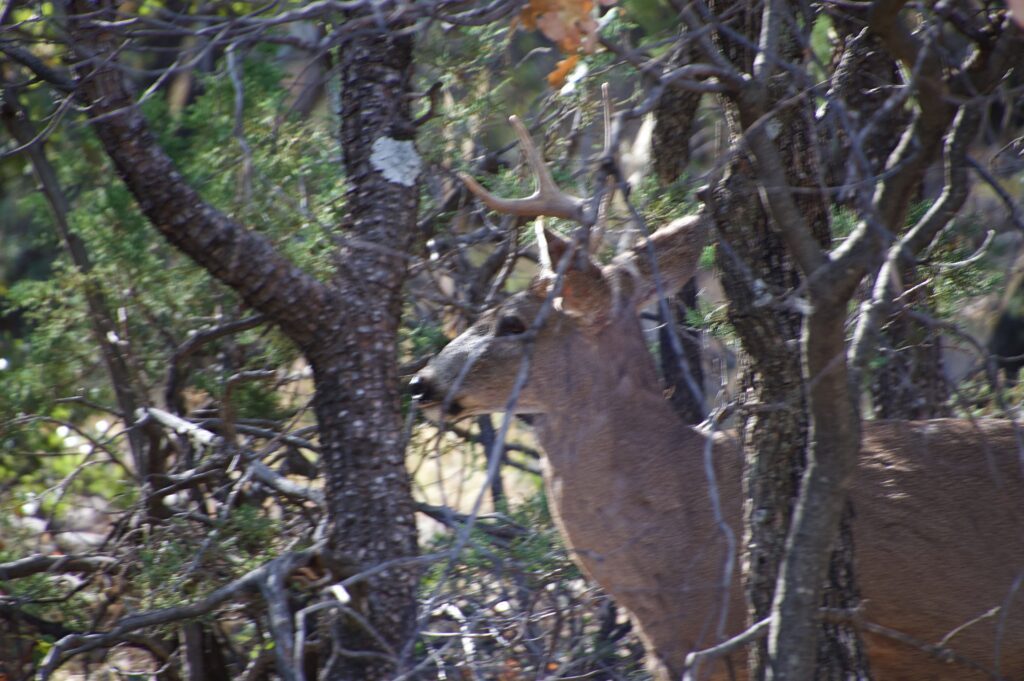
Deer wander through the Chisos Basin often enough that campers get used to the rustle in the brush — though this one kept mostly to the trees rather than the campground.
It’s a small but telling reminder of how much the park shifts within its own borders: the same trip that offers a bighorn sighting against bare rock can end with a deer stepping through the trees a few thousand feet higher, in what feels like an entirely different climate.
Birdlife is especially notable, with hundreds of species recorded across the park’s varied habitats. In the Chisos Mountains, the rare Colima Warbler finds one of its few U.S. refuges, making patience and early mornings worthwhile for those inclined to watch and wait.
Beyond the Park Boundary
Big Bend’s sense of place doesn’t end at the park boundary. Nearby communities add cultural texture and historical context.
The Boquillas Crossing offers a rare opportunity to step briefly into Boquillas del Carmen, a small village across the Rio Grande. The crossing itself feels unassuming, but it opens a window into life shaped by the same landscape, approached from a different side.
Terlingua, once a mining town, stands as a reminder of the region’s layered history. Its preserved ruins and small modern community offer an understated contrast to the open wilderness of the park.
Worth the Time It Asks For
Big Bend asked more of us than most parks do—longer drives, earlier mornings, a willingness to sit still and wait for a javelina that never showed up or a sky that lit up when we weren’t expecting it.
What we got back was a trip that’s hard to compress into a single highlight: wild horses on a hillside above an old bathhouse, a canyon that closes in like a doorway, a night sky that needed nothing but our own patience to reveal itself.
It’s not a park you knock out in a day, and it’s not trying to be. If you’re willing to give it the time it asks for, it tends to give something back
Wild Wanderings: A National Park Journal
National parks have a way of leaving lasting impressions—quiet moments, unexpected views, and details that often slip past unless there’s space to notice them.
Wild Wanderings was created as a companion to thoughtful travel. Rather than serving as a checklist, the journal offers room to slow down, reflect, and record the experiences that shape each visit, whether it’s a first impression at a scenic overlook or a familiar trail walked again.
What You’ll Find Inside
The Wild Wanderings National Park Journal is designed to support experience-led travel.
Each section provides space to:
capture first impressions and moments that linger
note standout trails, viewpoints, and wildlife encounters
reflect on how a place felt, not just what was seen
Practical elements are included where helpful, but the emphasis remains on observation and memory rather than itinerary.
A Companion to the Writing
The journal was created alongside the writing on Discover US Adventures and is meant to complement it—not replace it.
While the site explores national parks and destinations through long‑form, experience‑focused storytelling, the journal provides a personal space to document your own encounters with these places.
Availability
Wild Wanderings is available for purchase through Amazon in print.
As an Amazon affiliate, Discover US Adventures may earn a small commission from qualifying purchases made through links on this page. This comes at no additional cost to you and helps support the continued work on this site.
Whether you’re visiting your first park or returning to places already familiar, Wild Wanderings invites you to travel with attention and carry those experiences forward.