A practical companion to a slow and thoughtful visit.
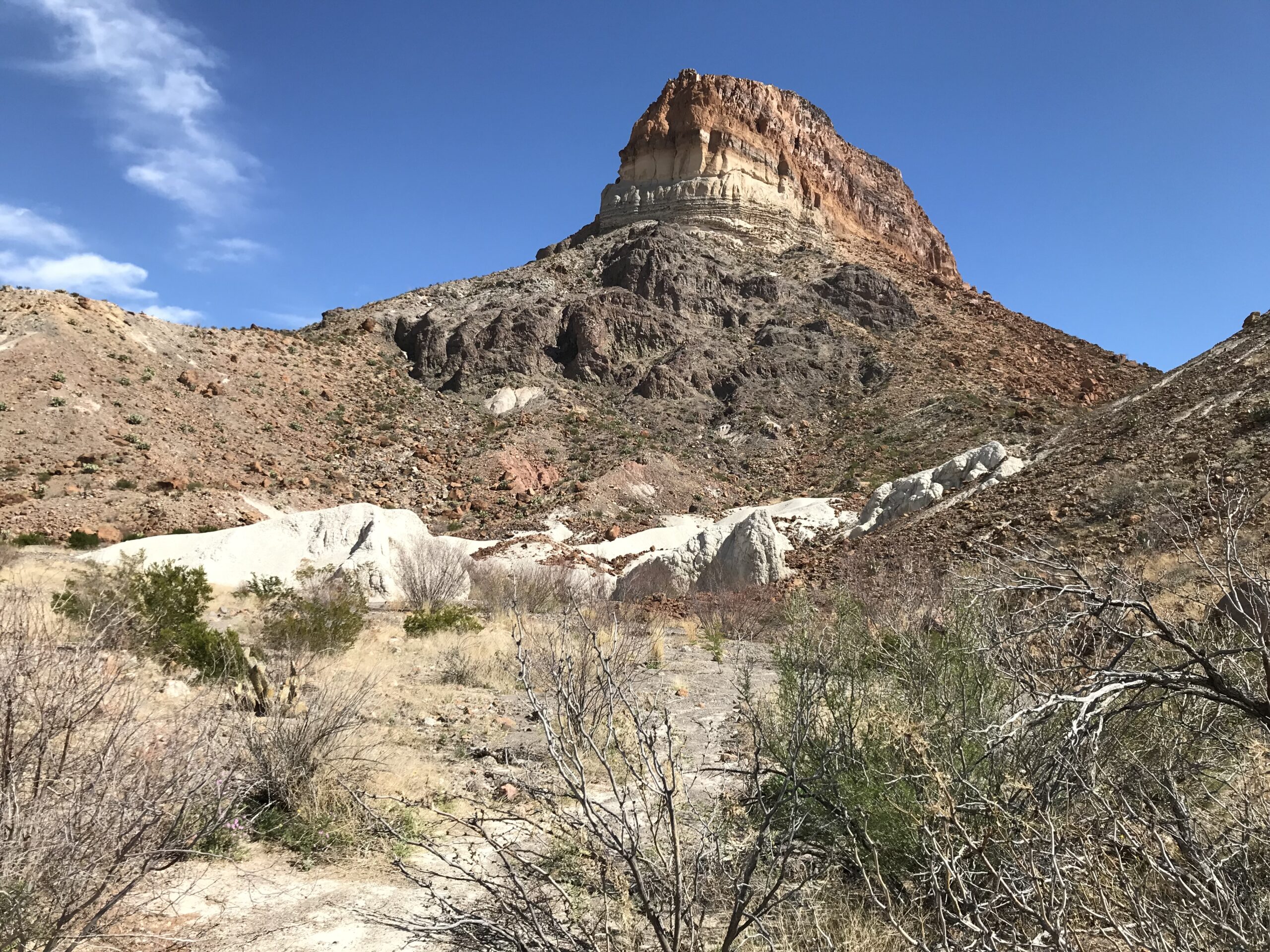
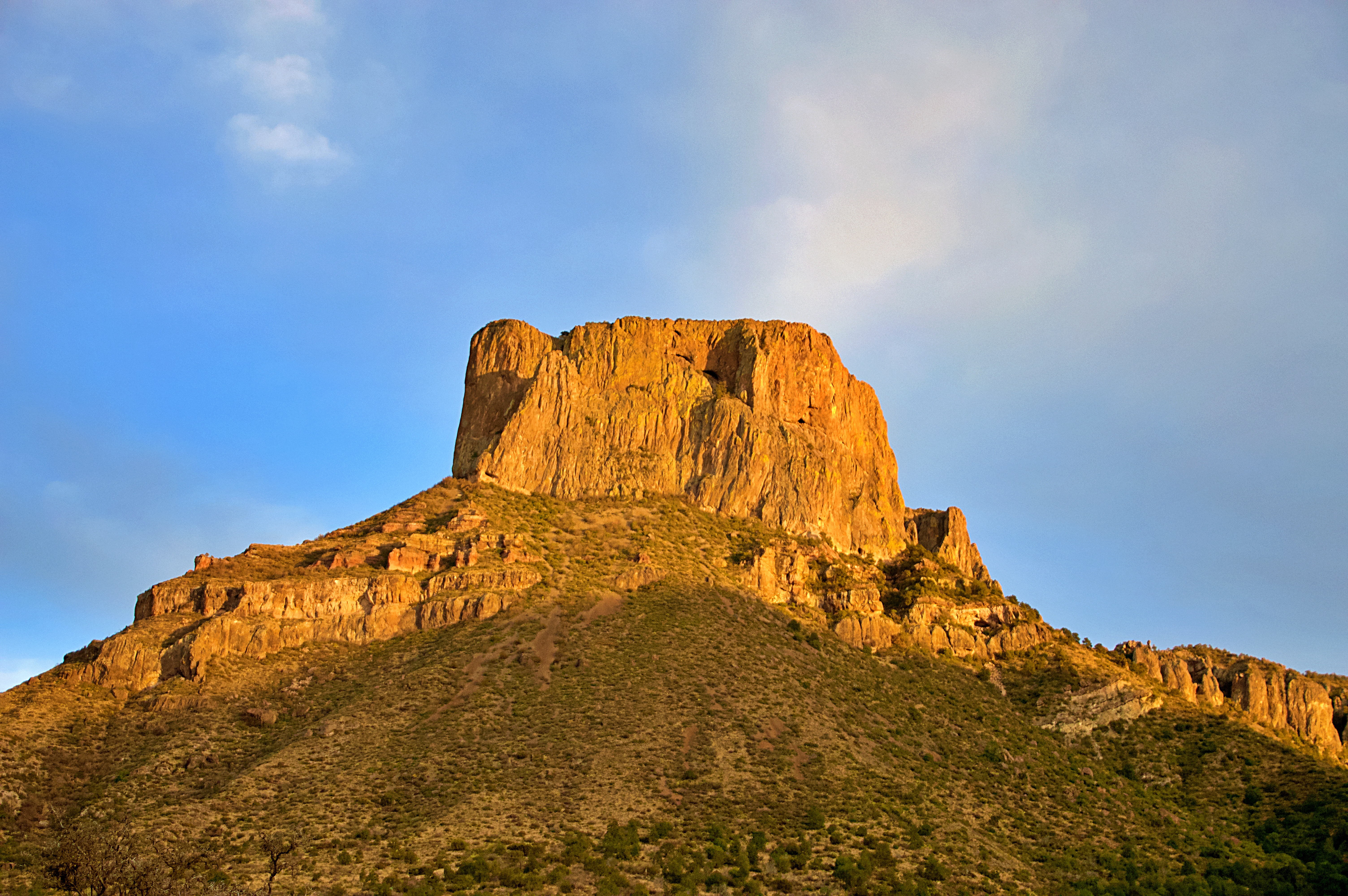
Cerro Castellan towers over the landscape along Ross Maxwell Drive in Big Bend National Park.
Before You Go
Big Bend National Park is vast, remote, and unlike many other national parks. Planning ahead isn’t about filling every day—it’s about understanding distances, conditions, and what kind of experience you want to have.
Cell service is limited throughout the park, gas stations are few, and many services close early or seasonally. Flexibility and advance preparation go a long way here, allowing you to settle into the slower pace the park quietly encourages.
Much of Big Bend is experienced gradually, often from the road. Scenic drives allow visitors to take in expansive desert views, changing elevations, and distant mountain ranges without feeling hurried.
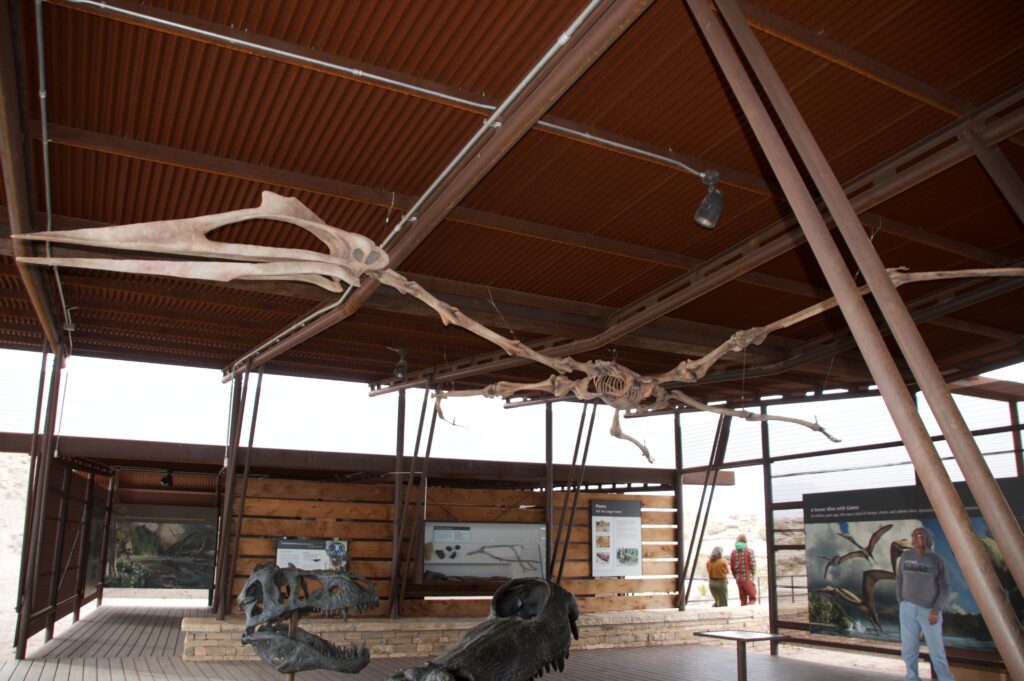
Quetzalcoatlus soared here millions of years before there was a river to name.
Just off the highway before the park entrance, the Fossil Discovery Exhibit is worth a stop on your way in. This free, open-air pavilion displays a full-scale reconstruction of Quetzalcoatlus, the largest known flying animal, along with fossils and information on the prehistoric creatures that once inhabited the region. It takes only a few minutes to see, making it an easy addition to your drive.
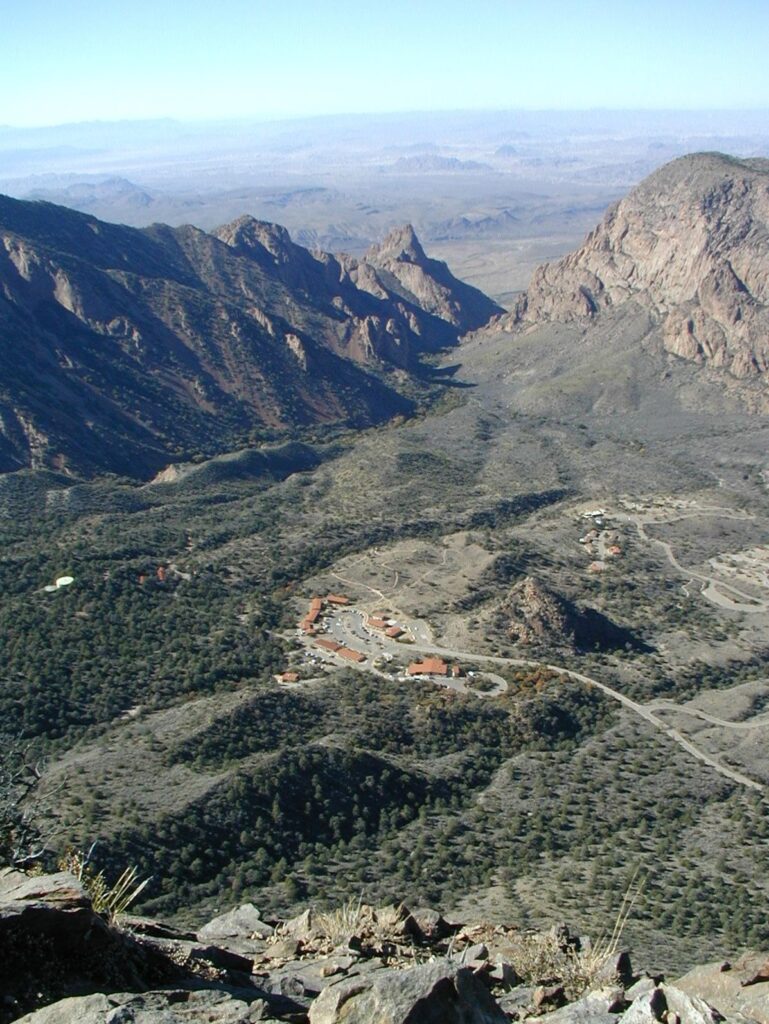
Looking down into the Basin — the lodge and campground sit at the heart of a natural bowl ringed by the Chisos Mountains. (NPS Photo)
The Chisos Basin is the one area worth building real time around. Ringed by the Chisos Mountains and sitting at roughly 5,400 feet, it’s noticeably cooler than the desert floor below—often by ten degrees or more—and green in a way the rest of the park isn’t, with oak, juniper, and pine replacing creosote and cactus.
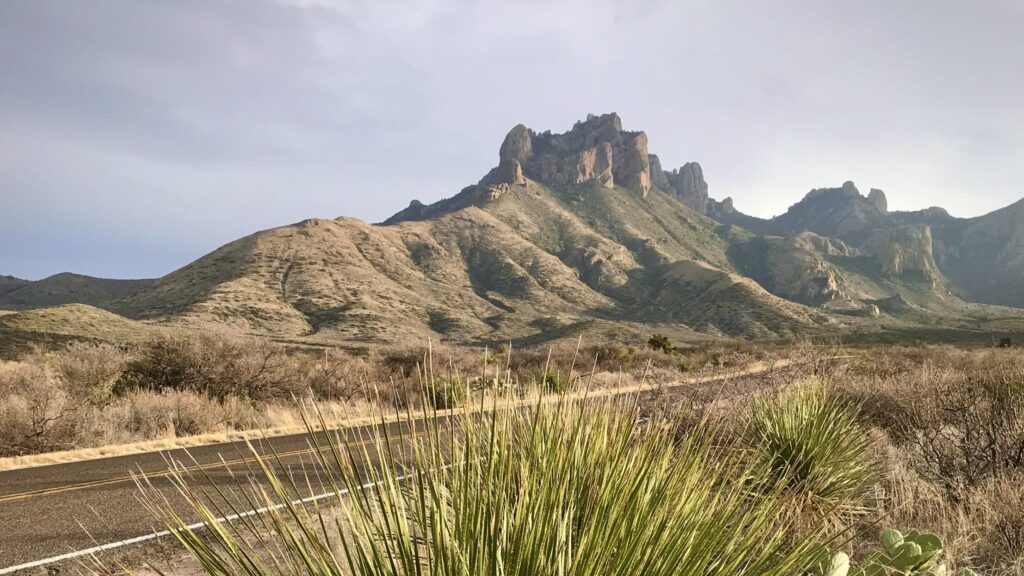
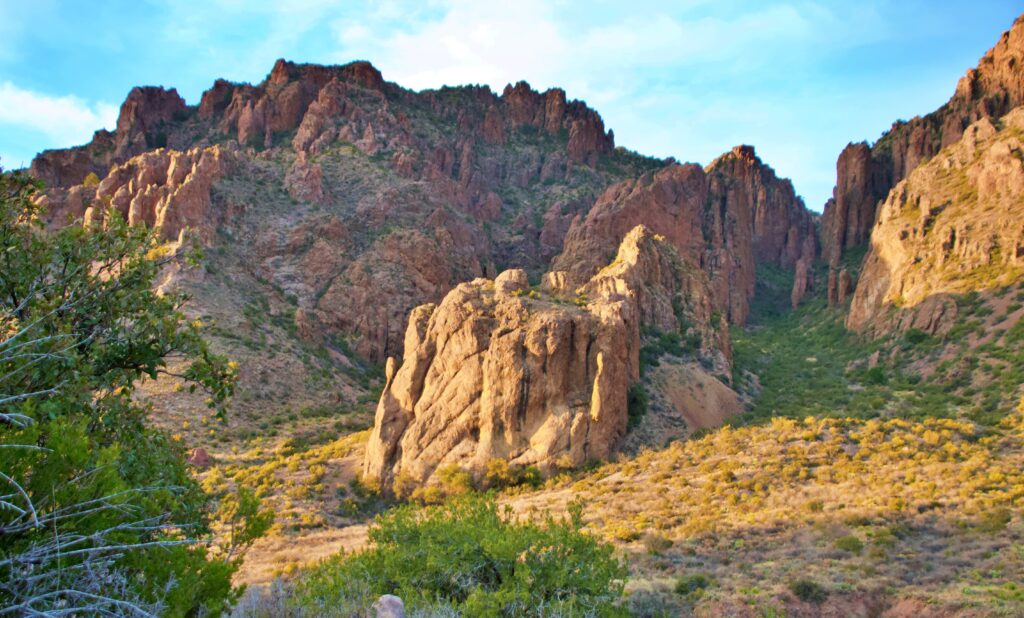
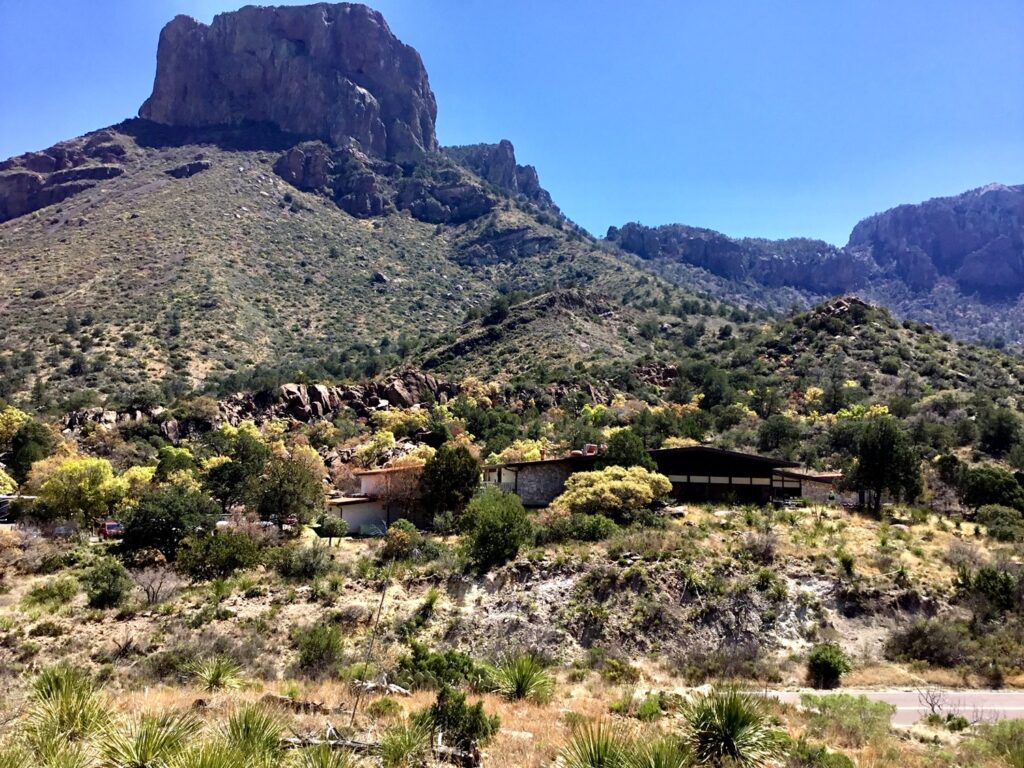
The ascent into the Chisos Basin trades desert flats for terrain like this — closer, sharper, and lit differently as the road climbs
The Window View Overlook Trail, an easy 0.3-mile walk near the visitor center, offers one of the park’s most photographed views: a V-shaped notch in the mountains framing the desert far below.
For a longer walk, the Basin Loop Trail (about 1.6 miles) circles through pine-oak woodland with basin overlooks along the way, and serious hikers can continue on to Emory Peak, the park’s highest point at 7,825 feet—a strenuous 10.5-mile round trip, but the only spot in Big Bend with a true summit view.
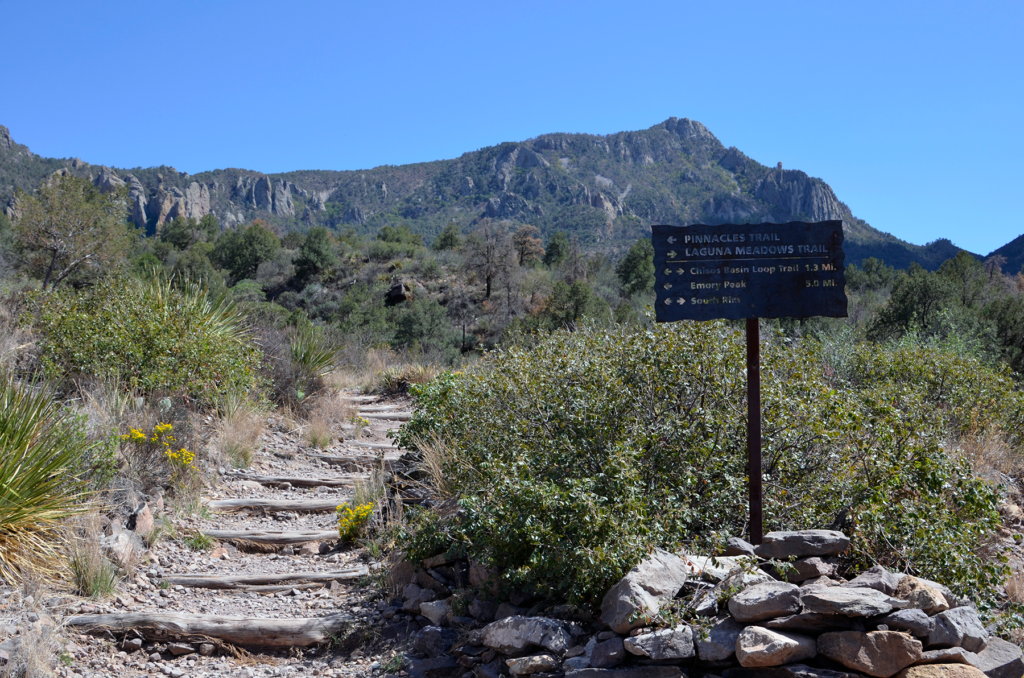
The Chisos Basin is the trailhead for some of Big Bend’s best hiking — Pinnacles, Laguna Meadows, Emory Peak, and the South Rim all branch out from here. (NPS Photo/Cookie Ballou)
The Basin is also the park’s most complete hub for staying and eating. Chisos Mountains Lodge offers the only in-park lodging, with rooms looking out over the mountains, and the adjoining Basin Lodge Restaurant is the most reliable sit-down meal inside park boundaries. Chisos Basin Campground sits just below the lodge, making it the most convenient—and often coolest—place to camp in Big Bend.
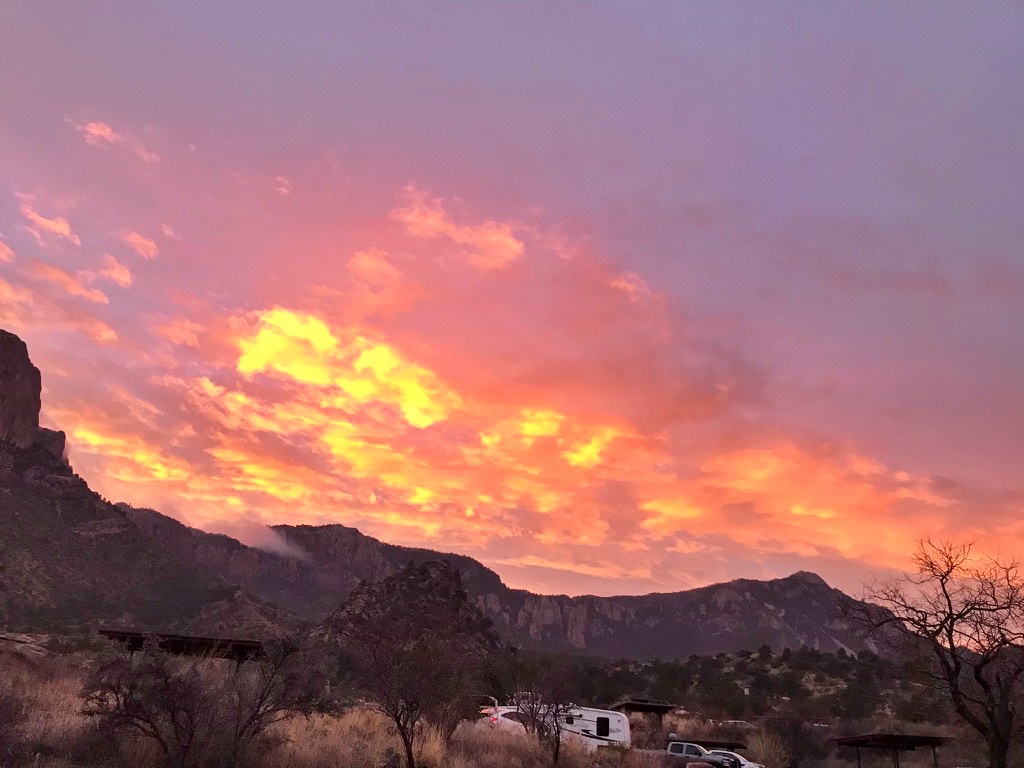
Chisos Basin Campground at sunset — the most convenient, and often coolest, place to pitch a tent or park an RV in Big Bend.
Because of the elevation and its central location, the Basin is also one of the best places in the park to watch both sunrise and sunset—the surrounding peaks catch light dramatically at both ends of the day.
Chisos Basin at golden hour — the heart of Big Bend National Park.
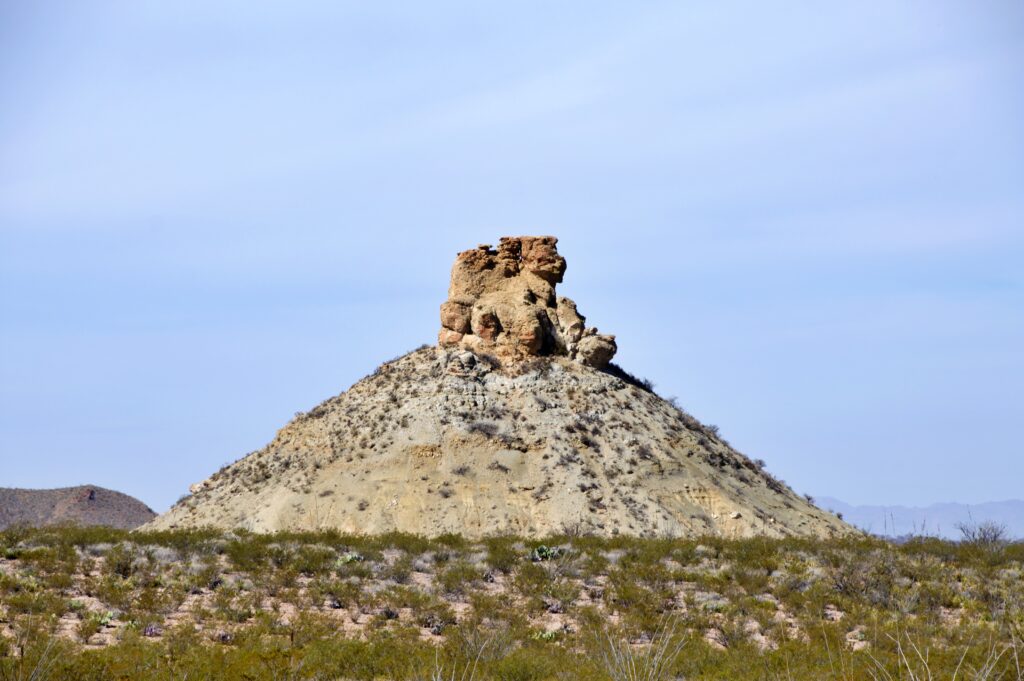
The Ross Maxwell Scenic Drive travels through some of the park’s most dramatic desert landscapes, offering pullouts where it’s easy to pause and take in the surroundings. Along the way, keep an eye out for Sphinx Rock, a striking formation perched atop a cone-shaped hill—some see a sphinx, others a hiker cresting the summit.
Sphinx Rock, one of the odd formations along Ross Maxwell Scenic Drive — some see a sphinx, others swear it’s a backpacker cresting the hill.
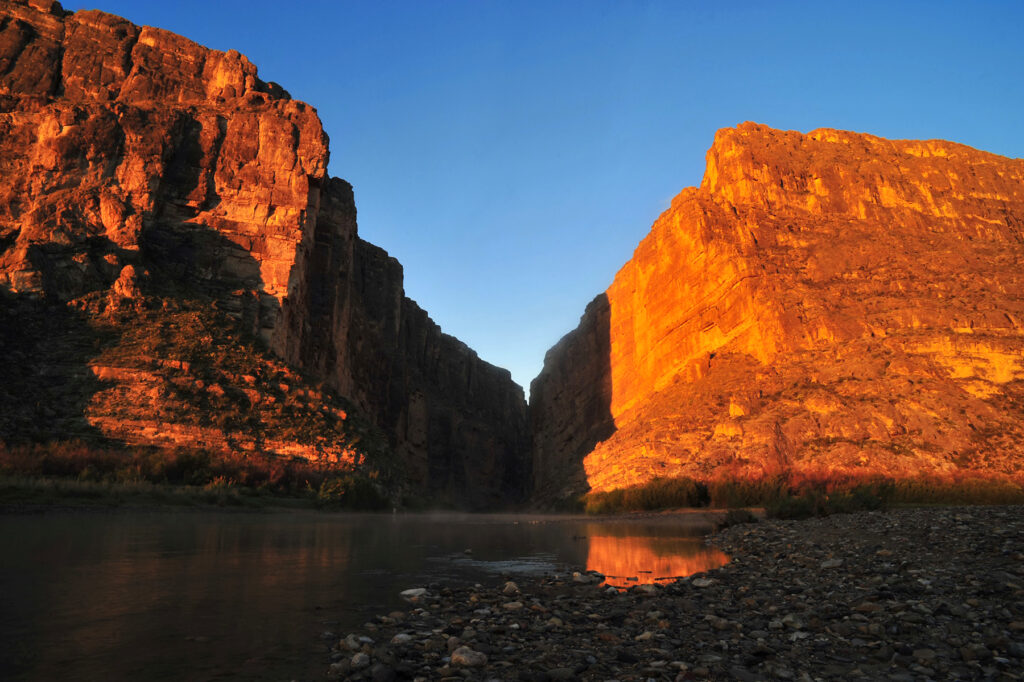
At the far end of the drive, Santa Elena Canyon marks one of the park’s most striking sights: sheer canyon walls rising nearly 1,500 feet where the Rio Grande has cut through solid rock. A short trail crosses Terlingua Creek and climbs into the canyon mouth—about 1.7 miles round trip—offering an up-close view of the walls and the river below.
Santa Elena Canyon at sunset, where the Rio Grande has carved 1,500 feet through solid rock. (NPS Photo/Mark Schuler)
Short Walks & Accessible Trails
Big Bend’s size can feel overwhelming at first, but there are several short walks and easy trails that provide meaningful experiences without committing to long hikes.
Trails such as the Rio Grande Village Nature Trail and the Window View Overlook Trail offer opportunities to observe desert plants, shifting light, and distant views at an unhurried pace. These walks are ideal for early mornings, late afternoons, or moments when you simply want to step outside and look around.
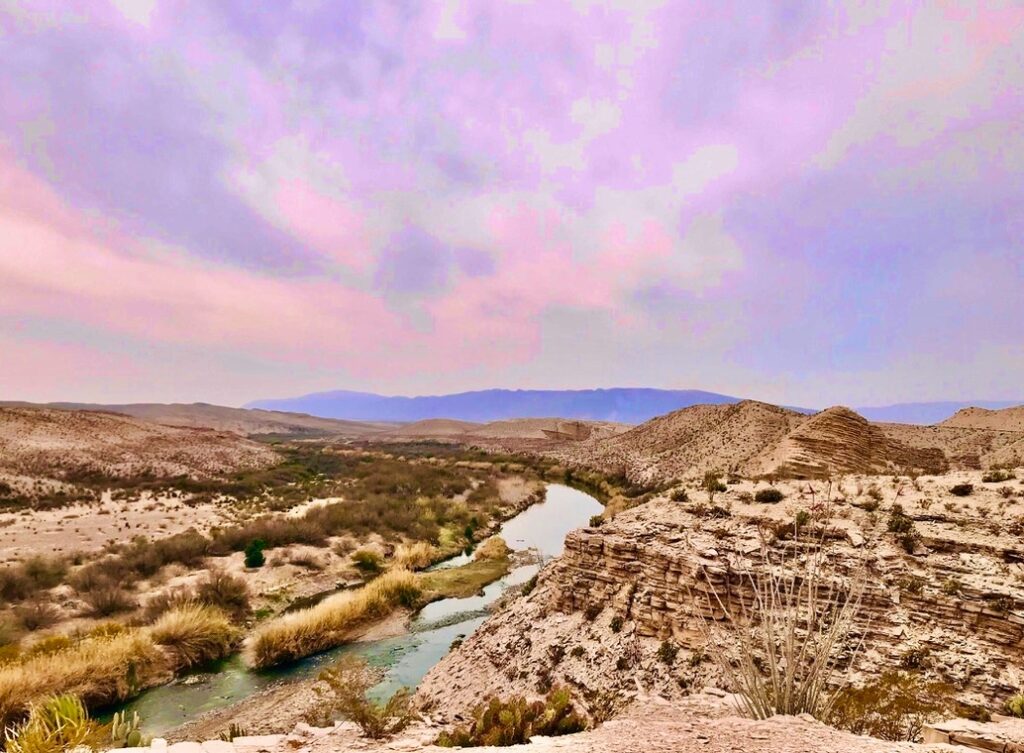
The view from the bluff above Hot Springs Trail — proof that an easy, flat walk can still deliver one of the best skies in the park.
The Hot Springs Trail, a short and mostly flat walk along the Rio Grande, leads to the ruins of a early-1900s bathhouse and the still-warm mineral springs that made this spot a health resort long before it became parkland. The water stays around 105°F year-round, and the trail continues past the springs into the surrounding hills—watch for wildlife, including the occasional horse or burro that has wandered across the river from Mexico.
Stargazing & Nightfall
As daylight fades at Big Bend, the park takes on a different rhythm. The desert cools, the air settles, and the sky begins to fill with points of light that feel impossibly distant and incredibly close at the same time.
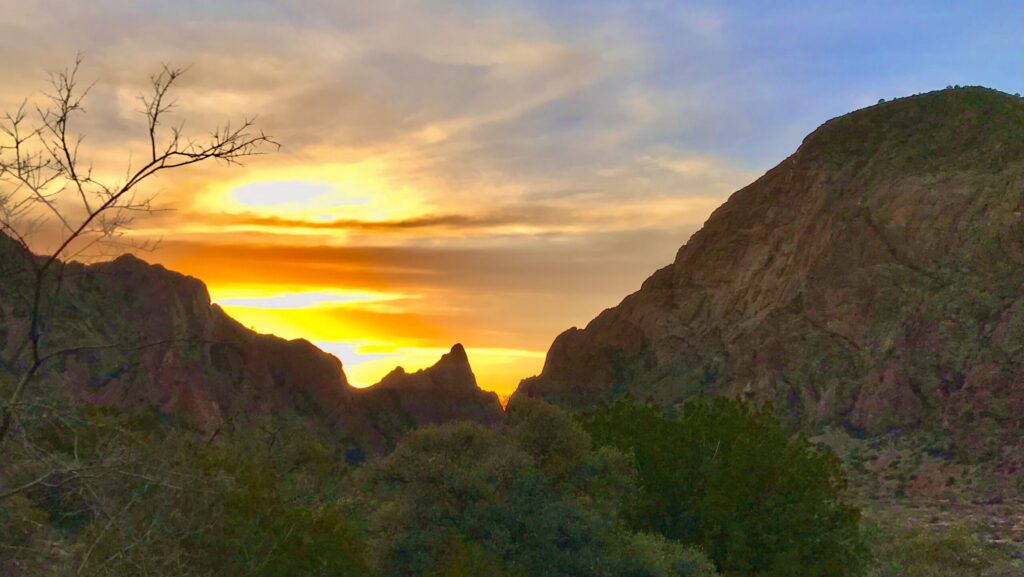
The Window
Twilight settles over the Window in Big Bend National Park, marking the quiet transition from daylight to night.
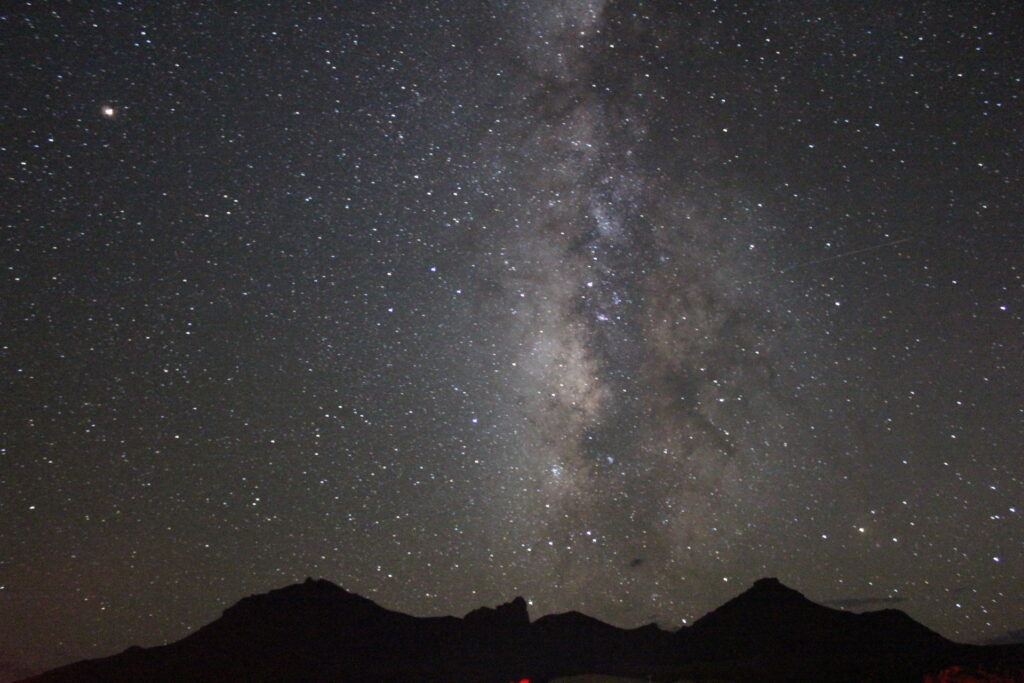
Big Bend’s remote location and minimal light pollution make it one of the darkest night-sky parks in the country. On clear nights, stars appear quickly and in abundance, with constellations and the Milky Way often visible without optical aids.
Stargazing here doesn’t demand effort or planning. Many visitors simply step outside after sunset, allowing their eyes to adjust as the sky unfolds overhead. Open areas near Rio Grande Village, Panther Junction, and the Chisos Basin all provide accessible vantage points for quietly taking in the view.
The Milky Way over Panther Junction — one of several accessible spots in the park to take in Big Bend’s dark skies. (NPS Photo/T. Jurado)
Rather than feeling dramatic or overwhelming, nightfall at Big Bend encourages stillness. It’s a reminder that some of the park’s most memorable moments happen when you stop moving and look up.
Wildlife & Observation
Wildlife sightings in Big Bend tend to reward quiet observation rather than active searching. Desert bighorn sheep, mule deer, javelinas, and a wide variety of bird species move through the park’s varied habitats, often appearing unexpectedly.
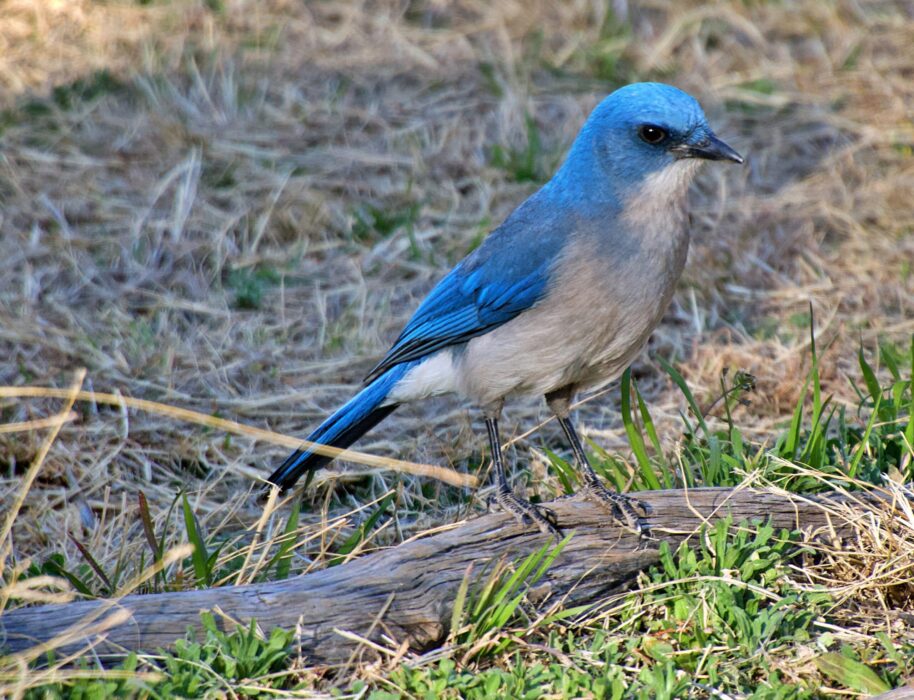
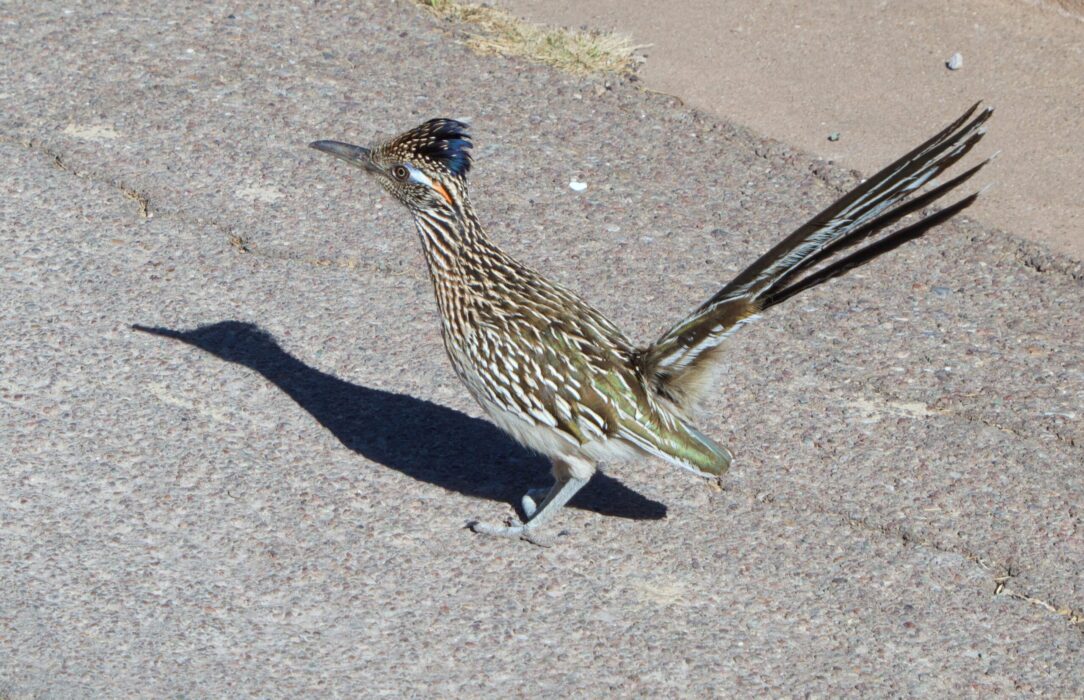
Birding is especially notable here, with over 450 recorded species thanks to the park’s mix of desert, river, and mountain environments. The Mexican jay and greater roadrunner are two of the easiest to spot, often turning up right around developed areas rather than requiring a long hike to find.
The Mexican jay is one of the park’s most recognizable birds — bold, social, and hard to miss.
A greater roadrunner, mid-stride and in no particular hurry to prove the cartoons wrong.
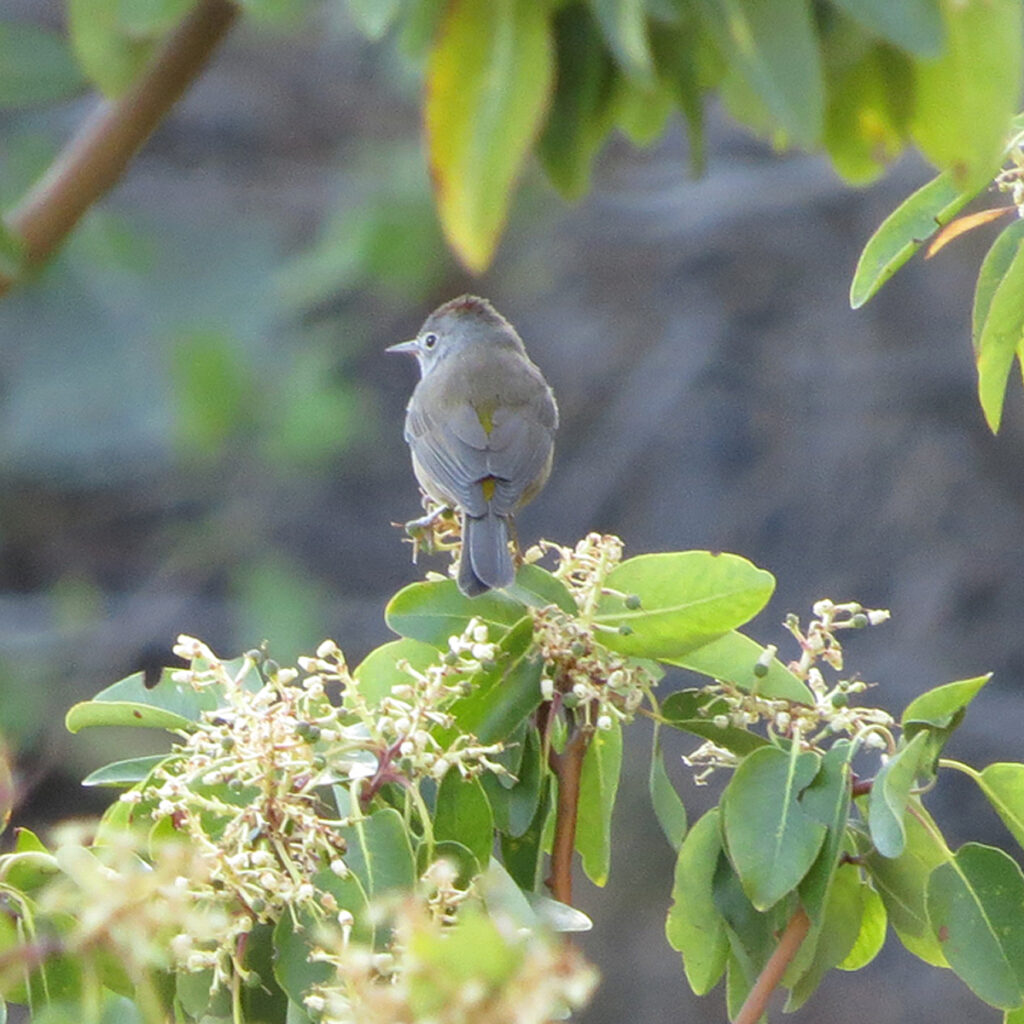
The Chisos Mountains are one of the only places in the United States where Colima Warblers can be found, making patience and early mornings worthwhile for those interested.
The Colima Warbler — Big Bend is one of the only places in the U.S. to spot this small, unassuming bird. Photo by Don Faulkner, licensed under CC BY-SA 2.0.
Camping & Lodging
Big Bend offers a range of camping and lodging options, from developed campgrounds to more remote backcountry sites.
Developed areas such as Chisos Basin Campground, Rio Grande Village, and Cottonwood Campground provide varying levels of amenities and views. Reservations are required, and availability can be limited during peak seasons.
For those who prefer indoor accommodations, the Chisos Mountains Lodge, the only in-park lodging, offers rooms within the park, while additional lodging options are available in nearby communities outside the park boundary.
Chisos Mountains Lodge sits in the shadow of Casa Grande. (NPS Photo)
Traveling with Pets
Pets are allowed in developed areas within Big Bend, including campgrounds, picnic areas, and parking lots. However, they are not permitted on trails, in the backcountry, or in most buildings.
Leashes are required at all times, and kennel facilities are not available in the park. If you plan to hike extensively, arranging care outside the park may be necessary.
Dining and supplies
Dining options within the park are limited. The Chisos Basin Lodge Restaurant provides casual meals and basic supplies, while the Rio Grande Village Store offers convenience items and camping essentials.
Outside the park, Terlingua and nearby communities provide additional dining options, ranging from casual cafés to longtime local favorites.
Fuel Planning in Big Bend National Park
Big Bend’s vastness is one of its defining features, but it also means that distances between services are significant. Travelers quickly learn that fuel planning here isn’t an inconvenience—it’s simply part of moving thoughtfully through the park.
There are two fuel stations located inside Big Bend National Park, providing limited but reliable opportunities to refill your tank while exploring. Gasoline is also available in nearby Terlingua, which serves as an important stop before entering or after leaving the park.
Because driving distances are long and routes often loop rather than connect directly, it’s wise to top off your tank whenever fuel is available, even if you don’t feel low yet. This small habit allows you to explore comfortably without rushing or worrying about what lies around the next bend.
Fuel prices inside the park and in remote surrounding areas are typically higher than in larger towns, reflecting the park’s location and limited infrastructure. Planning ahead helps keep the focus on the landscape rather than logistics.
A Thoughtful Final Note
Big Bend is not a place to rush. Its distance, quiet, and scale shape every visit, often leaving the strongest impressions in moments where nothing is planned at all.
This guide is meant to support a visit—not dictate one. Choosing just a few experiences, allowing extra time, and staying flexible often leads to the most rewarding days in the park.