Theodore Roosevelt National Park: The Complete Guide to Visiting Both Units
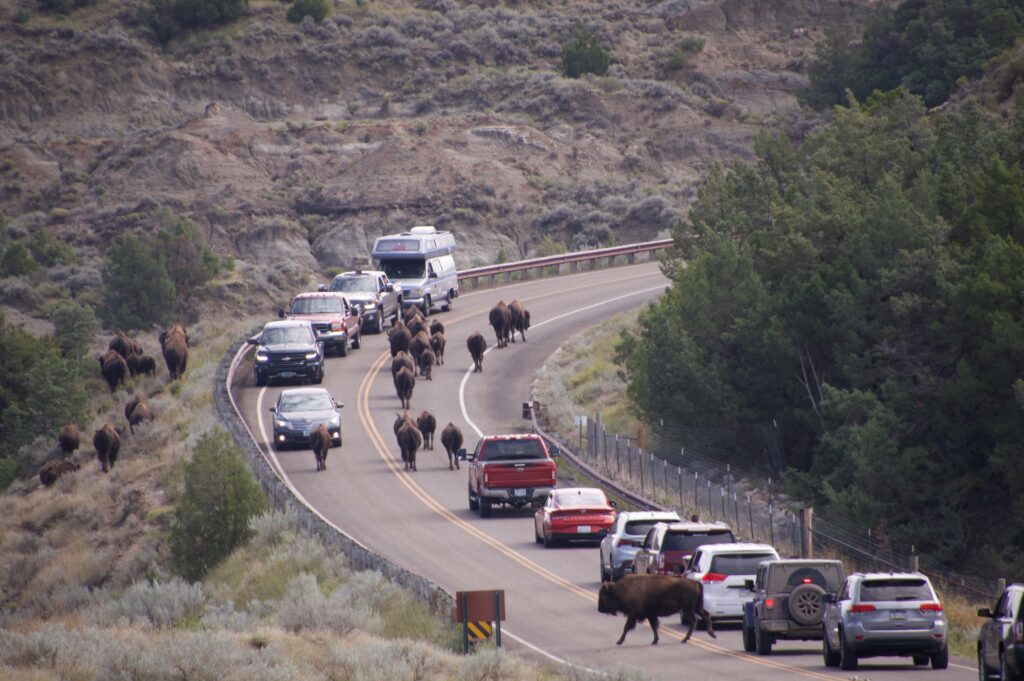
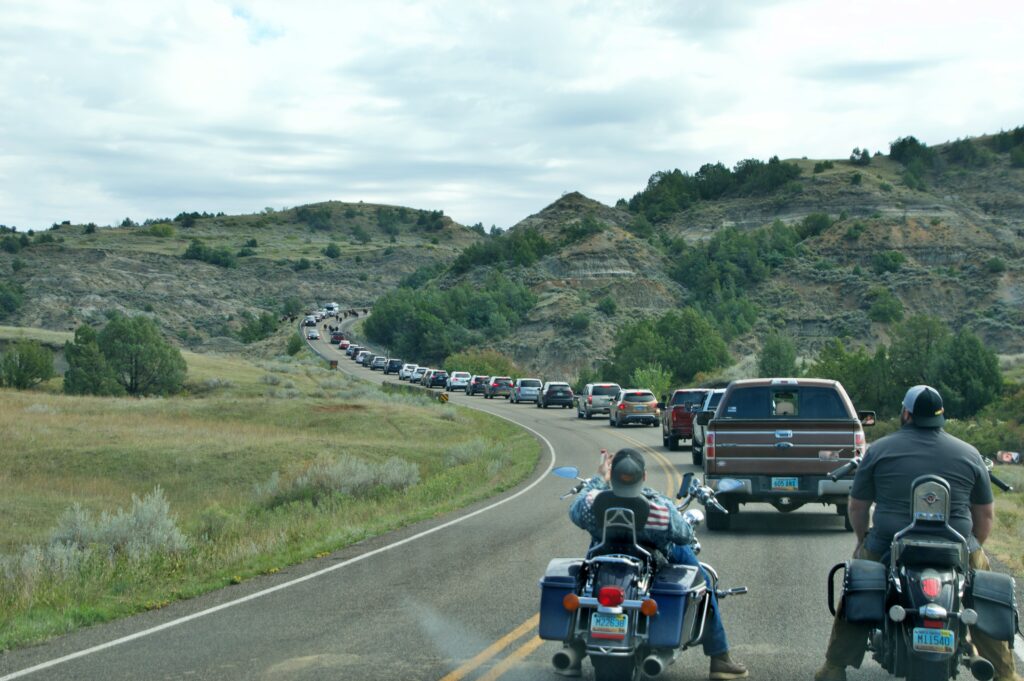
A classic South Unit bison jam — the herd took over both lanes, and traffic backed up around the bend while everyone waited it out.
Most people visiting Theodore Roosevelt National Park never make it past the South Unit. It’s the one right off I-94, the one with the visitor center in Medora, the one every itinerary defaults to. We almost did the same thing — until we decided to do both units in a single day and see them both for ourselves.
This guide covers everything you need to plan that same trip: fees, timing, where to stay, what to expect at each stop, and a few things we wish we’d known before we went. If you’d rather read about how the day actually unfolded, we wrote that up separately: Read the Full Story →
Entrance Fees
A $30 vehicle pass covers everyone in the car for 7 days; a motorcycle pass runs $25, and travelers on foot or bicycle pay $15 per person. If you’re planning multiple visits within a year, the park’s own $55 annual pass is worth it, or consider the $80 America the Beautiful pass if you’re hitting other national parks the same year.
The South Unit entrance station is right in Medora; the North Unit’s is about 15 minutes south of Watford City. The park has also gone fully cashless as of 2026, so bring a card.
North Unit or South Unit — Or Both?
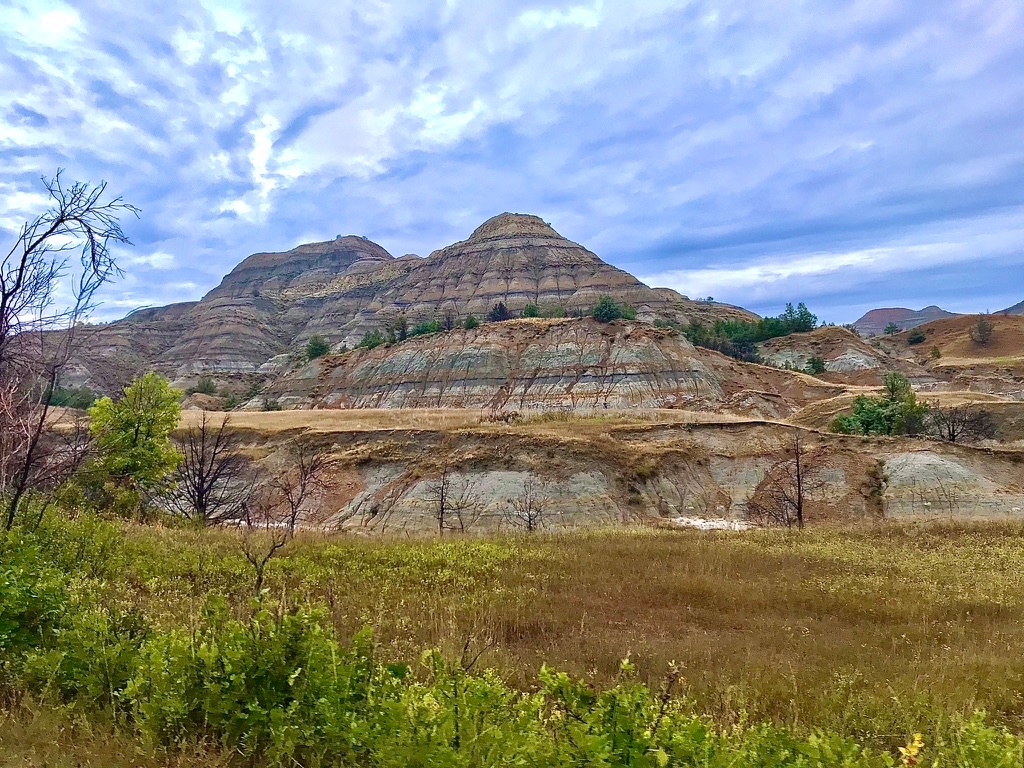
The South Unit’s badlands open up wide — bigger, brighter, and often busier than the quiet you’ll find up north.
The South Unit is the popular one, and for good reason — it’s easy to get to, well developed, and genuinely beautiful. But if you only have time for one, we’d point you toward the North Unit: fewer crowds, closer wildlife encounters, and a quieter, more immersive feel overall.
The North Unit’s Scenic Drive — quieter roads, striking formations, and views that unfold at every bend.
If you can manage it, doing both in a single day is absolutely possible — we did — though it does mean a fair amount of driving. Starting in the North Unit and ending in the South Unit gave us a nice sense of build, opening wide as the day went on rather than the other way around.
The Time Zone Split
Here’s something that catches a lot of visitors off guard: the North Unit runs on Central Time, while the South Unit runs on Mountain Time — despite both belonging to the same park. If you’re driving between the two in a single day, budget that extra hour into your plans so you don’t end up short on daylight without realizing why.
Where to Stay: Skip Medora, Try Watford City
Most visitors base themselves in Medora, right outside the South Unit entrance — and it’s a fine, convenient choice. We stayed in Watford City instead, about 45 minutes north and much closer to the North Unit. Two reasons drove that decision: the hotel rates were a little more affordable, and it put us right where we needed to be for an early start.
It’s a small, genuinely nice town with good accommodations, though dining options are limited, so don’t expect a lot of variety if you’re staying more than a night or two. If your plan includes prioritizing the North Unit the way ours did, Watford City puts you in the right spot. Learn more here.
When to Visit
Spring and fall are the sweet spot here — mild temperatures, fewer crowds, and the best conditions for wildlife spotting, especially early mornings. We visited in early fall, just after Labor Day, and even then the South Unit had real crowds and traffic — so don’t assume shoulder season means an empty park, particularly on that side.
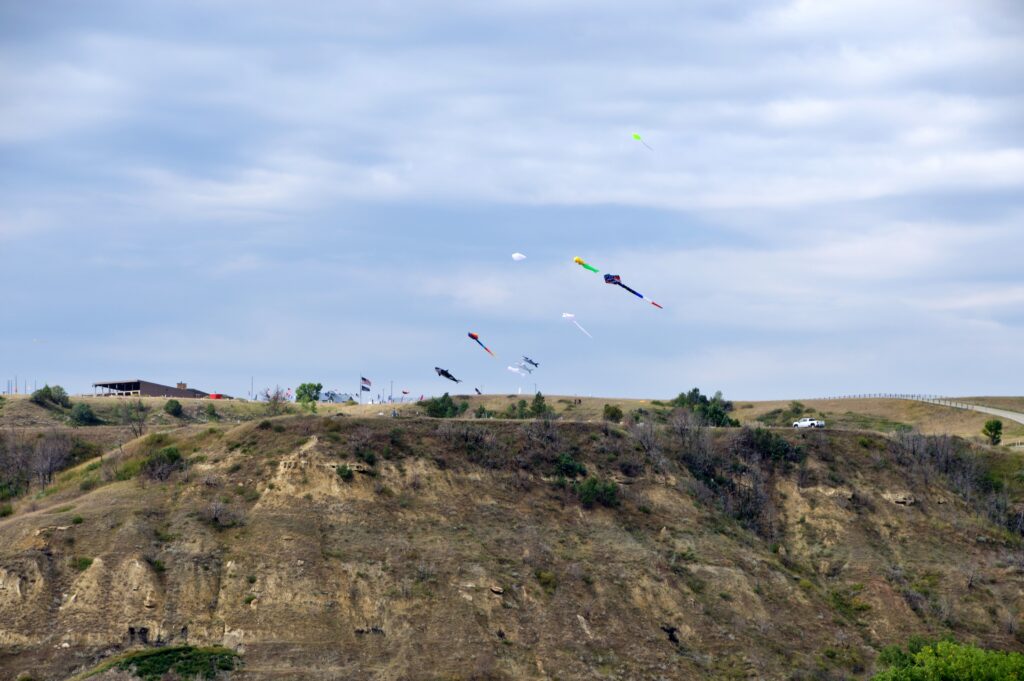
Annual Medora Hot Air Balloon Rally & Badlands Kite Fest — kites soaring over the badlands.
If you’re visiting in early September, keep an eye out for the annual Medora Hot Air Balloon Rally & Badlands Kite Fest, held just outside the park. We didn’t plan around it, but caught the tail end of it ourselves — colorful show kites soaring over the badlands, with hot air balloons launching nearby in the early morning when conditions allow.
Summer brings the heat, and the Badlands offer very little shade, so plan hikes for early morning or evening if you’re visiting June through August.
Winter is a different park entirely — snow-dusted buttes and near-total solitude, but expect harsh cold, icy roads, and limited services; the South Unit Visitor Center stays open, but many amenities scale back.
Trails and Overlooks Worth Knowing About
We spent most of our visit driving and stopping at overlooks rather than hiking long distances, but the park has more than 90 miles of trails between the two units if you have the time.
In the North Unit
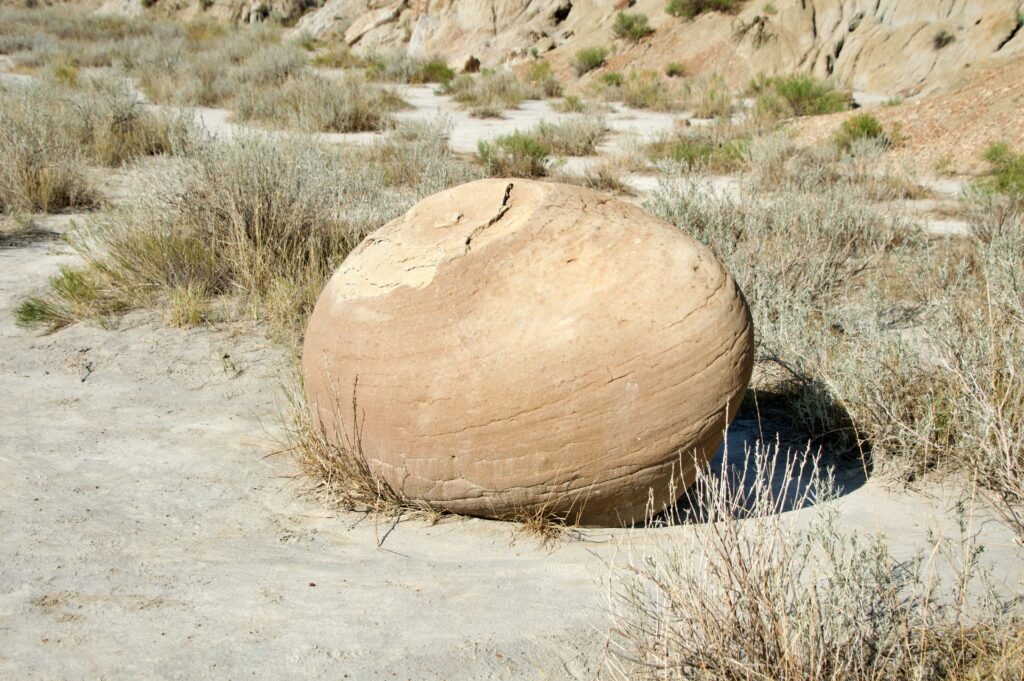
Cannonball Concretions — a pullout not far past the entrance, featuring strange, spherical sandstone boulders scattered across the hillside, some pitted with holes. Most visitors see these first; we saved them for our way out.
The Cannonball Concretions, unlike anything else we saw in the park — smooth, round, and pitted with holes that make them look almost otherworldly.
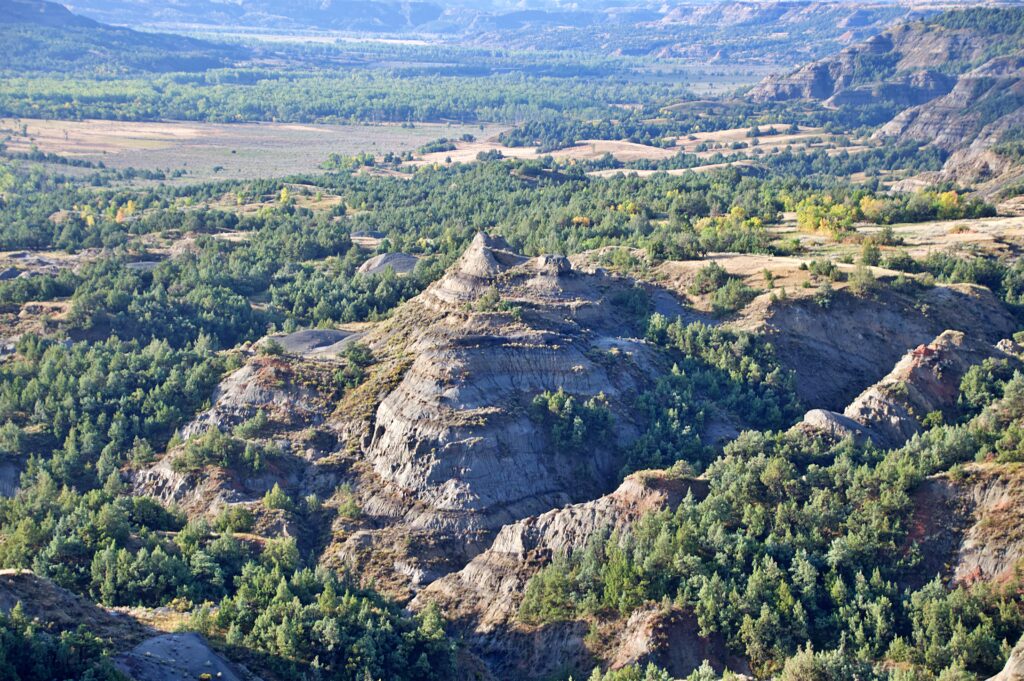
Bentonitic Clay Overlook — a roadside stop along the Scenic Drive with a sign explaining the blue-black, popcorn-textured clay layer below, along with sweeping valley views.
The view from the Bentonitic Clay Overlook — badlands rising out of a valley thick with pine and cottonwood, stretching out toward the horizon.
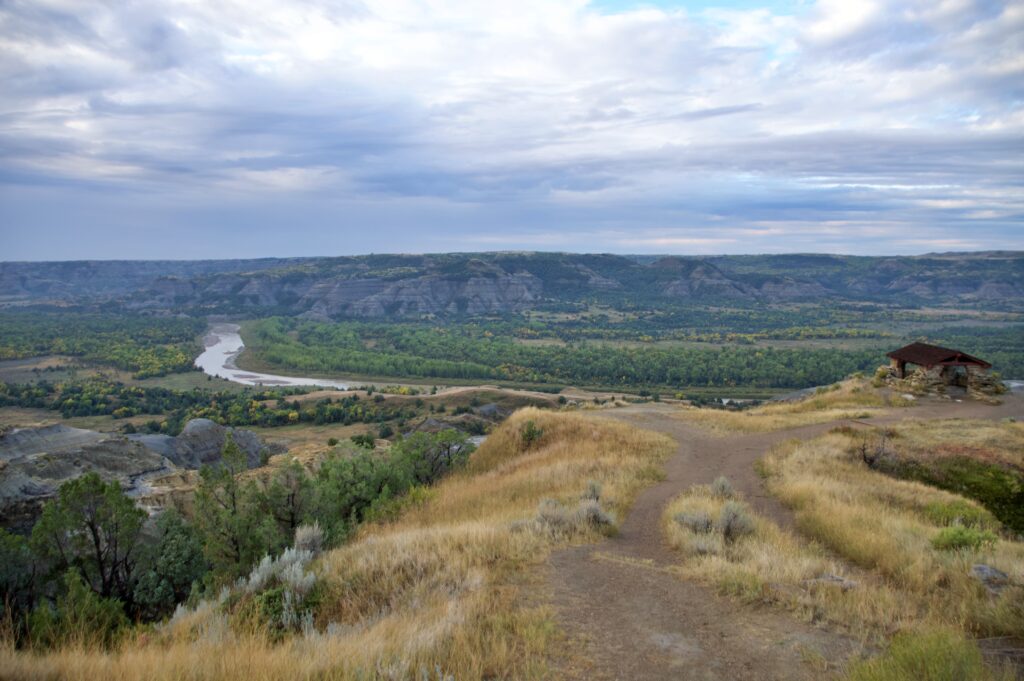
River Bend Overlook — a short, roughly 1.1-mile round-trip walk on a gravel path with some stairs, leading to a stone shelter built in 1937 by the Civilian Conservation Corps. One of the most iconic views in the park, overlooking a sweeping bend in the Little Missouri River.
River Bend Overlook — the trail leads to a stone shelter built in 1937, with the Little Missouri curving below.
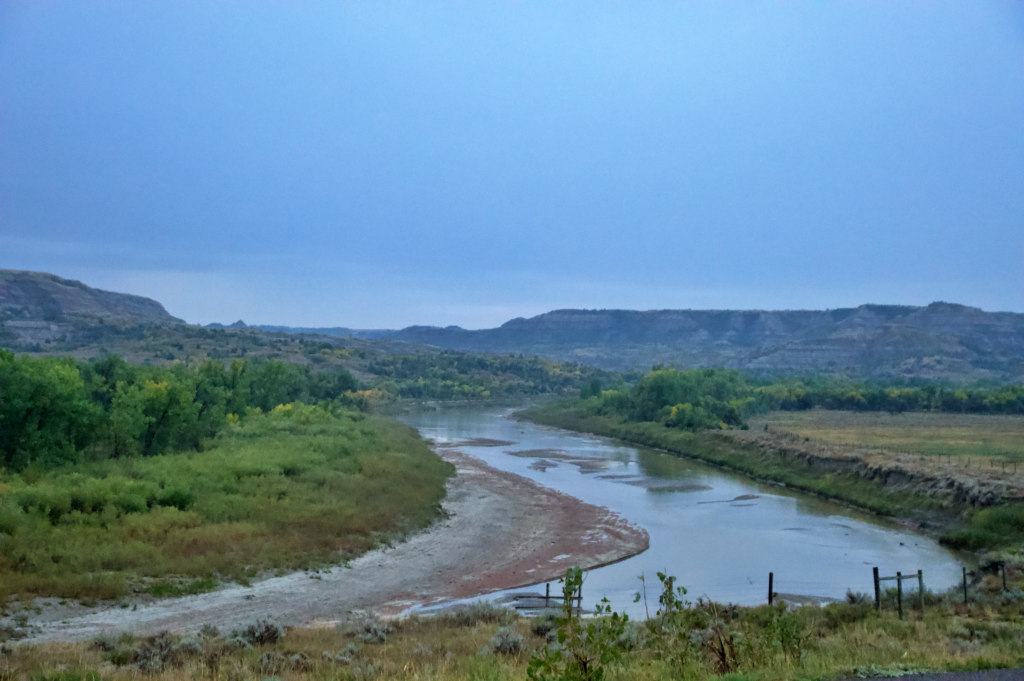
Oxbow Overlook — sits at the end of the North Unit Scenic Drive (about 14 miles one-way from the Visitor Center), where the river makes a dramatic bend. A peaceful, quiet spot to end the drive.
Oxbow Overlook, where the Little Missouri makes its sharp turn east — a quiet spot to end the Scenic Drive.
Caprock Coulee Trail (4.2 miles round trip) — the North Unit’s most popular hiking route, a loop through badlands terrain with panoramic views over the Little Missouri River. For something shorter, the first 0.8 miles functions as the Caprock Coulee Nature Trail, an easy out-and-back.
In the South Unit
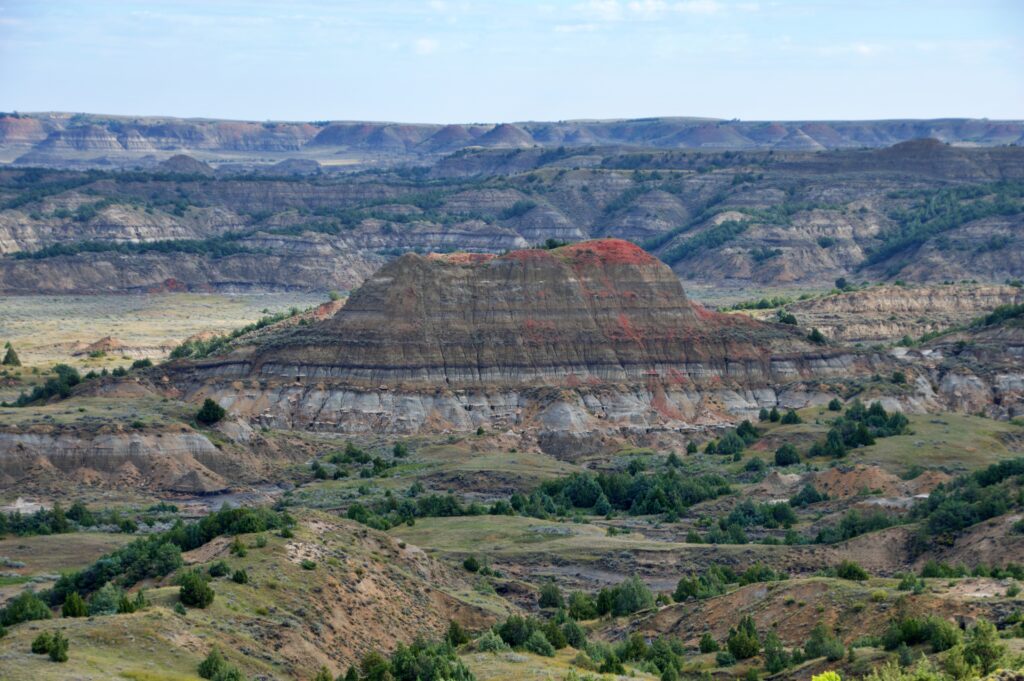
Painted Canyon Overlook — sits right off I-94, just outside the South Unit entrance near Medora. Often the very first (or last) stop for visitors, since it’s visible from the highway itself.
Painted Canyon Overlook — visible right off I-94, and often the first glimpse visitors get of the badlands before they’ve even entered the park.
Painted Canyon Loop Trail — near the Painted Canyon Visitor Center, an easy 1-mile option if you’re just passing through on I-94.
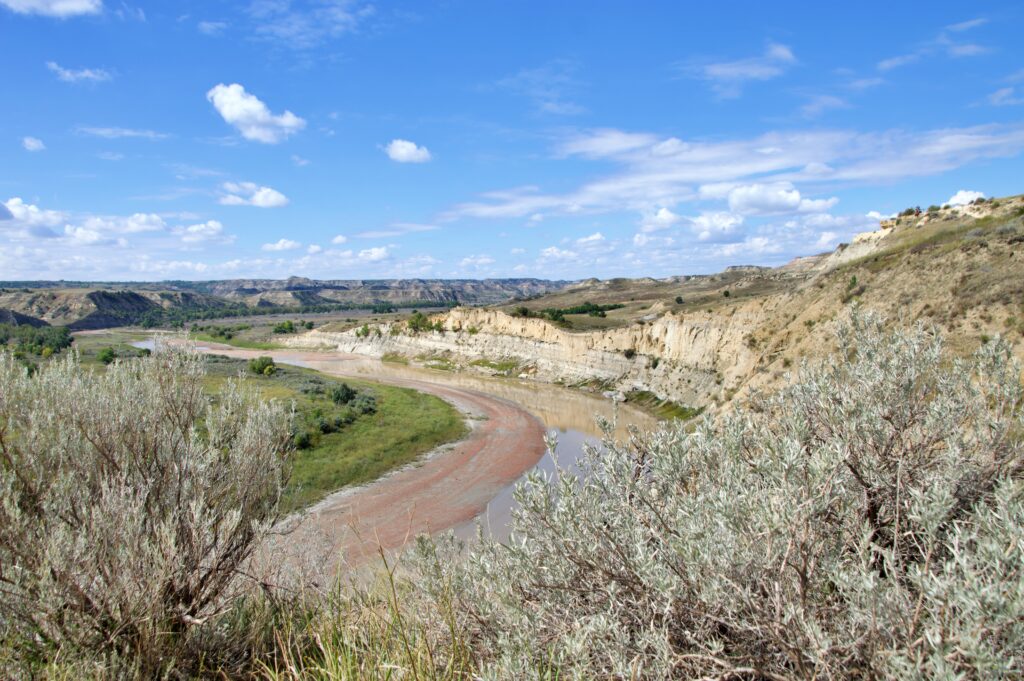
Wind Canyon Trail — short (under half a mile) but climbs steadily, with stairs near the top. It delivers one of the best views in the South Unit: the Little Missouri curving below a canyon carved by wind rather than water.
The payoff at the top of Wind Canyon Trail — the Little Missouri curling below a canyon carved by wind.
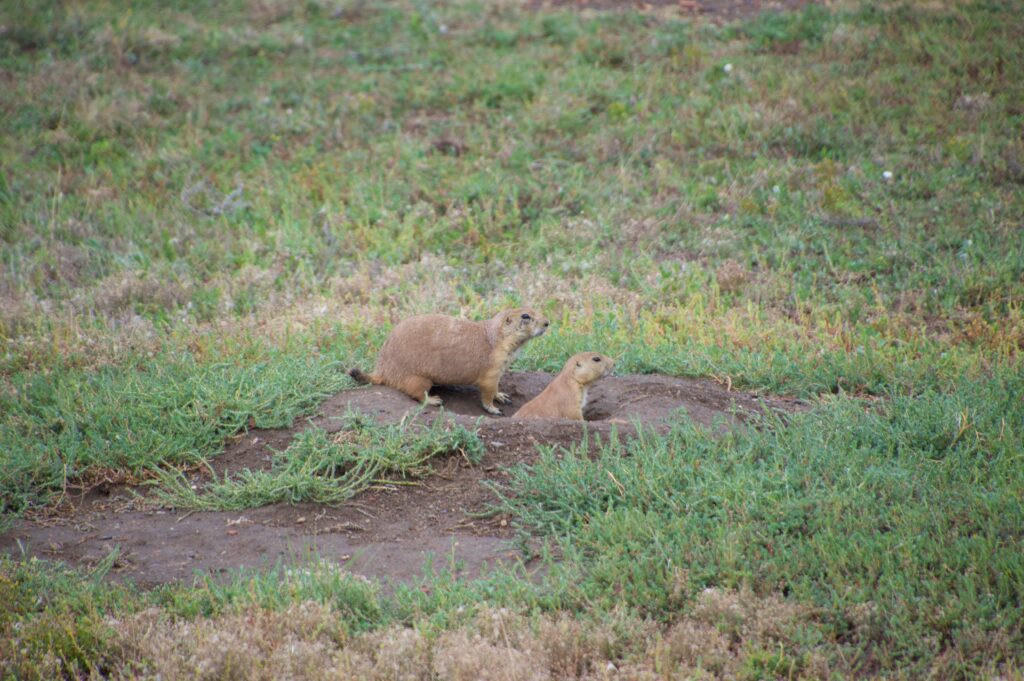
Prairie Dog Town — near Cottonwood Campground along the South Unit Scenic Loop Drive, home to a colony of black-tailed prairie dogs.
Black-tailed prairie dogs near Cottonwood Campground — the whole colony seemed to be chattering back and forth as we passed.
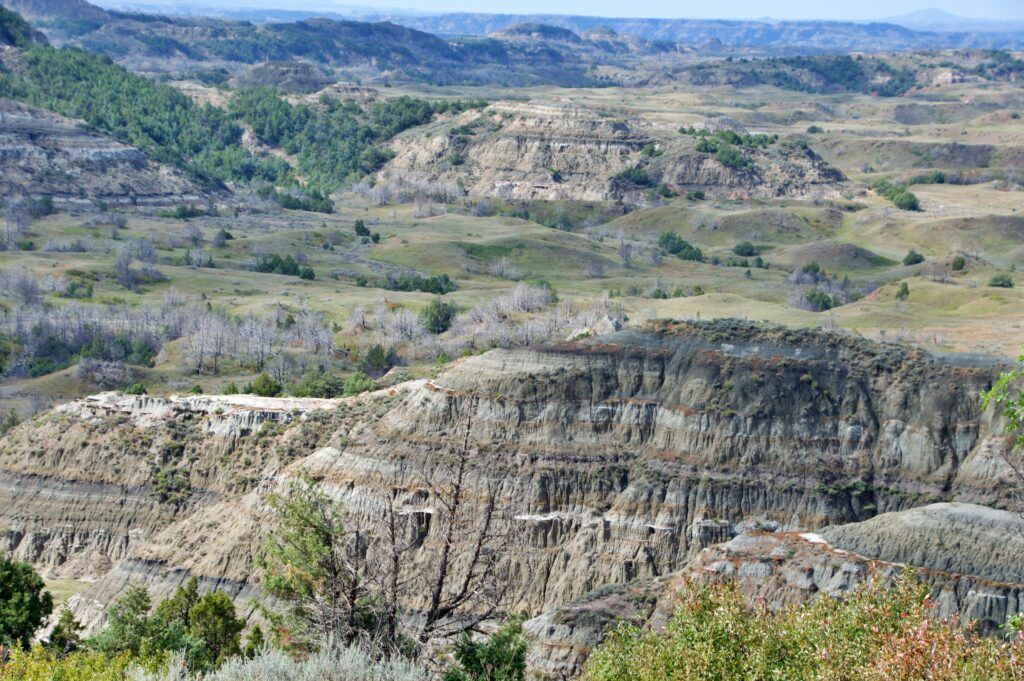
Boicourt Overlook — one of the widest, most sweeping panoramic views in the South Unit, with layered badlands rolling out in every direction. A short walk from the parking area along the Scenic Loop Drive.
The view from Boicourt Overlook — one of the widest panoramas in the South Unit, badlands in every direction.
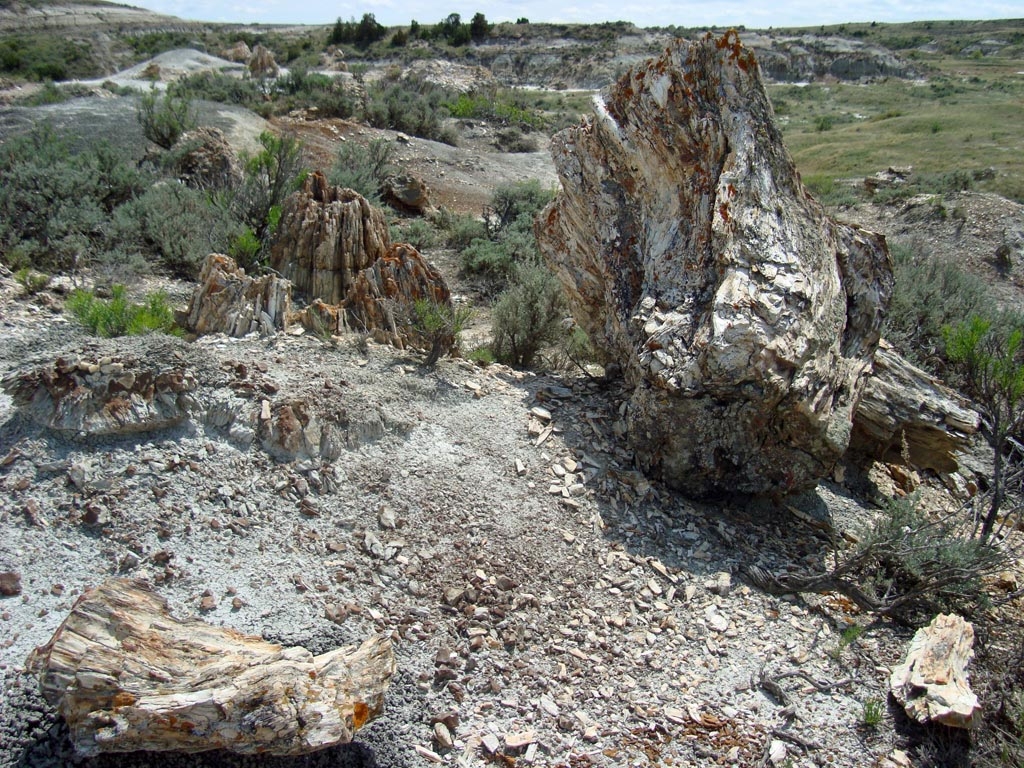
Petrified Forest Loop — a more ambitious, moderate 10.3-mile trail through one of the park’s most striking petrified wood sites.
We didn’t make it to the Petrified Forest Loop ourselves, but Theodore Roosevelt National Park holds the third-largest concentration of petrified wood in the country. (Photo: National Park Service)
If you’re the backcountry type, the Maah Daah Hey Trail runs 144 miles and connects all three units of the park (South, North, and the more remote Elkhorn Unit) — well beyond what most visitors take on, but worth knowing it’s there.
Keep an Eye Out for Wild Horses
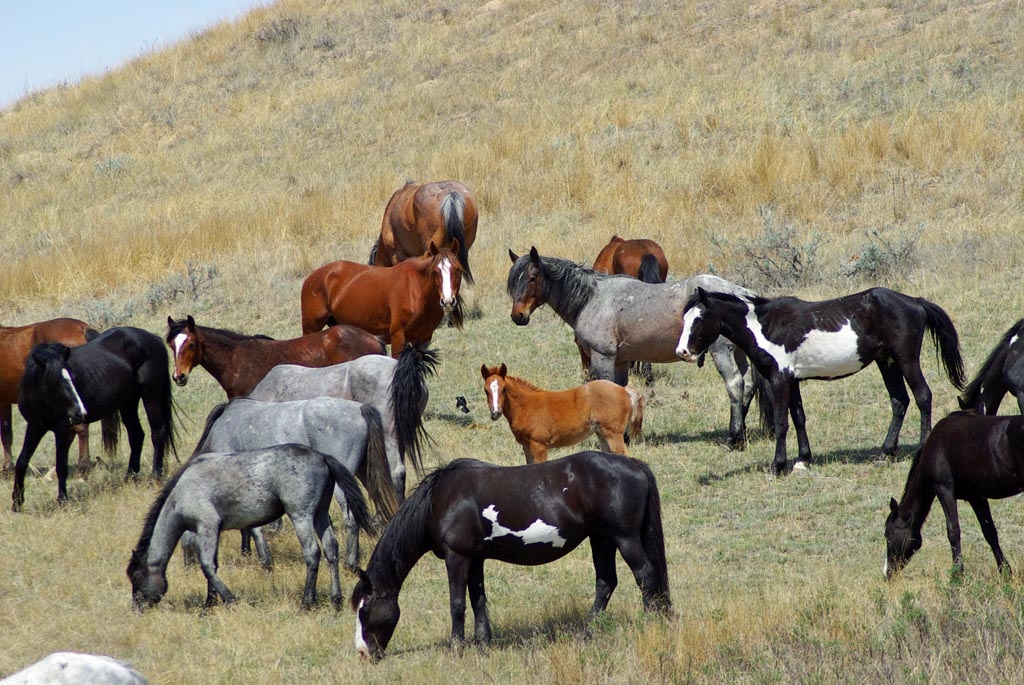
The South Unit is also home to a free-roaming herd of wild horses — one of the few places in the National Park System where they exist. We didn’t spot any on our visit, but they’re frequently seen along the Scenic Loop Road, especially in early morning or evening.
The South Unit is home to a free-roaming wild horse herd — one of the few in the National Park System. They’re often seen along the Scenic Loop Road. (Photo: National Park Service)
Expect a Bison Jam
If you’re visiting the South Unit, budget extra time for traffic — not from other cars, but from bison. Herds regularly move directly down the Scenic Loop Road, and when they do, everyone stops and waits, sometimes for a while.
A classic South Unit bison jam — the whole herd claimed the road, and everyone just waited it out.
It’s a normal, expected part of visiting this side of the park, and rushing it isn’t an option anyway — bison have the right of way, whether you’re in a car or on a motorcycle. Build in extra time for your scenic drive, and treat the delay as part of the experience rather than an inconvenience.
The South Unit Gets Crowded
Even outside of peak summer, don’t assume the South Unit will feel quiet. We visited in fall, just after Labor Day, expecting lighter crowds — and still found ourselves in traffic, competing for parking at overlooks, and sharing the road with plenty of other visitors. If a quieter experience matters to you, the North Unit is the better bet regardless of season.
New This Year: The Theodore Roosevelt Presidential Library
One thing worth planning a return trip around: the new Theodore Roosevelt Presidential Library in Medora officially opened to the public on July 4, 2026 — fittingly, the nation’s 250th anniversary. It wasn’t open yet when we visited, but it’s already becoming a major addition to the area.
Sitting on a 93-acre site right alongside the park, the 96,000-square-foot library was designed by the architecture firm Snøhetta and includes a mile-long boardwalk, a walkable green roof, and immersive exhibits — including an interactive AI-powered exhibit where visitors can “speak” with Roosevelt himself. It’s built around the themes that defined him: leadership, citizenship, and conservation, with his time in the Badlands at the center of the story.
Since it sits right next to the South Unit, it pairs naturally with a South Unit visit — and it’s reason enough on its own to plan a return trip.
Elkhorn Ranch: The Park’s Third, Remote Unit
Tucked between the North and South Units along the Little Missouri River sits Elkhorn Ranch, the park’s third and most remote unit — accessible from either side if you have extra time built into your visit. We didn’t make it out there ourselves; with only one day to give the park, something had to give.
If you’re planning a visit, know before you go: per the National Park Service, the last three miles of the access route sometimes require 4-wheel drive and/or a high-clearance vehicle, especially in winter or during and after rain showers. Check current road conditions at a park visitor center before heading out, and don’t count on cell service — there’s no signal at Elkhorn Ranch or along much of the route.
Nearby Detour: The Enchanted Highway
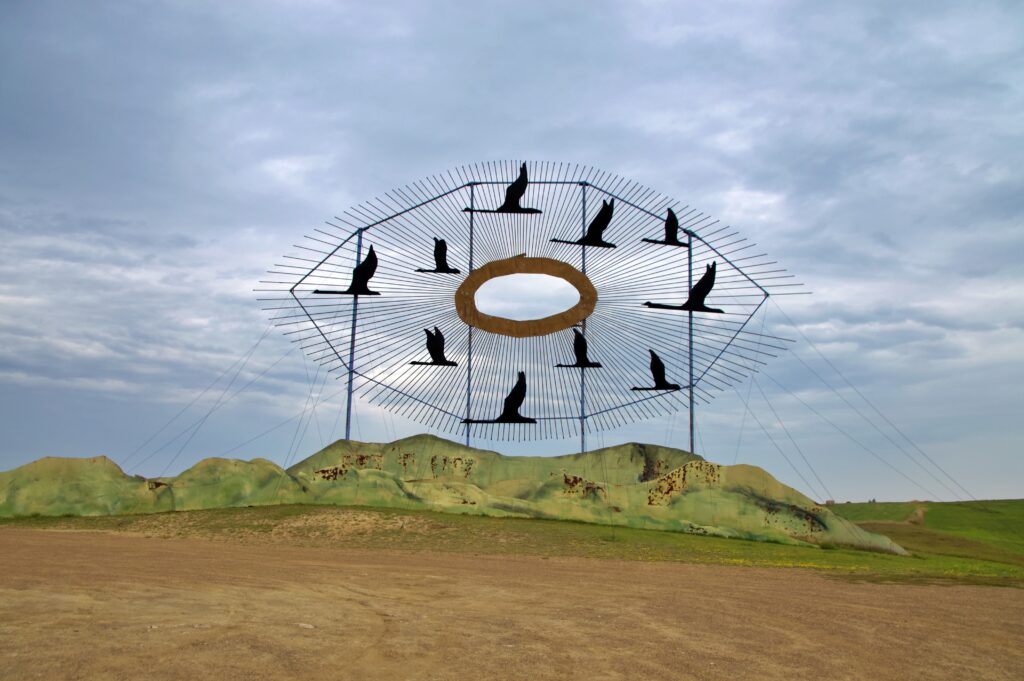
If you’re driving I-94 to or from the South Unit, it’s worth building in time for the Enchanted Highway — a stretch of giant scrap-metal sculptures scattered along a quiet North Dakota backroad, about an hour and 15 minutes away.
The first sculpture, Geese in Flight — the world’s largest scrap metal sculpture — sits right off the interstate (at Exit 72, near Gladstone), so even a quick stop delivers a payoff without committing to the full drive.
The whole route only takes a couple of hours round trip if you want to see them all, making it an easy add either on your way in or your way out of the park.
Visit the North Unit early in the morning for the best light and the best wildlife sightings — this is when we saw bison, wild turkey, and deer all in the same drive
If you can only pick one unit, choose the North Unit for a quieter, more immersive experience
Stay in Watford City instead of Medora if you’re prioritizing the North Unit — just plan ahead, since dining options are limited
Remember the time zone split — the North Unit runs Central Time, the South Unit runs Mountain Time
Drive slowly on both Scenic Drives — wildlife appears with little warning, and bison jams are common in the South Unit
Don’t assume shoulder season means low crowds in the South Unit — we visited just after Labor Day and still hit traffic
The Theodore Roosevelt Presidential Library in Medora opened July 4, 2026 — worth building extra time into a South Unit visit to see it
If you have extra time, consider Elkhorn Ranch — but check road conditions first, and don’t count on cell service
Add the Enchanted Highway to your I-94 drive — about 1 hour 15 minutes from the South Unit, and only a couple hours round trip
Want the story behind this guide? We spent one full day exploring both units — sunrise wildlife in the North, a bison jam and a climb up Wind Canyon Trail in the South, and everything in between. [Read the Full Narrative →]