Route 66 in Oklahoma

Route 66 in Oklahoma carries a noticeable sense of continuity and scale, as the landscape begins to flatten and give way to open grasslands. Unlike the shorter or more transitional stretches that come before it, this portion of the road unfolds across a wide span of towns, landscapes, and cultural touchpoints, offering a more sustained experience of travel along the Mother Road.

This page highlights selected locations and experiences along Route 66 in Oklahoma, focusing on places that reflect the character of the route and the stories that continue to shape it.

The Character of Route 66 in Oklahoma

Route 66 in Oklahoma stretches long enough to develop its own rhythm, shaped by open landscapes, historic towns, and a strong sense of cultural preservation. Here, Route 66 is not just remembered—it is actively lived and maintained.

The distance between towns introduces a deeper sense of journey, while the continuity of landmarks and local efforts to preserve the road reinforce its enduring presence.

Blue Whale of Catoosa — Catoosa

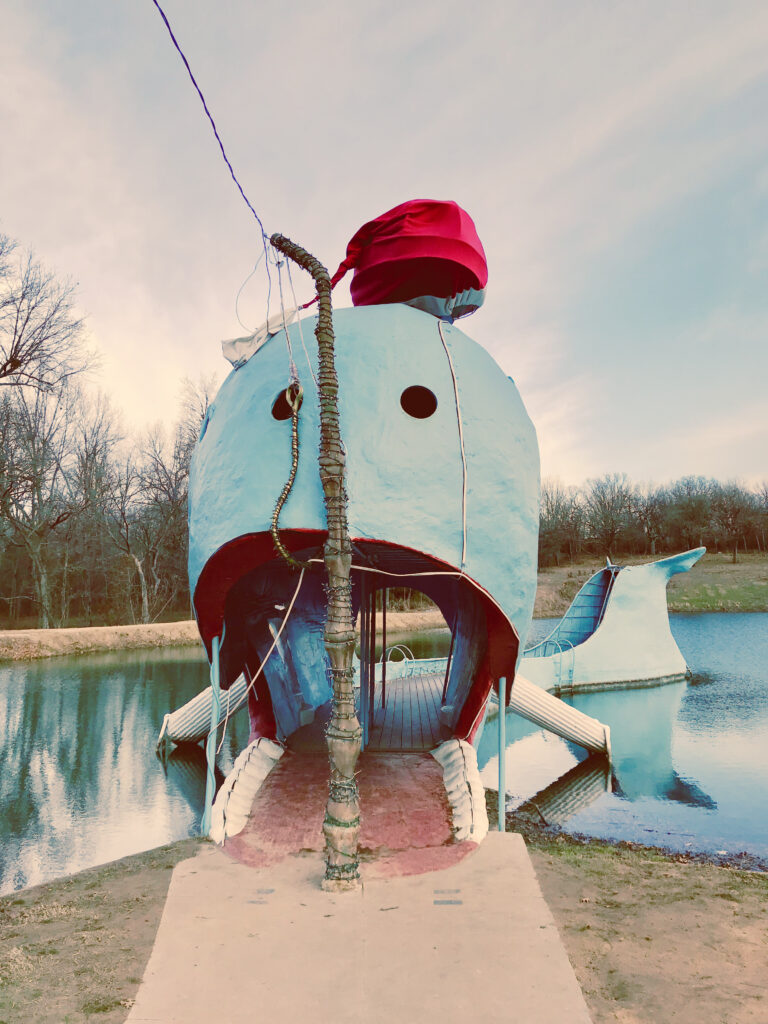
Front view of the Blue Whale of Catoosa showing walkway into the open mouth of the whale, decorated with a Santa hat in winter.
Visitors once crossed into the whale’s mouth along this walkway, a space made even more memorable by the addition of a Santa hat during the winter season.

Set beside a small pond just off Route 66, the Blue Whale of Catoosa stands as one of the road’s most recognizable and unexpected landmarks. Built in the early 1970s by Hugh Davis as an anniversary gift for his wife, the whale began as a personal project and gradually became a gathering place for the community.

Originally designed as a private swimming spot, the site included a dock, diving platform, and picnic areas, welcoming families and travelers alike during Route 66’s later years of popularity. Children once climbed across its back and slid into the water, giving the structure a life shaped as much by memory as by design. During my visit in winter, the whale wore a Santa hat, adding a seasonal note to an already playful stop along the road.

When Route 66 declined, the site fell into disrepair, reflecting a broader quiet that settled over many roadside attractions. Its restoration in the early 2000s brought it back not as a swimming destination, but as a preserved piece of roadside history.

Today, the Blue Whale remains a symbol of Route 66’s more whimsical side—an expression of personal creativity that, over time, became part of a shared experience along the road.

Coleman Theatre — Miami

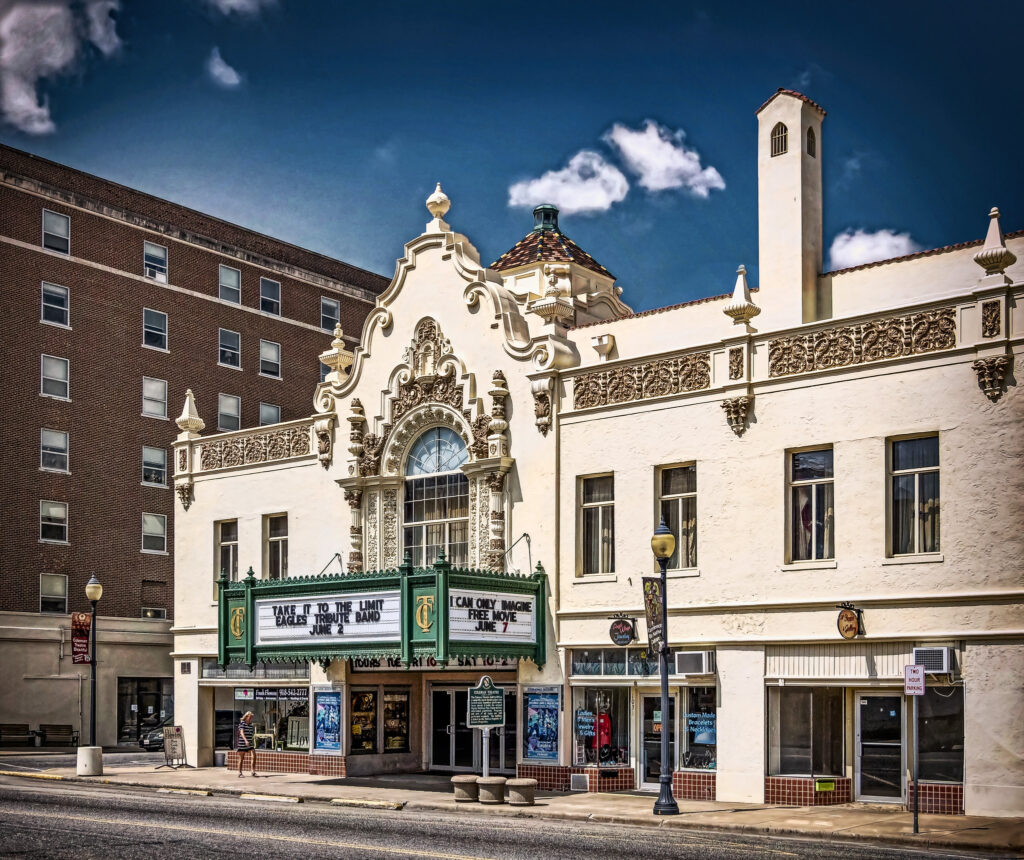
The Coleman Theatre in Miami, Oklahoma stands along Route 66. Photo: “Coleman Theatre” by Steve Walser, licensed under CC BY-NC-ND 2.0.

Located in the small town of Miami, Oklahoma, the Coleman Theatre stands as an unexpected reflection of grandeur along Route 66. Opened in 1929, the theater was designed in the style of a Spanish Mission, its ornate façade and lavish interior offering a striking contrast to the surrounding landscape.

Inside, the theater was built to impress, featuring detailed plasterwork, rich wood finishes, and a grand staircase that speaks to a time when even small-town venues were designed with careful attention to beauty and experience. Originally constructed as both a vaudeville stage and a movie house, the Coleman Theatre served as a cultural centerpiece for the community during the early years of Route 66.

As the years passed and traffic along the road declined, the theater, like many landmarks along Route 66, fell into a period of quiet neglect. Its restoration in the late 20th century reflects a renewed appreciation for preserving not just the road itself, but the places that shaped life along it.

Today, the Coleman Theatre remains active, hosting performances, films, and community events. Its continued use preserves the sense that Route 66 is not only a path through landscapes, but through the shared spaces where people once gathered—and still do.

Route 66 Museum — Clinton

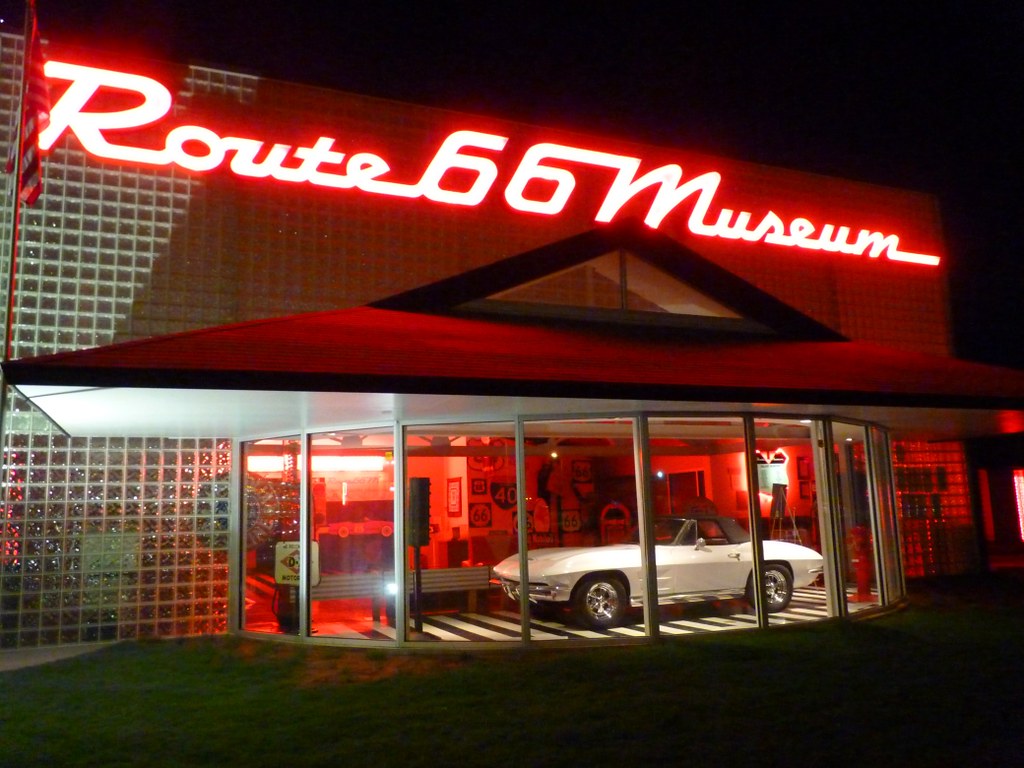
Route 66 Museum in Clinton, Oklahoma at night with red neon sign and glass front displaying a classic car inside
The Route 66 Museum in Clinton captures the visual language of the road. Photo: “117 Okla” by JymPoiranges, CC BY-NC-ND 2.0 https://www.flickr.com/photos/30052300@N08/

Located along Route 66 in Clinton, this museum offers a deeper look into the history and evolution of the road itself. Rather than focusing on a single landmark, the exhibits trace Route 66 across decades, capturing the shifting experiences of those who traveled it.

Through recreated scenes, vintage signage, and period displays, the museum reflects the changing nature of the highway—from its early years as a rugged and uncertain route, to its peak as a corridor of migration and commerce, and later as a symbol of American road travel. Each era is presented with careful attention to atmosphere, allowing visitors to move through the story in a way that feels both structured and immersive.  Exhibits reflecting the Dust Bowl migration, postwar travel, and mid-century roadside culture help illustrate how the meaning of the road changed over time.

More than a collection of artifacts, the museum serves as a reminder that Route 66 is not defined by any one stop, but by the accumulation of journeys, communities, and moments along the way. In that sense, it provides context for the road as a whole—offering a broader perspective on the places that continue to shape its identity today.

Pops 66 — Arcadia

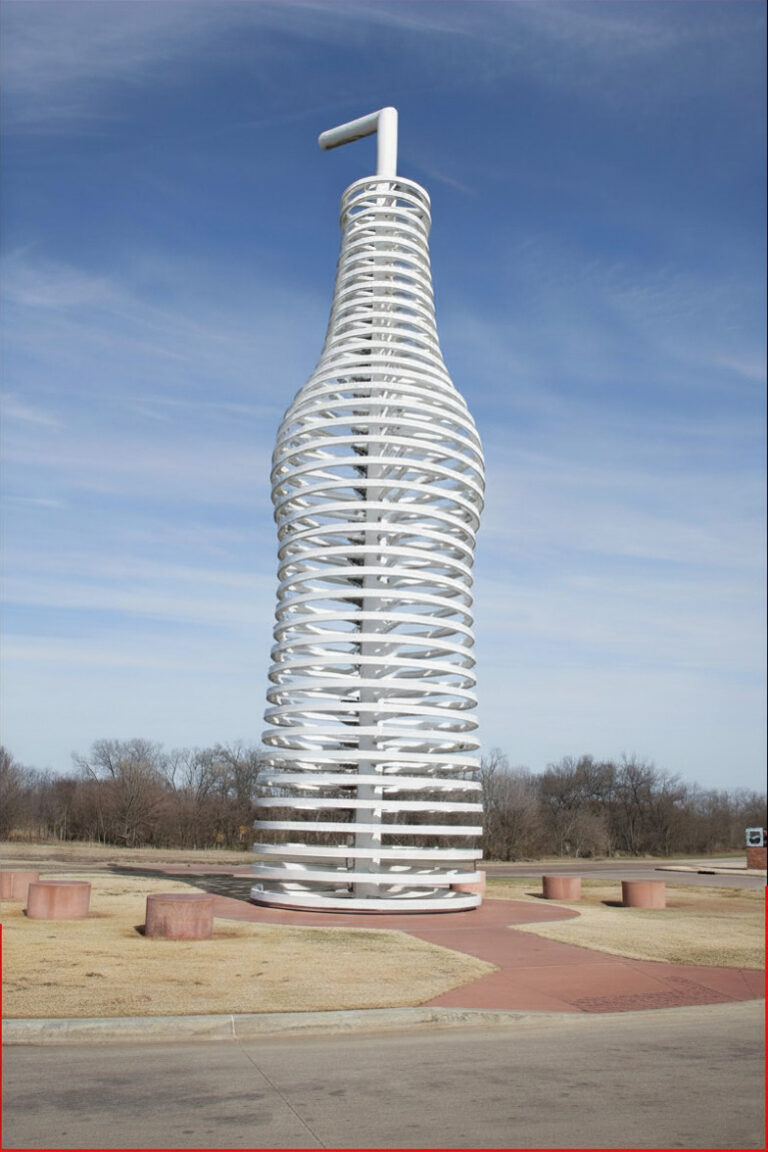
Large soda bottle sculpture at Pops in Arcadia, Oklahoma along Route 66 with open sky and surrounding grassy area
The towering soda bottle at Pops in Arcadia offers a contemporary take on roadside culture, a recognizable landmark along Route 66.

Rising along Route 66 just outside Arcadia, Pops stands apart from many of the road’s historic landmarks, representing a more contemporary expression of roadside culture. Opened in 2007, the site was designed by architect Rand Elliott in collaboration with Route 66 advocate Michael Snyder, blending modern design with the spirit of the road.

At its center is a 66-foot-tall illuminated soda bottle, a striking landmark that becomes especially noticeable at night when it glows against the open Oklahoma sky. The structure mirrors the highway it stands beside, both in scale and in name, while offering a visual contrast to the more traditional roadside attractions found along the route.

Inside, Pops houses hundreds of varieties of soda from around the world, ranging from nostalgic classics like root beer, cream soda, and glass-bottled colas to more unexpected flavors such as bacon, ranch, or buttered corn. This mix of familiarity and novelty continues the long-standing Route 66 tradition of giving travelers a place to pause, explore, and experience something unexpected.

In this way, Pops reflects both continuity and change—honoring the road’s past while presenting it through a distinctly modern lens.

Arcadia Round Barn — Arcadia

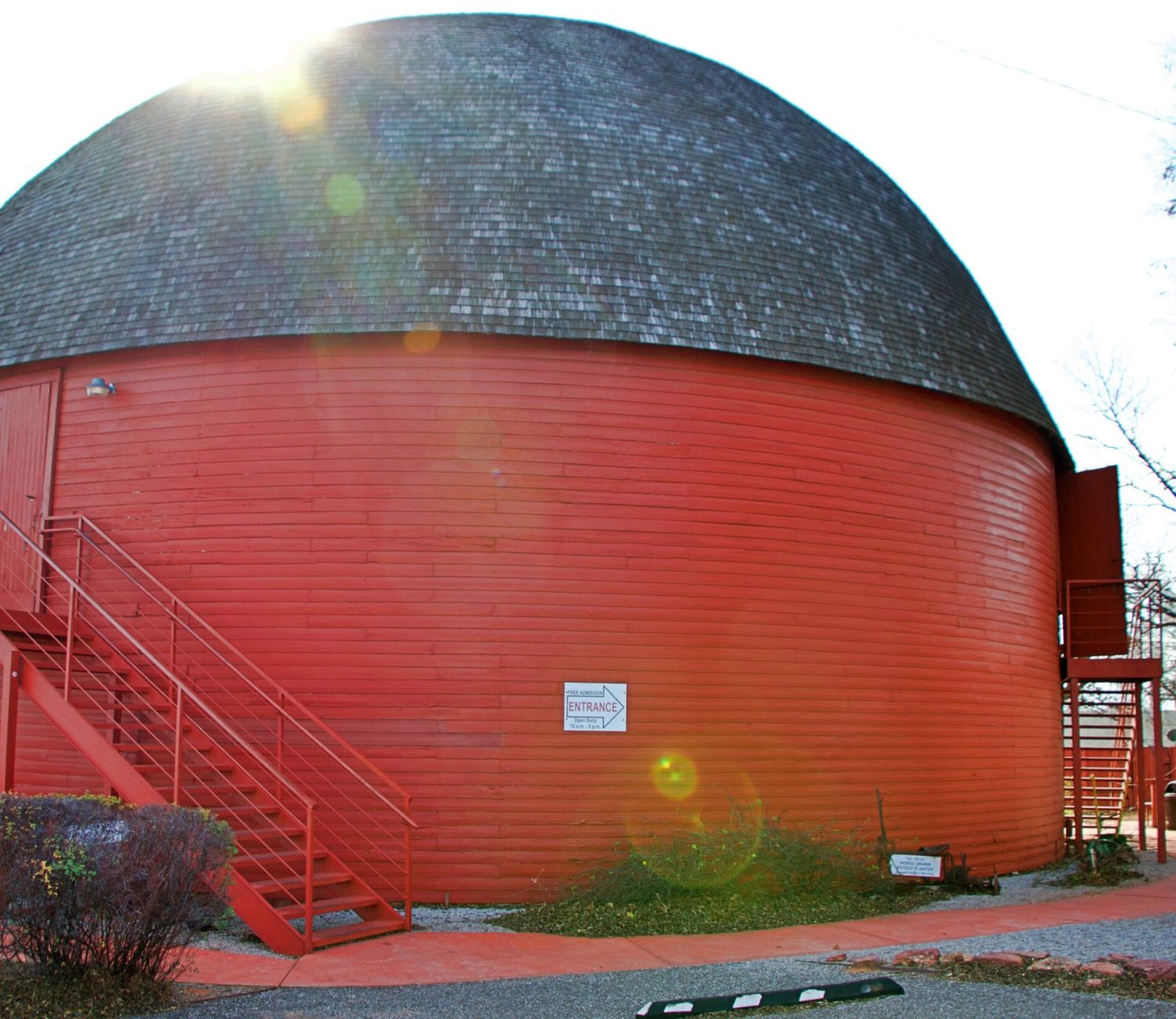
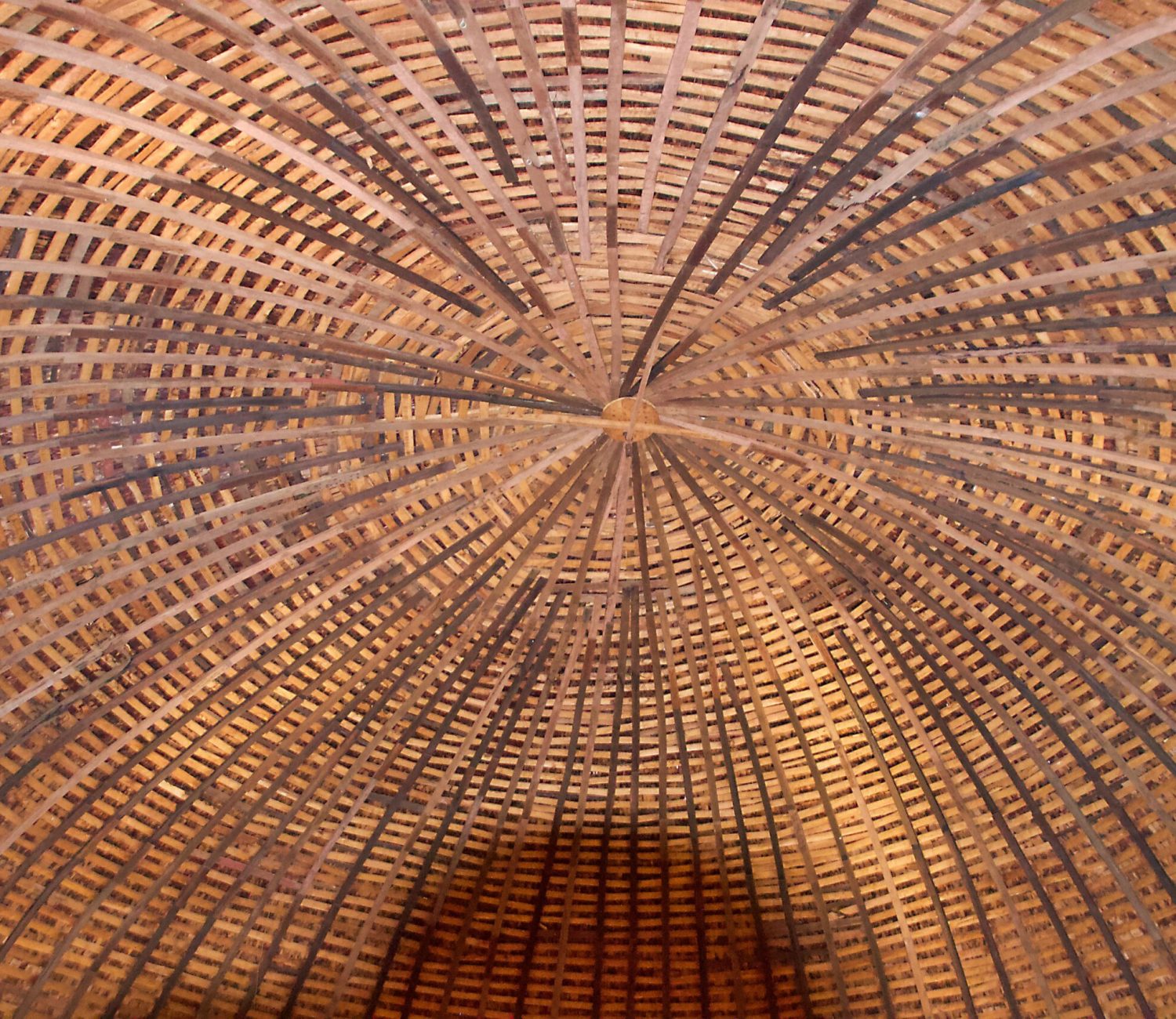
Restored and preserved, the Round Barn represents the ingenuity and uniqueness that appear throughout Route 66. Built in 1898 by W.H. Odor using locally harvested burr oak, its construction reflects both resourcefulness and innovation—its curved rafters were soaked in the Deep Fork River and bent into shape, creating a structure that still stands apart today.

Measuring 60 feet in diameter and rising 43 feet high, the barn’s circular design was inspired by the belief that round barns were more resistant to cyclones. While that idea was never proven, it shaped both the form and identity of the structure. In its early years, the loft served as a community gathering place, hosting square dances well into the 1930s.

As Route 66 took shape, the road through Arcadia evolved from a crude dirt path in 1917 to a paved highway by 1929, passing directly by the barn. From Dust Bowl migrants to wartime convoys and postwar travelers, the road—and the barn—quietly witnessed decades of movement and change.

After being added to the National Register of Historic Places in 1977, the barn faced near loss when it collapsed in 1988. Its survival today reflects the determination of a group of local retirees, known as the Over-the-Hill Gang, whose fundraising and restoration efforts helped bring the barn back to life. Reopened in 1992, its continued presence stands not only as a preserved structure, but as a reflection of the people who refused to let it disappear.
Seaba Station Motorcycle Museum — Warwick

The restored Seaba Station in Warwick on Route 66. Photo: “Seaba Station Motorcycle Museum” by Melodibit, licensed under CC BY-SA 3.0, https://commons.wikimedia.org/w/index.php?curid=36327981

Located in the small town of Warwick along Route 66, Seaba Station offers a glimpse into the mechanical history that helped define travel along the road. Built in 1921, the building originally served as a service station, providing fuel and basic repairs to early motorists navigating what was then an evolving highway.

Today, the restored station houses a collection of vintage motorcycles, small engines, and mechanical artifacts, reflecting a time when travel required both resilience and a hands-on understanding of the road. The displays, many of them compact and carefully arranged, capture the ingenuity of early motorized transportation and the role these machines played in connecting distant places.

Unlike some of the larger, more stylized attractions along Route 66, Seaba Station retains a quieter presence. Its modest scale and preserved structure offer a more intimate perspective—reminding visitors that the history of the road is not only found in its landmarks, but also in the tools and machines that made the journey possible.

Route 66 Historical Village — Tulsa

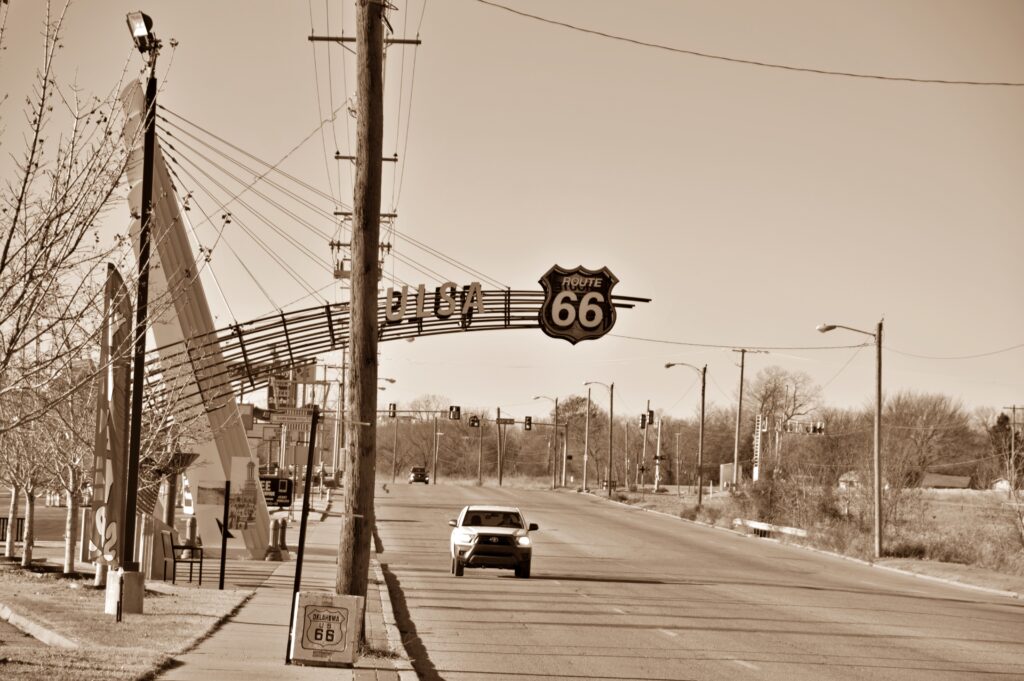
Sepia-toned image of a car driving under the Route 66 arch in Tulsa, Oklahoma near the Route 66 Historical Village
A car traveling beneath the Route 66 arch in Tulsa reflects the ongoing movement that connects the past and present along the historic road.

The Route 66 Historical Village in Tulsa offers a layered look at the industries and transportation systems that helped shape both the city and the road itself. Set along the Arkansas River, the site brings together restored structures and large-scale exhibits, including a towering oil derrick and a vintage steam locomotive, reflecting Tulsa’s deep ties to oil, rail, and early highway travel.

More than a single landmark, the village feels like a collection of moments from different eras—each one contributing to the broader story of Route 66 as both a working corridor and a cultural pathway.

Roadside Culture & Landmarks

Oklahoma carries one of the strongest expressions of Route 66 culture. Neon signs, restored service stations, diners, and museums appear regularly along the route, creating a sense of continuity that extends across the state.

Unlike shorter stretches where landmarks feel isolated, Oklahoma’s Route 66 feels interconnected. Preservation efforts, local pride, and tourism initiatives work together to keep the identity of the road visible and active.

Rather than isolated novelty, these landmarks feel embedded within their communities, reinforcing the idea that Route 66 developed as part of everyday life rather than as a series of attractions.

Traveling Through Oklahoma

Traveling Route 66 in Oklahoma often involves longer stretches of road between towns, allowing the landscape to play a greater role in the experience. The drive alternates between open spaces and concentrated areas of activity, particularly near Tulsa and Oklahoma City.

Because of its length, this portion of the route invites a slower pace. Rather than moving quickly between major stops, the experience benefits from allowing time for smaller, less obvious places to emerge along the way.

Want the full 8-state guide?  Download it free.