Rocky Mountain National Park: Returning to the High places
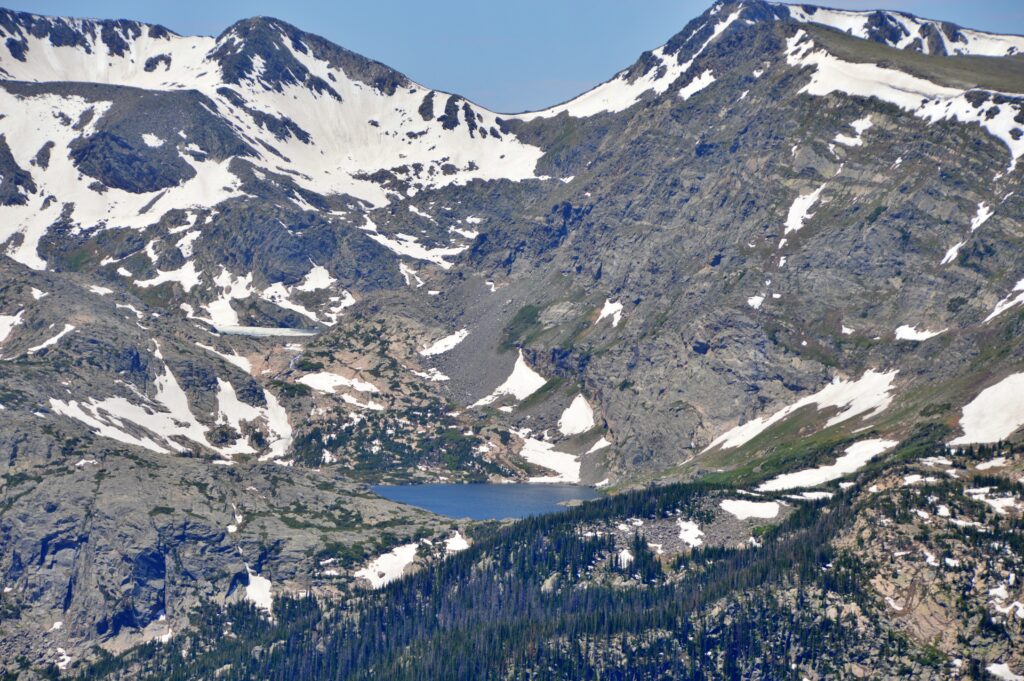
One of the remote Gorge Lakes glimmers far below in Forest Canyon, visible only with a zoom lens from Trail Ridge Road — a reminder of how much hidden alpine terrain the park holds beyond what’s visible from the pavement.
There are some places that stay with you long after you’ve left them.
Rocky Mountain National Park is one of those places.
I visited once before, but like so many national parks, one visit never feels like enough. There’s something about the elevation, the mountain light, and the sheer scale of the landscape that invites you back—not just to see it again, but to experience it differently the second time.
Taking It Slower This Time
On my first visit, I tried to see as much as possible. This time, I’m approaching it differently.
This trip isn’t about checking off landmarks. It’s about slowing down, noticing more, and returning to a place that feels both familiar and completely new. Instead of rushing from one viewpoint to the next, I’m paying more attention to the small details:
* the way the light changes through the day
* the patterns in the rocks
* the quiet moments between the bigger views
It’s less about “what to see” and more about **how it feels to be there**.
One of the most striking things about Rocky Mountain National Park is how quickly the landscape shifts.
In one stretch of road, you can move from:
* dense forests
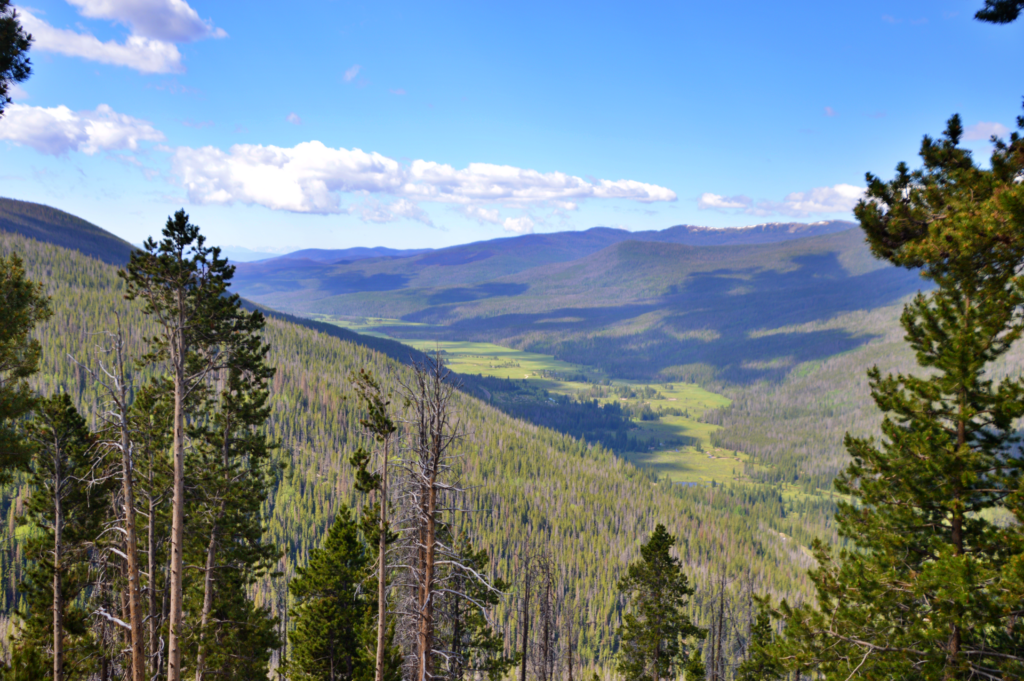
The Kawuneeche Valley stretches out below Farview Curve on Trail Ridge Road — a quiet contrast to the alpine tundra just a few miles up the road.
* to open meadows
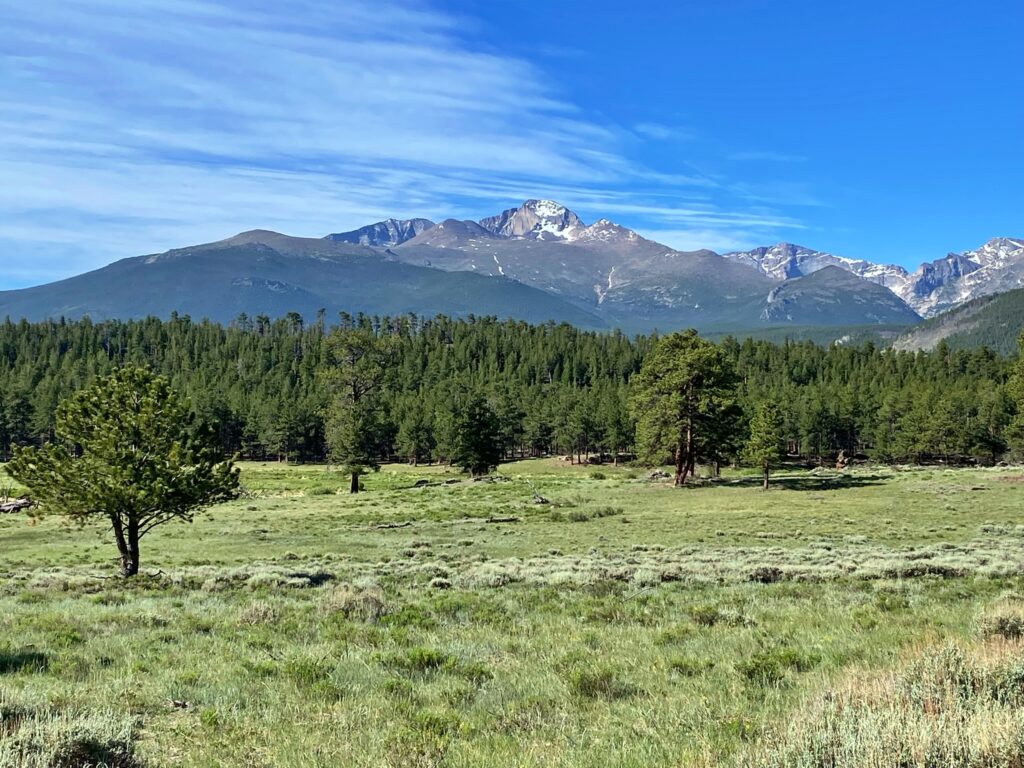
Longs Peak rises above Beaver Meadows, its jagged, snow-streaked summit visible across the open grassland — one of the park’s most classic views, and a favorite spot for spotting elk in the meadow below.
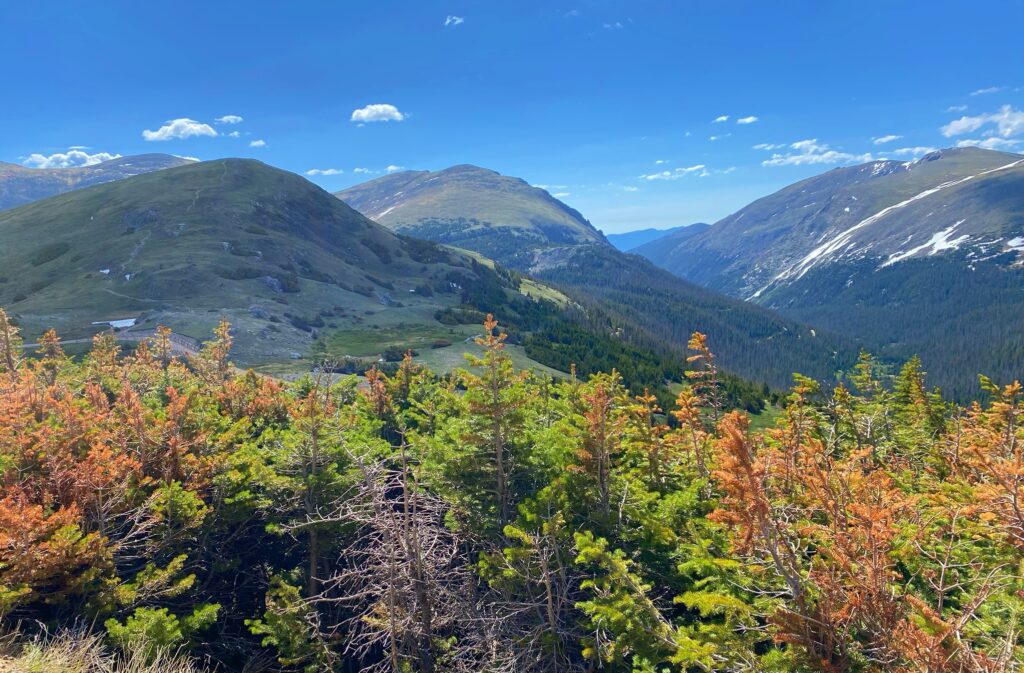
* to tundra above the tree line
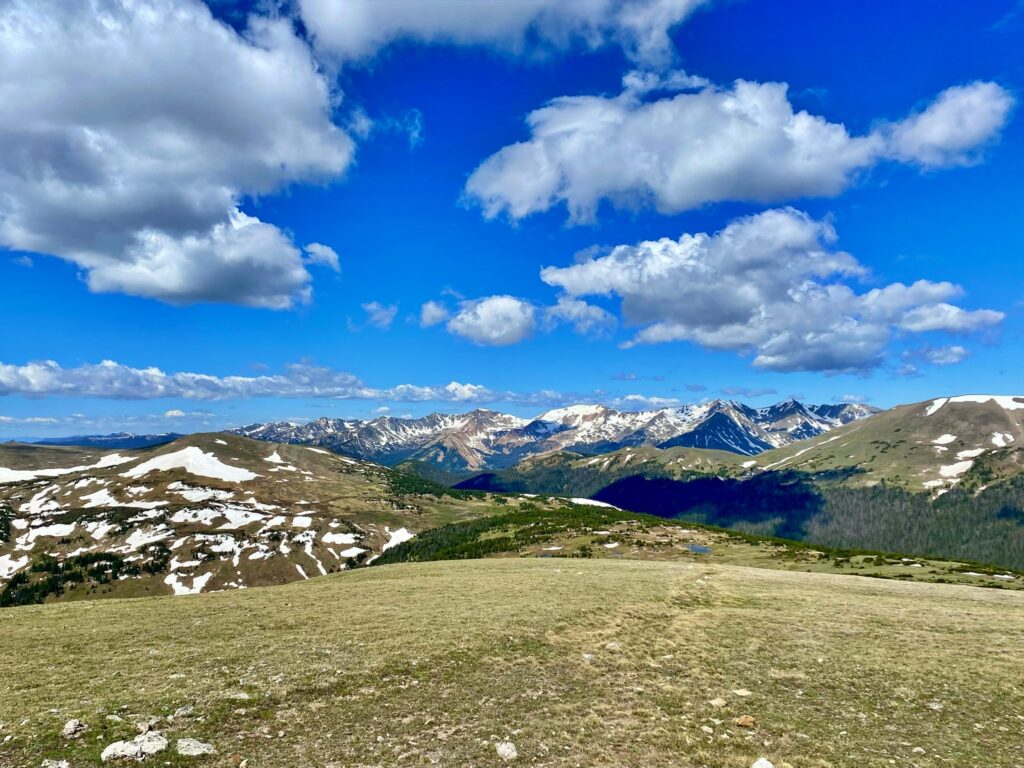
Alpine tundra stretches toward the distant, still-snow-covered peaks of the Gore Range.
Each area feels like a completely different environment, with its own texture, colors, and quiet rhythms.
It’s the kind of place where the journey between stops is just as memorable as the destinations themselves.
Finishing What I Started
On my first visit, I never made it to the trio of lakes that most people consider the park’s signature hike. This time, I made sure of it.
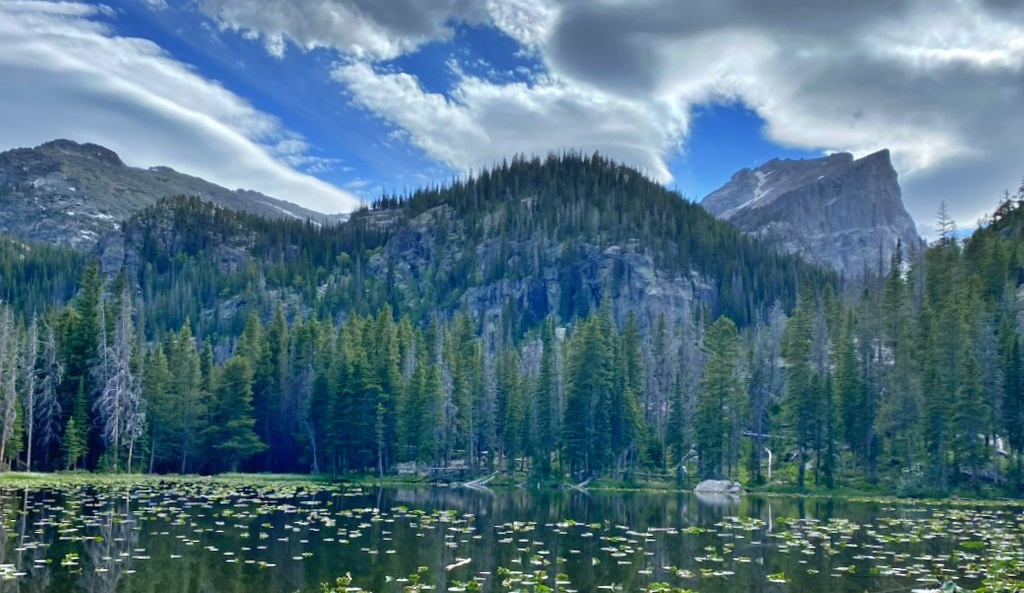
The trail climbs gradually from Bear Lake, past Nymph Lake first — small, lily-padded, and easy to underestimate before the trail keeps going.
Nymph Lake’s surface, dotted with lily pads, gives the small lake its name — the first stop on the trail toward Dream and Emerald Lakes, with Hallett Peak already visible in the distance.
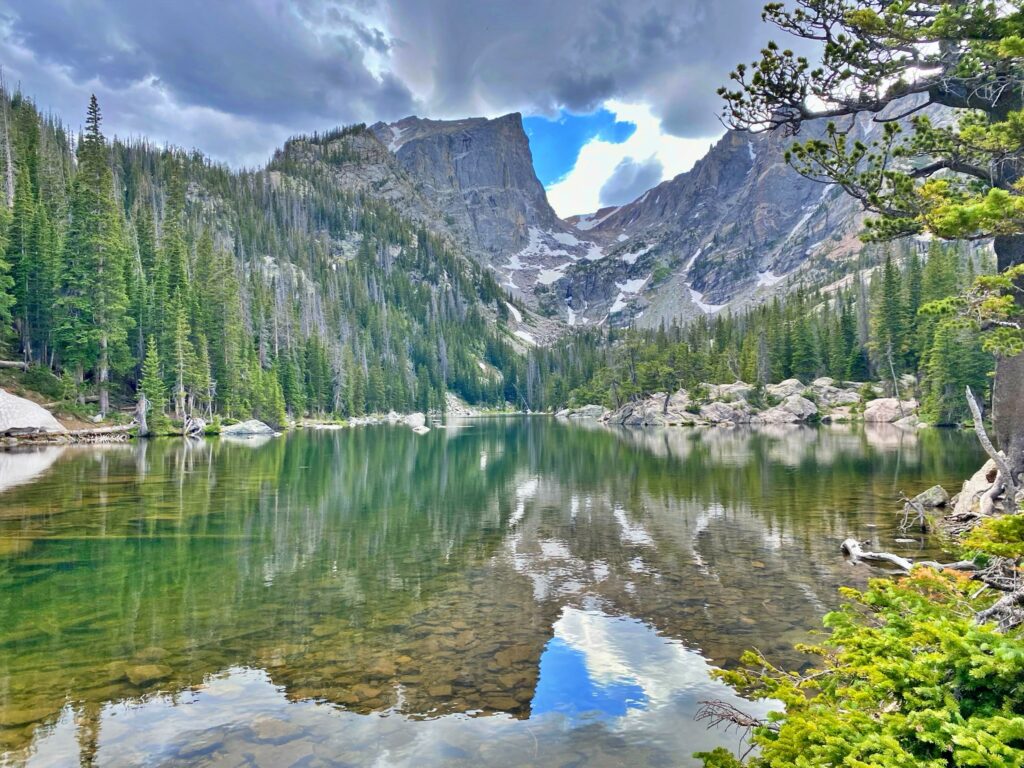
Dream Lake comes next, framed by Hallett Peak behind it.
Dream Lake’s glass-still surface mirrors Hallett Peak and Flattop Mountain almost perfectly — the second stop on the trail toward Emerald Lake, and the most photographed lake in the park.
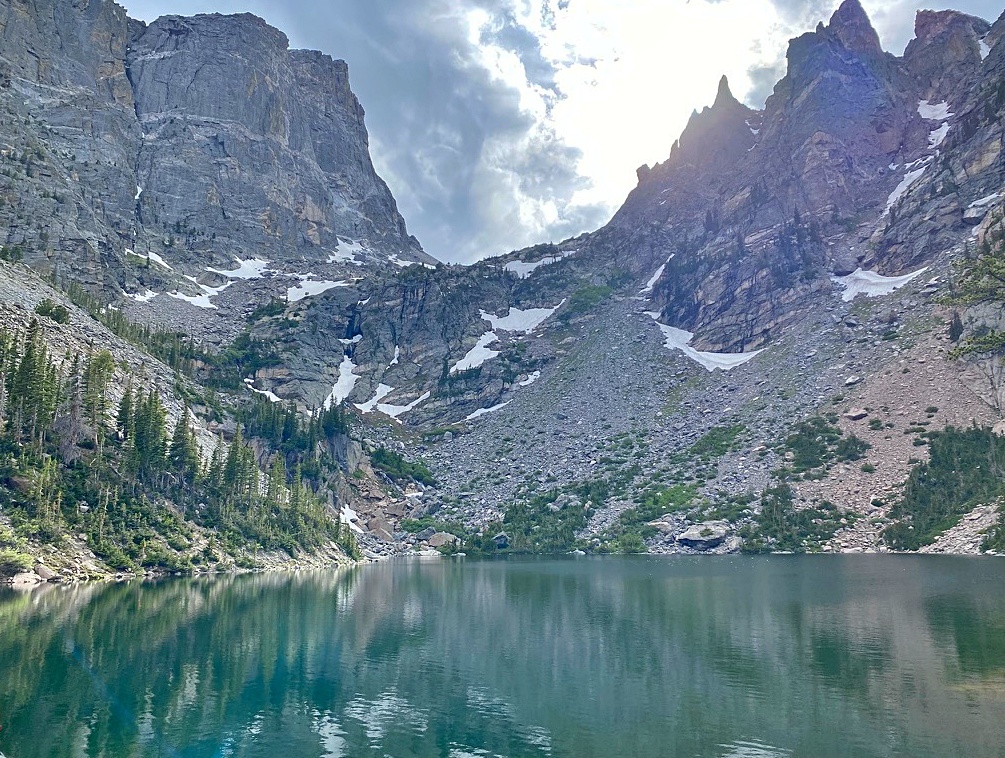
But it’s Emerald Lake, the final stop, that earns its reputation: a striking blue-green alpine lake set right at the base of Hallett Peak, fed by glacial runoff that gives the water its color.
Three lakes, one trail, and a view I’d been chasing since my first visit.
Emerald Lake, the final and most dramatic of three alpine lakes along one of Rocky Mountain National Park’s most popular trails, sits at the foot of 12,713-foot Hallett Peak — its glacier-fed water taking on a striking blue-green color that gives the lake its name.
Old Favorites, Revisited
Not everything on this trip was new. Some of it was about returning to places I already loved — Bear Lake, Lake Irene, and Sprague Lake all made the list again, along with the Alpine Visitor Center, perched at over 11,000 feet along Trail Ridge Road.
Old Fall River Road, on foot, with the kind of views that don’t get old on a second visit.
From the Alpine Visitor Center, we walked a portion of Old Fall River Road — the park’s original route to the high country, built as a one-way gravel road that predates Trail Ridge Road itself. On foot, away from the cars, the views felt even bigger than I remembered.
Exploring the East Side
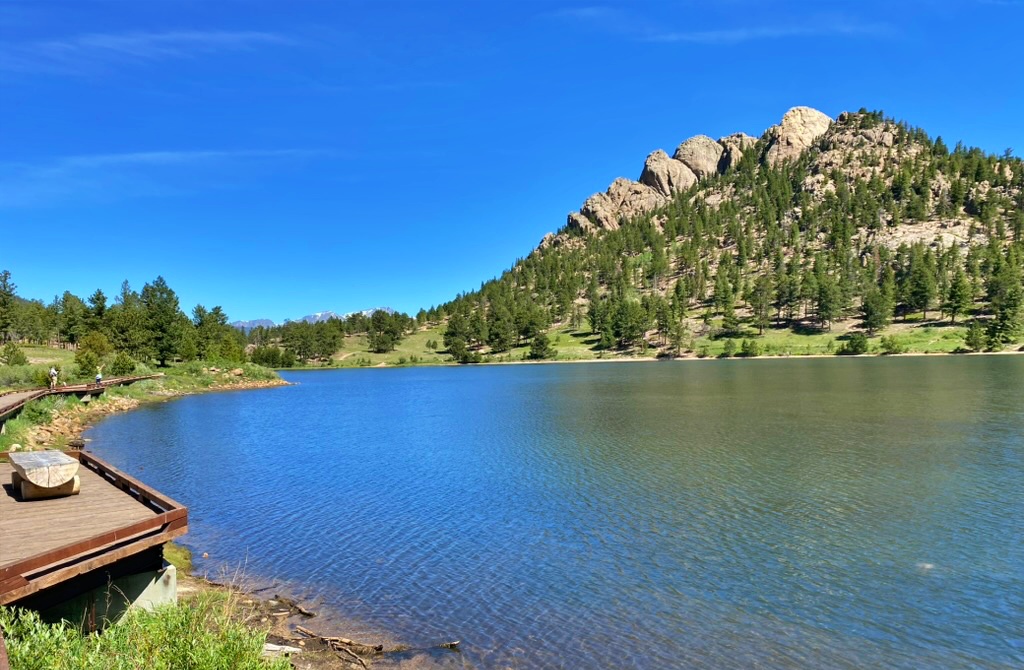
On my last trip, I never made it beyond the park’s most obvious stops. This time, I spent a full day on the east side — starting at Lily Lake, just south of the Estes Park entrance.
Lily Lake’s boardwalk and viewing deck offer an easy, accessible stop on the park’s east side, with a rocky, tree-covered ridge — and a distant ridge worth the climb — rising just beyond the shoreline.
I found what looked like bear tracks along the shoreline — a reminder of how much wildlife moves through this park unseen. Climbing the ridge above the lake rewards you with a wide, open view out over the valley below, the kind of payoff that only comes from leaving the main trail.
Wild Basin: Copeland Falls, Calypso Cascade, and Ouzel Falls
Further south, the Wild Basin area offers a completely different pace — dense forest, a rushing creek, and a string of waterfalls strung along one trail. Copeland Falls comes first, low and wide, just a short walk from the trailhead.
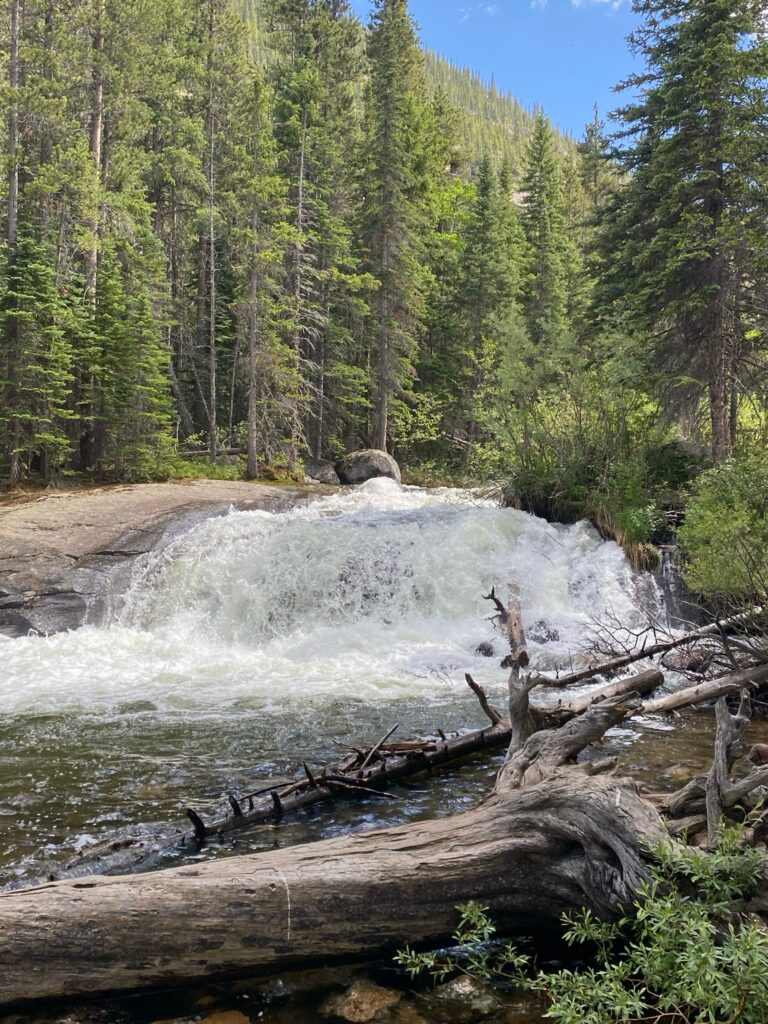
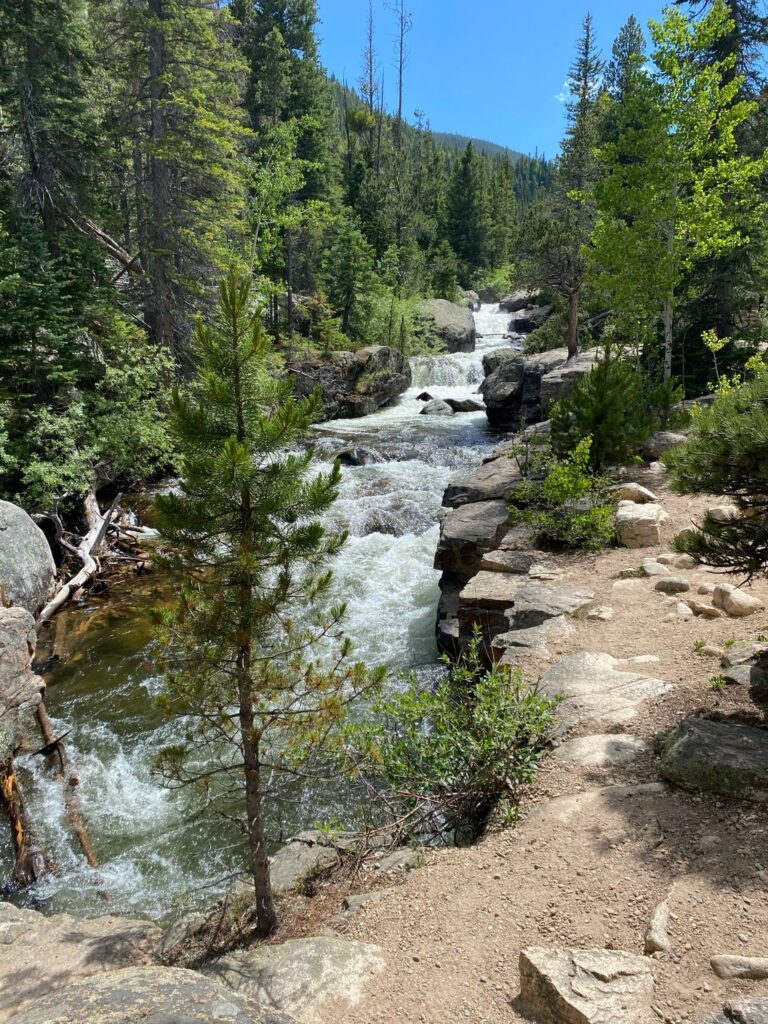
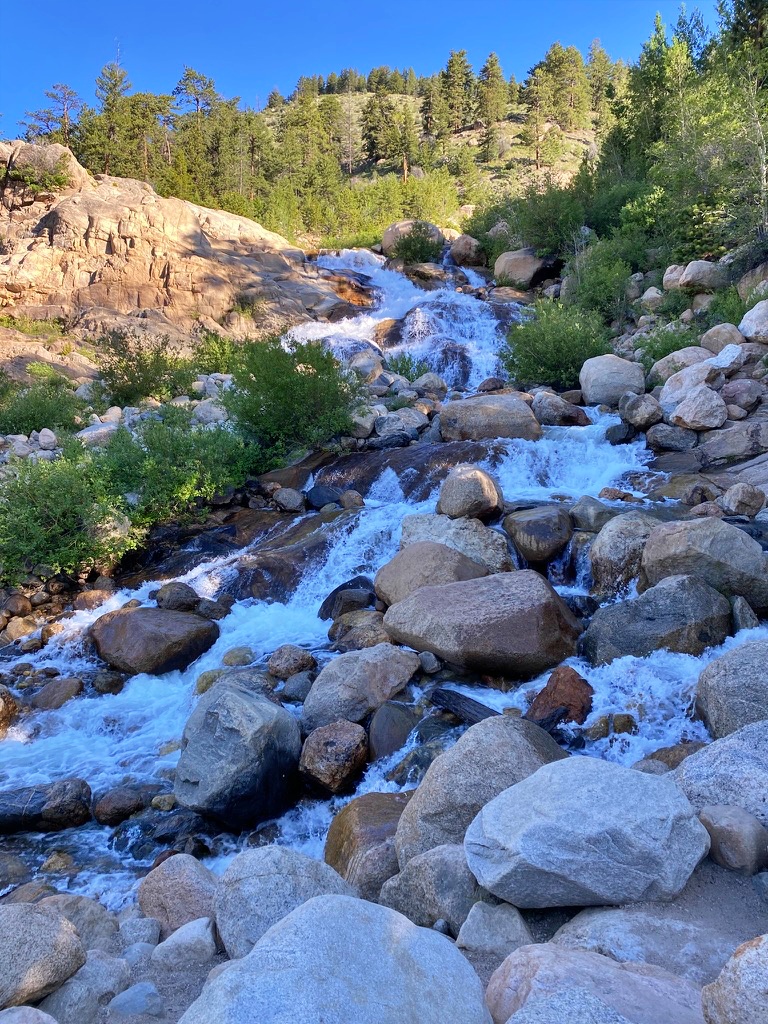
Lower Copeland Falls spills over smooth granite into a wide, calm pool along North St. Vrain Creek — a gentler drop than its upper counterpart, and the very first waterfall hikers reach on the Wild Basin trail.
Upper Copeland Falls tumbles over a series of rock tiers along North St. Vrain Creek — the first waterfall on the Wild Basin trail, and a gentle warm-up for the steeper cascades still ahead.
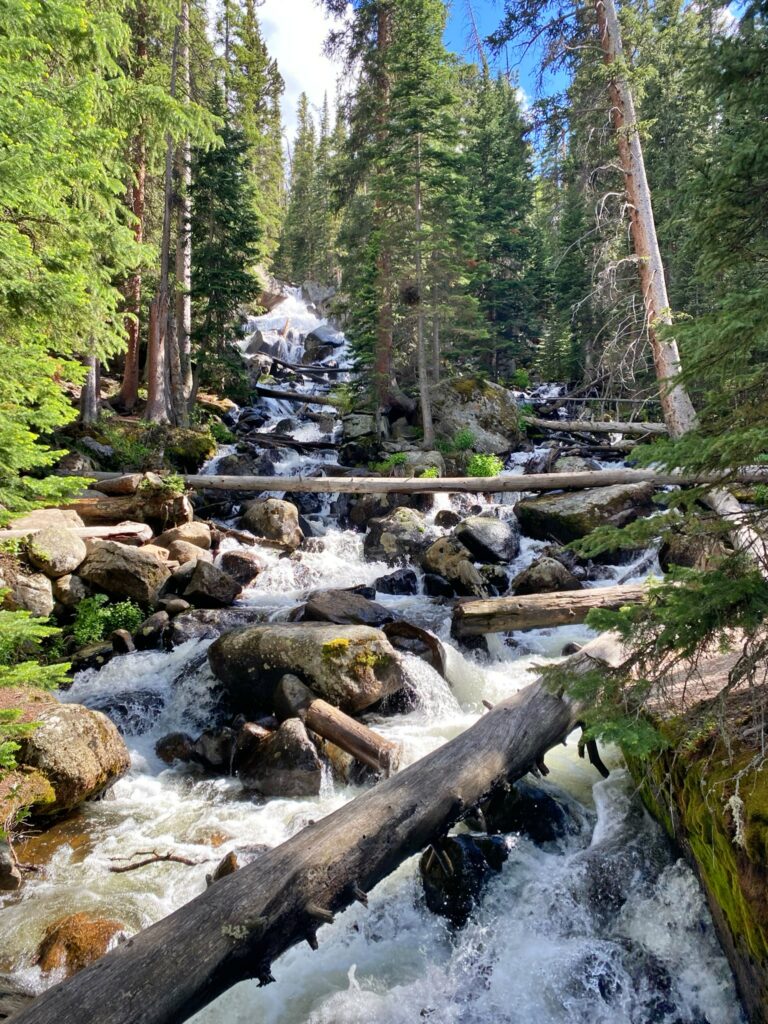
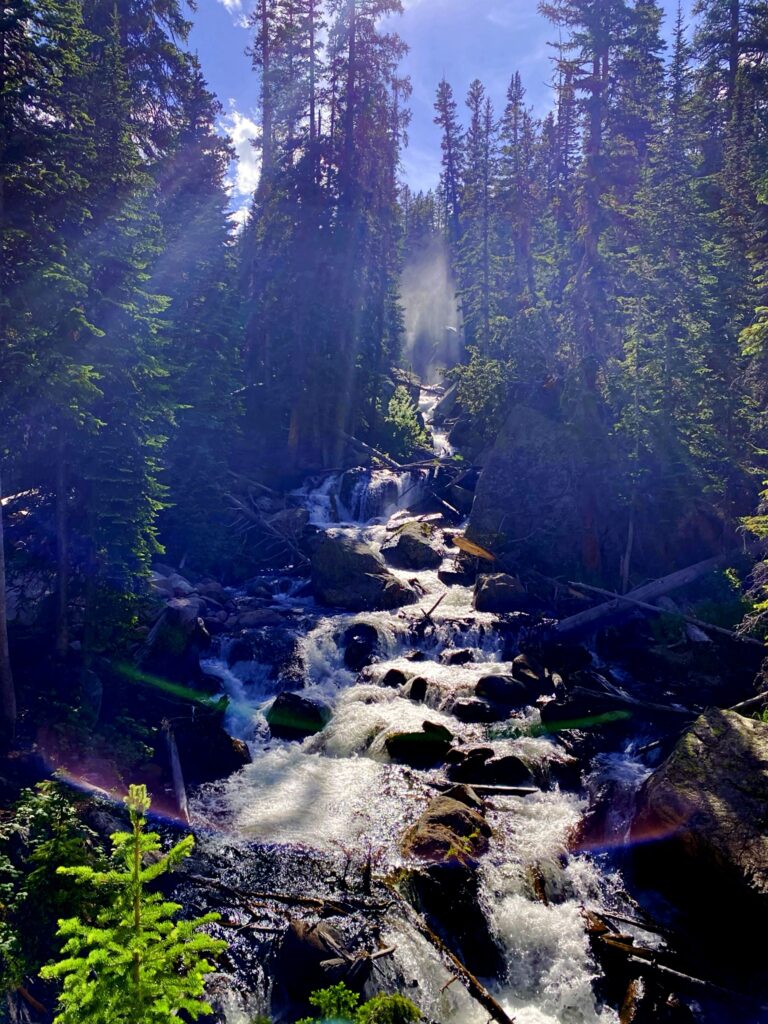
Calypso Cascade follows, tumbling steeply through the trees.
Calypso Cascades tumbles through a maze of boulders and fallen logs, the middle stop on Wild Basin’s trio of waterfalls and one of the more dramatic — a full-force rush of whitewater cutting through the forest.
Ouzel Falls, the farthest of the three, drops in a long, narrow ribbon that makes the extra mileage worth it.
Ouzel Falls churns over a long, rocky cascade in Wild Basin, with late-day mist rising off the water and catching the last of the sunlight through the trees — the farthest of the trail’s three waterfalls.
Wild Basin sees a fraction of the crowds that Bear Lake does, and it shows — quieter trails, more birdsong than footsteps, and waterfalls that feel like a reward rather than a photo stop.
The Alluvial Fan: Where the Dam Broke
Another first for me this trip was the Alluvial Fan, a boulder-strewn landscape near Horseshoe Park that looks almost out of place against the surrounding meadows — until you learn why it’s there.
Water still rushes through the Alluvial Fan’s boulder field today — a reminder of the 1982 Lawn Lake Dam failure that reshaped this valley in half an hour, scattering house-sized rocks across more than 40 acres.
On July 15, 1982, the earthen Lawn Lake Dam, built in 1903 high above the valley, failed just after 6 a.m. Roughly 30 million cubic feet of water tore down the Roaring River in about half an hour, scouring the valley up to 50 feet deep in places. When the flood reached the flatter basin below, it dropped tons of boulders and debris across more than 40 acres, creating the landscape now known as the Alluvial Fan. The surge went on to break a second dam downstream, sending a wave of water into the town of Estes Park itself. Three people lost their lives in the flood.
The trail through the site was rebuilt in 2020 to be fully accessible, crossing a 56-foot bridge over the Roaring River, with signage explaining how the landscape came to look the way it does.
Holzwarth Historic Site: A Dude Ranch Frozen in Time
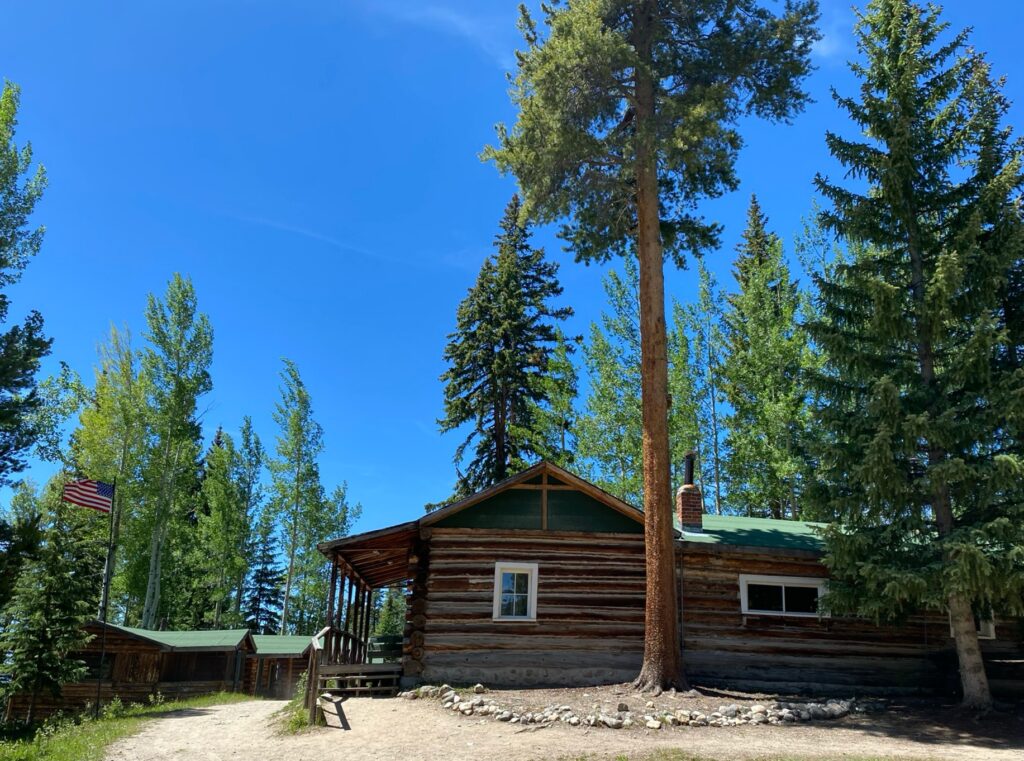
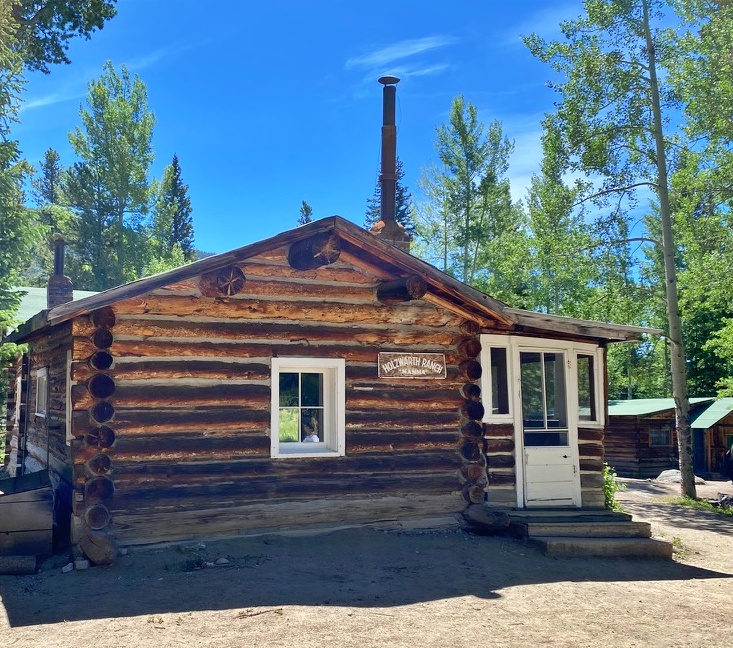
A log cabin at the Holzwarth Historic Site, tucked among towering pines in the Kawuneeche Valley.
On the park’s west side, in the Kawuneeche Valley, sits a piece of history I hadn’t explored before: the Holzwarth Historic Site, also known as the Never Summer Ranch.
German immigrant John Holzwarth Sr. settled here in 1917 after Colorado’s prohibition laws shut down his Denver saloon. What began as a homestead and cattle ranch turned into something else entirely once tourists discovered the valley — the family opened the Holzwarth Trout Lodge, charging visitors $2 a day (or $11 a week) for horseback riding, hunting, and, as one old sign put it, “all the trout you can catch.” It’s widely considered the first dude ranch in Colorado.
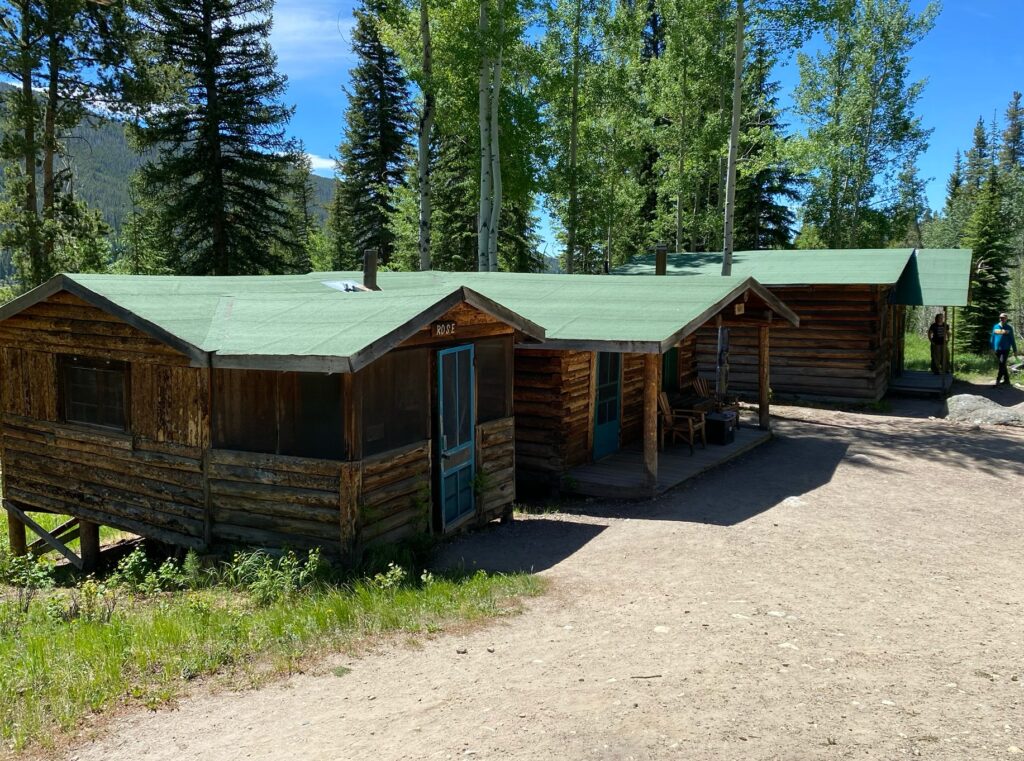
Named guest cabins like “Rose” still stand at the Holzwarth Historic Site, each with its own screened porch — a glimpse of what hospitality looked like at Colorado’s first dude ranch nearly a century ago.
The ranch operated for decades before John Holzwarth Jr., at 71 years old, sold the property in 1974 so it could be preserved for the public rather than developed. Today, a short, easy trail leads to the original cabins — including the Mama Cabin, where Sophia Holzwarth once cooked three meals a day for guests — still standing much as they did in the 1920s.
Mama Cabin, where Sophia Holzwarth once cooked three meals a day for dude ranch guests, still stands at the Holzwarth Historic Site much as it did in the 1920s — log walls, tin chimney pipe, and all.
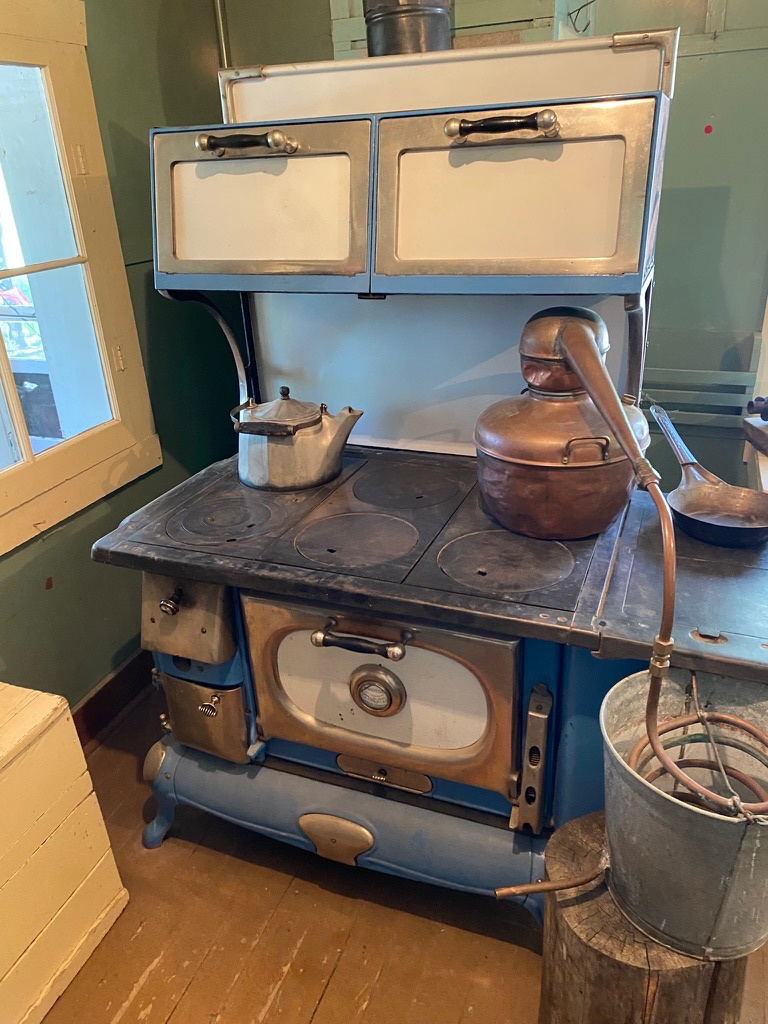
Sophia Holzwarth’s blue wood cookstove still sits where she used it to feed dude ranch guests three meals a day — copper kettles and all, a window into the daily labor behind the ranch’s hospitality.
Horseback Riding at Jackson Stables
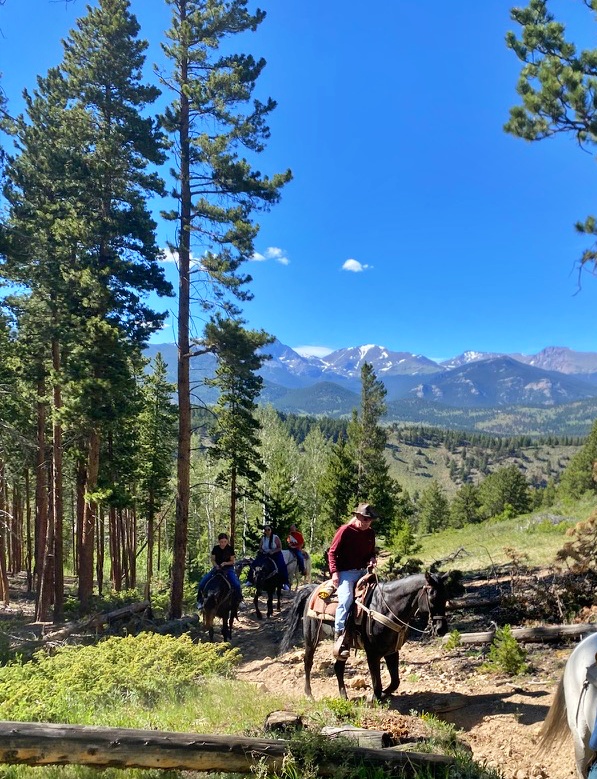
For a different pace entirely, we spent an afternoon on horseback with Jackson Stables, riding a route that combined their Deer Meadows and Glacier Basin trails along Glacier Creek. The terrain climbs steadily, steep enough in places to feel like real effort even from the saddle, but it rewards you with views looking down over the creek and out toward the Front Range.
Riders make their way along the Glacier Basin trail with Jackson Stables, with the Rocky Mountains framed perfectly through the trees — proof that some of the best mountain views come from the saddle.
Partway up, the trail offers a view down across the valley to Glacier Falls — a roughly 30-foot waterfall on Glacier Creek that’s usually reached on foot from a completely different trailhead. Seeing it from horseback, across the distance, gave it a different kind of scale than photos of hikers standing at its base ever do.
Why Rocky Mountain National Park Stays With You
Some parks impress you. Others stay with you.
Rocky Mountain National Park does both.
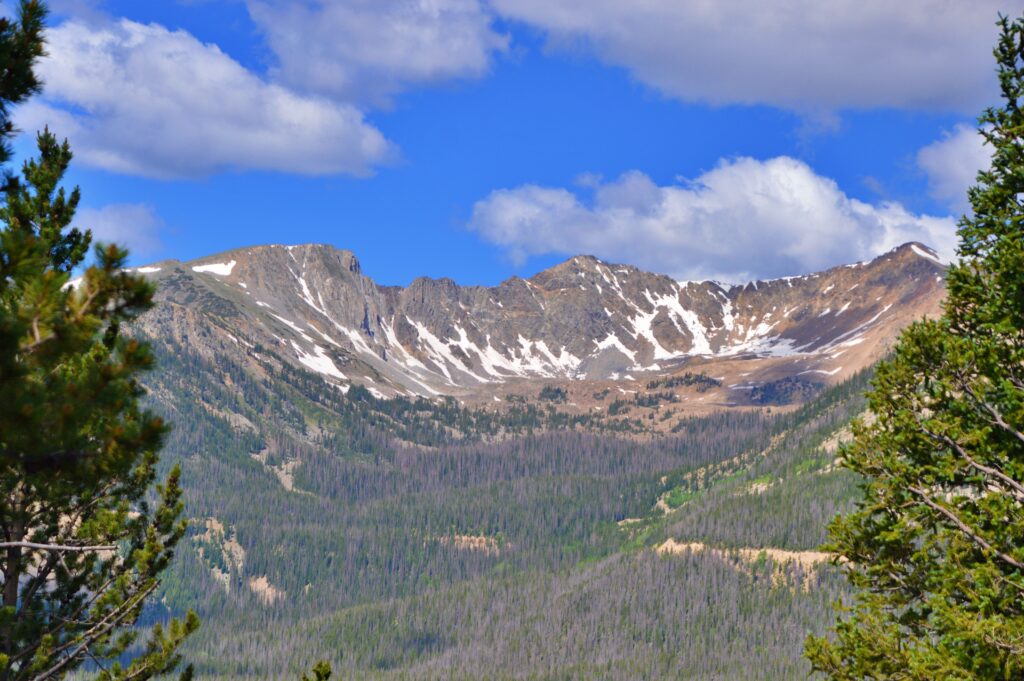
The Never Summer Mountains catch the light on the western edge of Rocky Mountain National Park.
It’s the kind of place that asks you to look up, slow down, and take it in—not all at once, but in pieces.
This trip filled in gaps my first visit left behind: three lakes I’d been chasing, a ridge I’d never climbed, waterfalls I’d never heard rushing, pika I’d never spotted, and a hundred-year-old ranch I’d never wandered through. And even after finally reaching all of it, part of me is already thinking about what I missed this time.
Signature spots worth your time:
Bear Lake — reflections are best before 8am
Nymph, Dream & Emerald Lakes — the trail worth returning for
Trail Ridge Road & the Alpine Visitor Center — drive it end to end at least once
Old Fall River Road — walk a portion for views without the traffic
Lily Lake & the ridge above it — for the view, and maybe the bear tracks
The Alluvial Fan — for the history hiding in plain sight
Wild Basin (Copeland Falls, Calypso Cascade, Ouzel Falls) — for the quiet
Jackson Stables — for a different way to see Glacier Creek
Holzwarth Historic Site — for the history
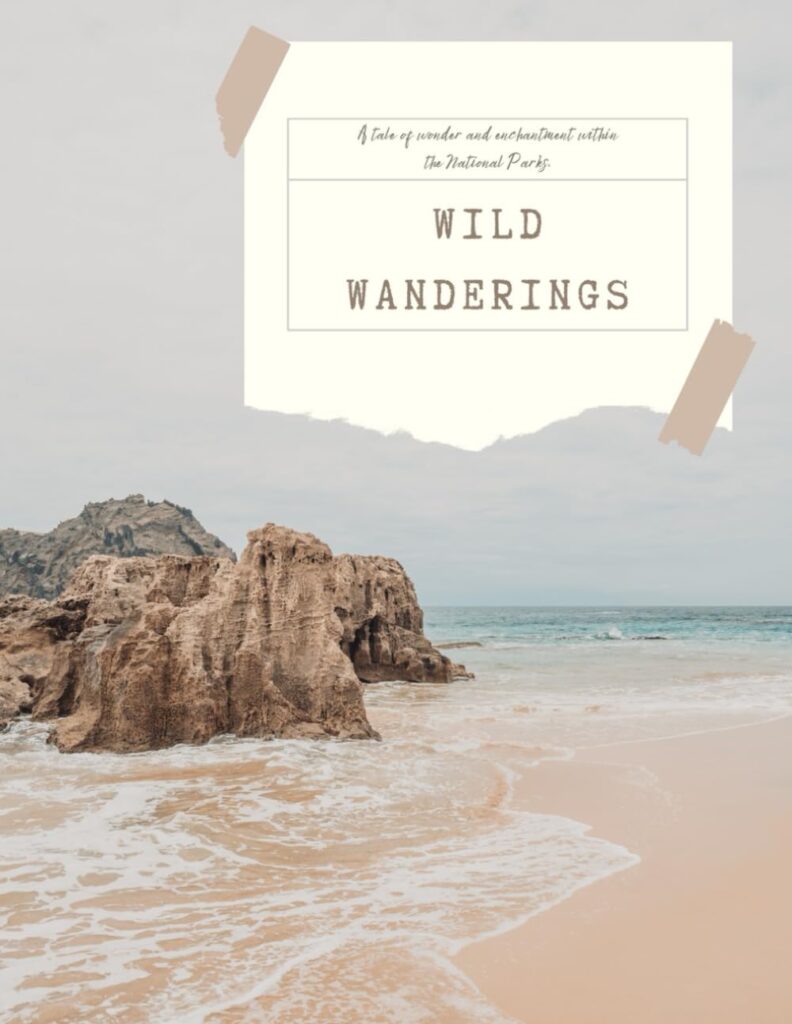
Wild Wanderings: A National Park Journal
National parks have a way of leaving lasting impressions—quiet moments, unexpected views, and details that often slip past unless there’s space to notice them.
Wild Wanderings was created as a companion to thoughtful travel. Rather than serving as a checklist, the journal offers room to slow down, reflect, and record the experiences that shape each visit, whether it’s a first impression at a scenic overlook or a familiar trail walked again.
What You’ll Find Inside
The Wild Wanderings National Park Journal is designed to support experience-led travel.
Each section provides space to:
capture first impressions and moments that linger
note standout trails, viewpoints, and wildlife encounters
reflect on how a place felt, not just what was seen
Practical elements are included where helpful, but the emphasis remains on observation and memory rather than itinerary.
A Companion to the Writing
The journal was created alongside the writing on Discover US Adventures and is meant to complement it—not replace it.
While the site explores national parks and destinations through long‑form, experience‑focused storytelling, the journal provides a personal space to document your own encounters with these places.
Availability
Wild Wanderings is available for purchase through Amazon in print.
As an Amazon affiliate, Discover US Adventures may earn a small commission from qualifying purchases made through links on this page. This comes at no additional cost to you and helps support the continued work on this site.
Whether you’re visiting your first park or returning to places already familiar, Wild Wanderings invites you to travel with attention and carry those experiences forward.