Blanchard Springs Caverns: Arkansas’ Newest State Park
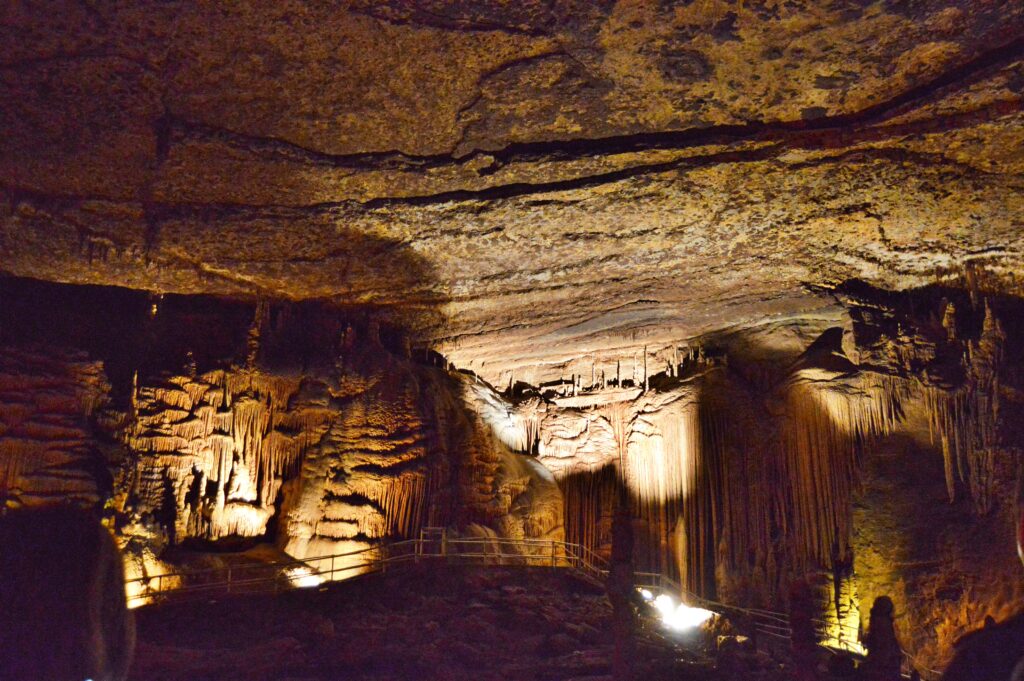
one of the most beautiful caves I’ve ever walked through
Blanchard Springs Caverns doesn’t advertise. It’s not sitting off a major highway, and it doesn’t show up on the usual lists of Arkansas’s most-photographed spots. You have to actually know to look for it, tucked into the Ozark National Forest well off the beaten path. And that’s exactly why it deserves more attention than it gets — this isn’t a quick stop on the way to somewhere else. It’s a genuine destination in its own right, and it’s absolutely worth the drive to get there.
I’ve been to Carlsbad Caverns, and I’ve been to Mammoth Cave — and I’ll say it plainly: Blanchard Springs rivals Carlsbad, and it’s simply more beautiful than Mammoth. That’s a bold claim, I know, but standing inside the Cathedral Room, I understood exactly why Arkansas decided this place deserved state park status.
Arkansas’ Newest State Park
Blanchard Springs Caverns has been open to the public since 1973, tucked into the Sylamore District of the Ozark National Forest near the tiny community of Fifty-Six — about 2.5 hours from Little Rock. But it only recently joined the Arkansas State Parks system as the state’s 53rd state park, the result of a partnership between Arkansas State Parks and the U.S. Forest Service.
The caverns themselves span eight and a half miles of explored passage, though visitors only see a small, carefully developed portion of that on the guided tours.
There’s a bit of urgency to visiting this year specifically: after the 2026 season wraps up at the end of October, the site is closing for its first major renovation since it opened over fifty years ago, with a reopening planned for 2028. If you want to see it in its current form, this is the window.
Inside the Caverns
We did both the Dripstone Trail and the Discovery Trail on this trip. The Dripstone Trail is the classic route — a half-mile walk through some of the caverns’ most decorated chambers, past stalactites and soda straws and a natural stone bridge, ending in the Cathedral Room.
That room alone is worth the trip: over a thousand feet long, anchored by a stone column that stands six stories tall. It’s the kind of scale that photographs genuinely can’t capture — you feel small in there in the best possible way.
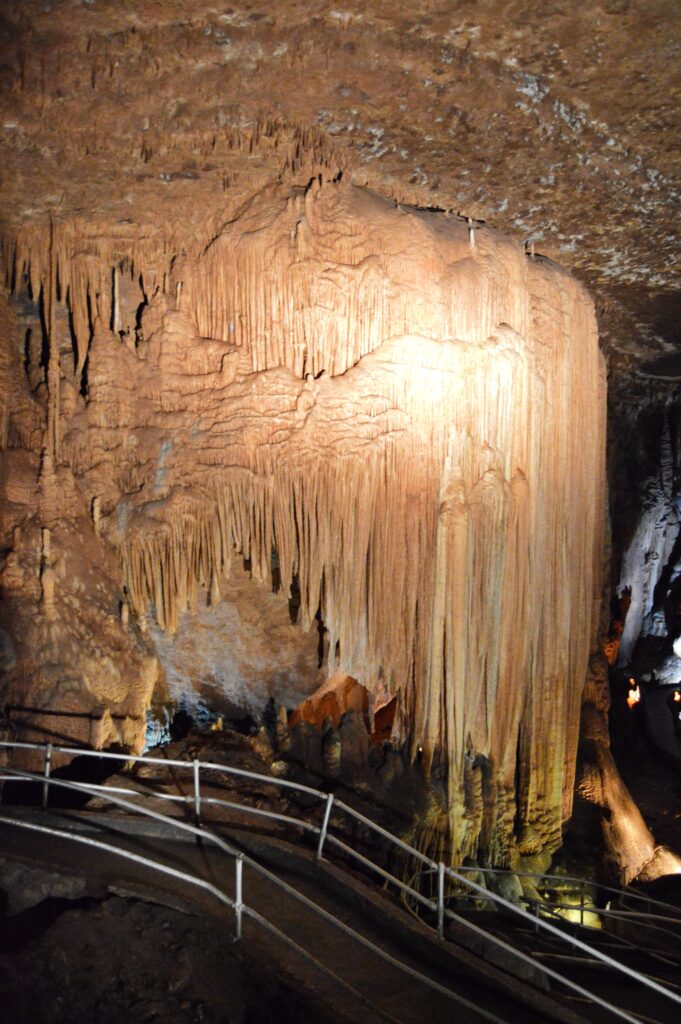
One of the most popular stops along the Dripstone Trail is the Soda Straw Room, and it earns that popularity honestly. Soda straws are the thinnest, most delicate stalactite formation there is — hollow, fragile tubes that grow just a fraction of an inch every hundred years, and this room has hundreds of them hanging in dense clusters from the ceiling.
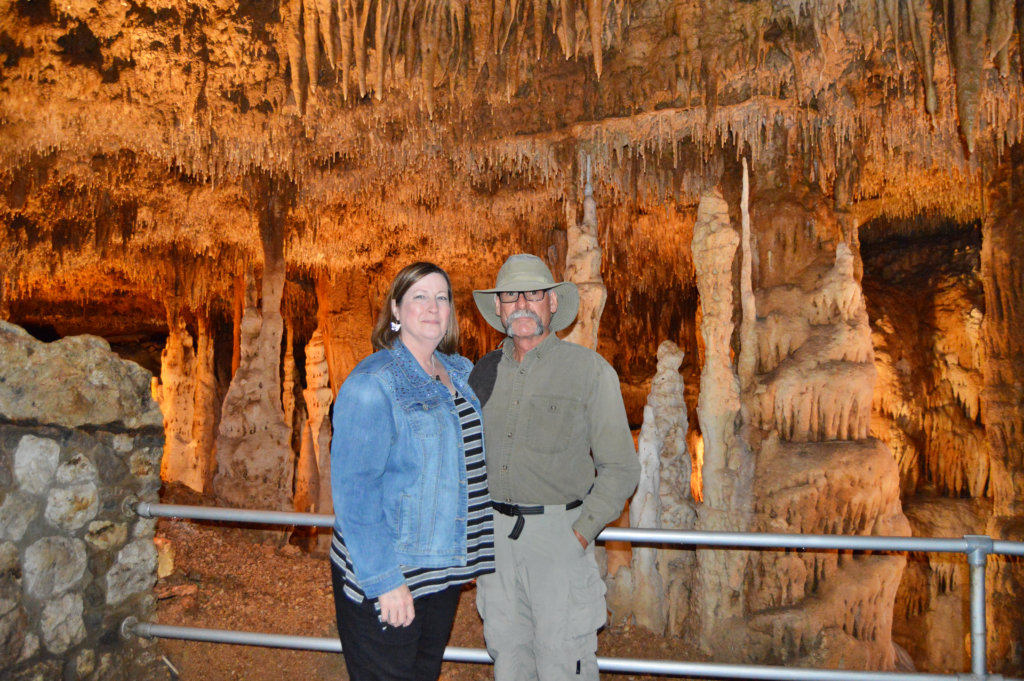
Photos genuinely don’t do it justice; the sheer density and fragility of them is something you have to stand under to really appreciate. It’s one of those rooms where you find yourself just staring straight up for a while.
The Discovery Trail is a different experience entirely — darker, longer, and it takes you much farther into the cave. Rather than looping through decorated show rooms, it follows the underground stream that carved the caverns in the first place, descending 366 feet below the surface — past the Natural Entrance, the Rimstone Dams where the stream pools along the way, and the Ghost Room, with its pale, ghostly flowstone.
It’s more walking than the Dripstone Trail (there are nearly 700 stair steps along the route), and the lighting is dimmer and more atmospheric, since you’re tracing the same path the water actually took to form the cave.
I’ll be honest: if I had to pick a favorite, it’s the Dripstone Trail, hands down. The Discovery Trail is genuinely worth doing — it shows you a different side of the cave, the depth and the raw geology of it, in a way the Dripstone Trail doesn’t. But it doesn’t have quite the same “wow” factor.
The single thing I remember most vividly from that trail isn’t a formation at all — it’s a massive pile of bat guano along the route, and a warning not to touch the railings along the walkway because they also have bat guano on them. Not exactly the Cathedral Room, but memorable in its own way, and a good reminder that this is still very much a working, living cave.
If two guided tours aren’t enough cave for you, there’s a third option we didn’t take: the Wild Cave Tour, a three-to-four-hour trip into the undeveloped sections of the cave that are otherwise closed to the public.
It’s the real spelunking experience — crawling on hands and knees, climbing steep slopes, squeezing under low ceilings, and getting genuinely dirty in the process — ending at a formation called the Titans, a cluster of towering, missile-shaped columns.
Hard hats, kneepads, coveralls, and gloves are provided, but you’ll want sturdy boots and a change of clothes for after. It’s reservation-only and limited to small groups, so it’s not something you can just show up and add on — but it’s there for anyone who wants to go past where the paved trails end.
One practical thing worth knowing before you go: the caverns hold a constant 58 degrees year-round, with high humidity, regardless of the season outside. Bring a light jacket even in the middle of summer, and wear shoes with real tread — the paved trails inside stay damp.
The Spring and Mirror Lake
The caverns aren’t the only water feature worth your time here. A short walk from the visitor center, the Blanchard Spring Trail leads to the real star of the surface world: the spring itself, gushing straight out of the mountainside.
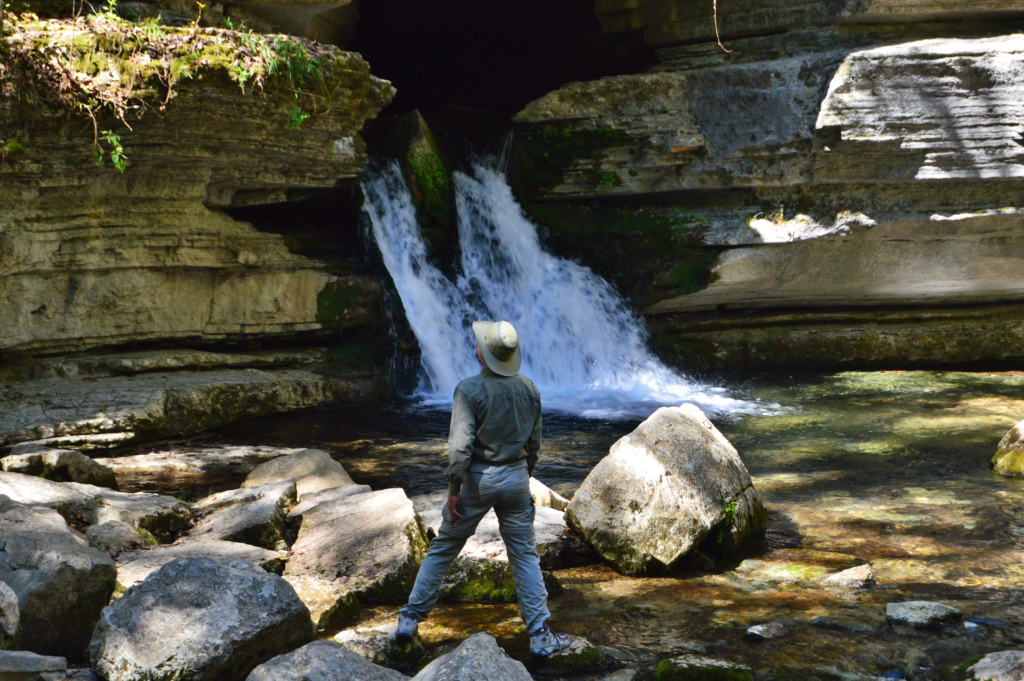
This is the same water that carved the caverns you just walked through, finally emerging back into daylight. The trail is fully paved and wheelchair-accessible, leading to an overlook platform where you can watch the spring pour out of the rock — and on a hot day, that cold water is genuinely refreshing just to stand near.
From the spring, the trail continues along the creek toward Mirror Lake, crossing a lovely old stone arch bridge along the way — one of my favorite spots on the whole property. It’s a quiet, shaded stretch, the kind of walk you don’t rush through.
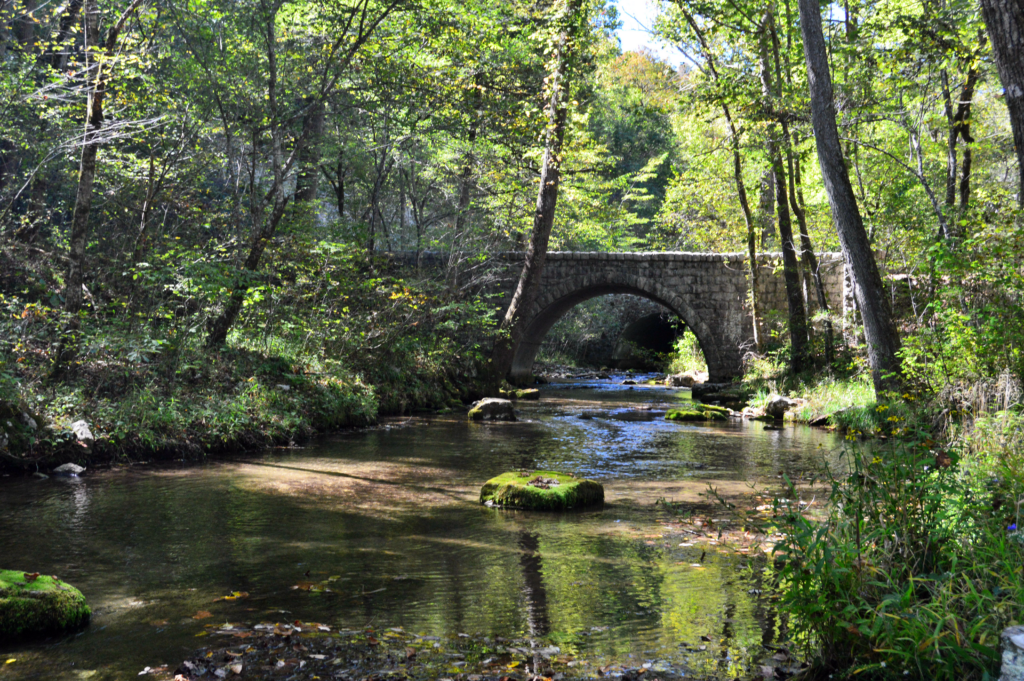
From there, that same water flows downstream and pools into Mirror Lake — a glassy, spring-fed lake formed by a dam the CCC built back in the 1930s, complete with its own two-tiered waterfall cascading in.
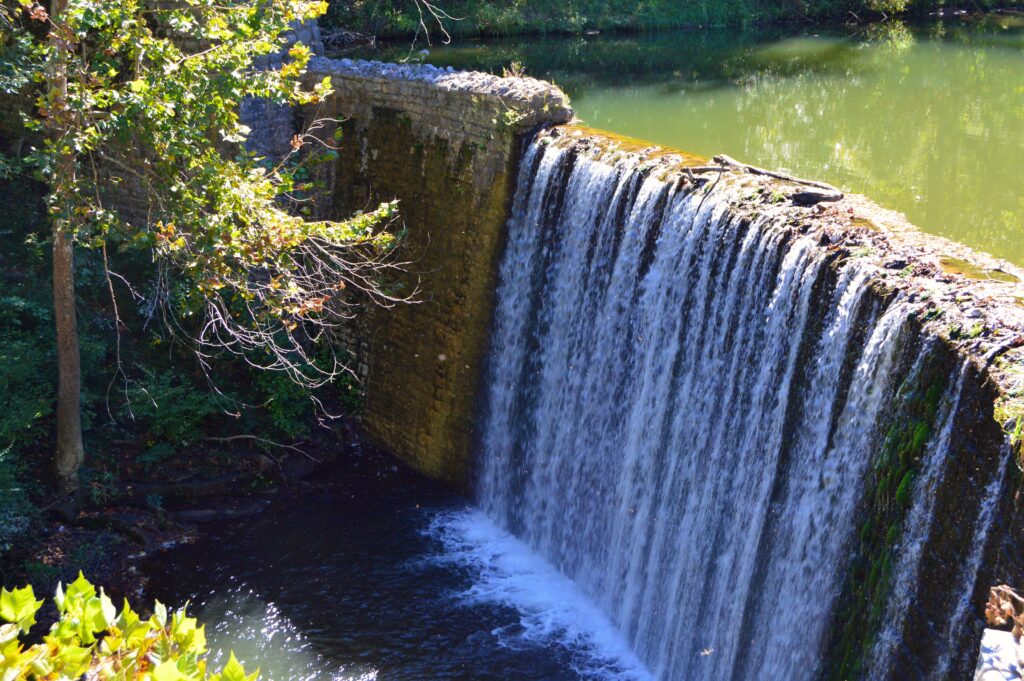
Mirror Lake is stocked with rainbow trout for fishing but swimming is not allowed, so if you want to cool off after the hike, you can swim and wade in the nearby crystal-clear waters of North Sylamore Creek (swim at your own risk).
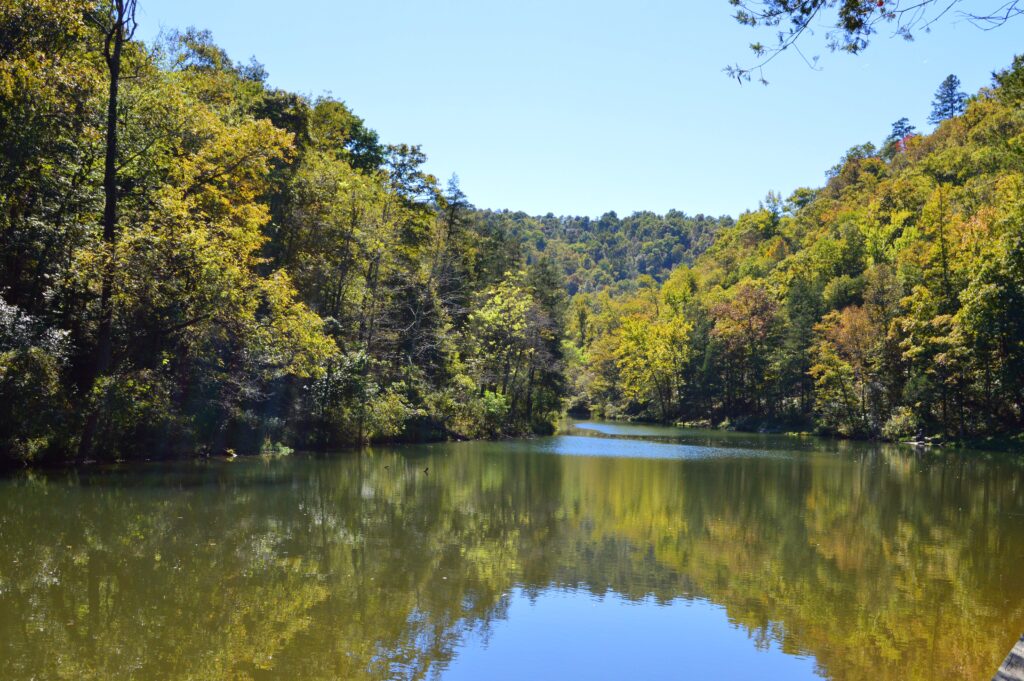
I saw Mirror Lake myself, and while it’s beautiful in its own right, the spring overlook is honestly the more memorable of the two — there’s something almost hypnotic about watching all that water pour straight out of solid rock.
Mountain View: The Folk Music Capital of the World
Blanchard Springs sits just a few miles from Mountain View, a small Ozark town that’s earned itself a genuinely great nickname: the Folk Music Capital of the World. If you’re making a day of the caverns, it’s worth building extra time into your trip for this town alone.
The story behind that title starts with one man: Jimmy Driftwood. Born just outside Mountain View in 1907, Driftwood spent decades as a schoolteacher before the rest of the world ever heard his name.
In 1936, he wrote a song for his sixth-grade American history class to help them remember the Battle of New Orleans — set, fittingly, to the tune of an old fiddle reel. Two decades later, that same song became a nationwide hit for Johnny Horton, topping both the country and pop charts and picking up a Grammy along the way.
Driftwood went on to write more than 6,000 songs over his lifetime, but he never really left teaching behind — he just traded a classroom for a mountain.
Driftwood used his newfound fame to champion the traditional music of his home region, helping found the Rackensack Folklore Society and lobbying Congress directly for the funding that built the Ozark Folk Center, which opened in Mountain View in 1973.
It’s still a state park today — a living history site with craft demonstrations, a large music auditorium, and regular traditional performances, built specifically to preserve the folkways of the Ozarks rather than just display them behind glass.
After a falling-out with the Folk Center in the 1970s, Driftwood and a group of fellow musicians built their own venue north of town — the Jimmy Driftwood Barn, a simple wood-frame building where folk and mountain music is still played live, to this day, most weekends. There’s something fitting about a place built specifically so the music wouldn’t stop.
Driftwood was also instrumental in preserving Blanchard Springs Caverns itself. He’s the voice you actually hear singing in the orientation film shown at the visitor center before you head underground — so in a strange way, the man from Mountain View is with you for the whole trip, above ground and below.
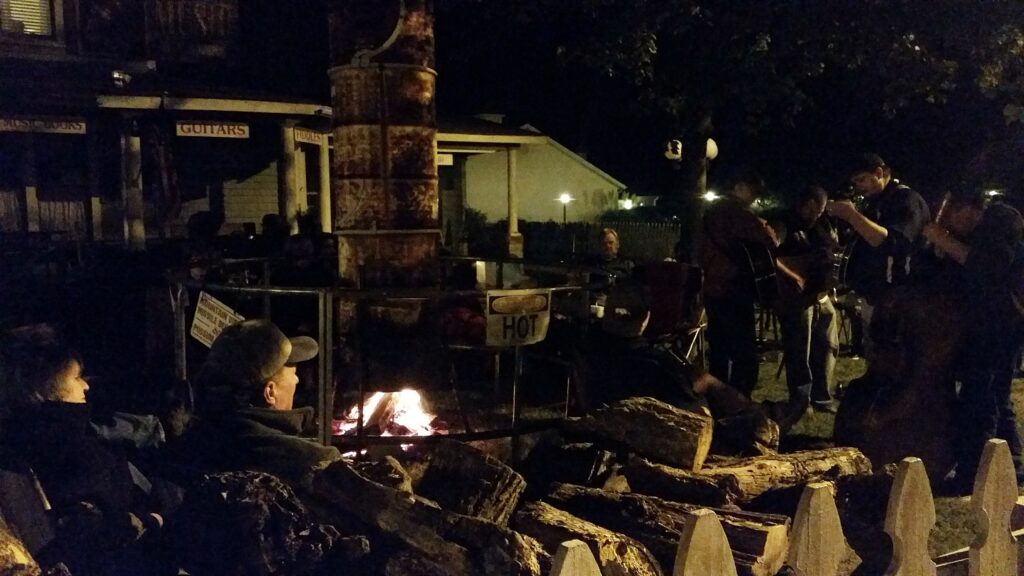
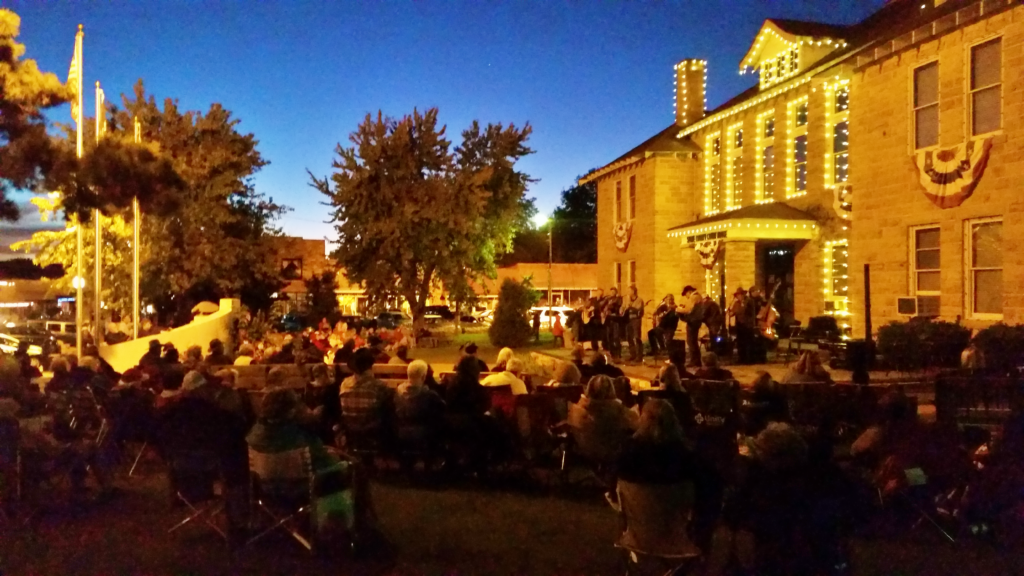
One of my favorite things about Mountain View, though, has nothing to do with a ticket or a scheduled show. In the evenings, groups of musicians simply gather on the downtown square and play — no cover charge, no formal stage, just folks pulling up a chair and picking.
What genuinely surprised me was the age range. This isn’t a scene kept alive by nostalgia alone; there were young people both performing and sitting in to listen, which says something good about how deeply this music is actually woven into the town rather than just being preserved as a museum piece. If you’re into that kind of thing, it’s worth wandering the square after dinner and just following the sound.
Hanging off the railing that surrounds the tall metal fire tower was a sign that read “Missile Defense and Possum Smoker” — a little tongue-in-cheek Ozark humor that tells you exactly what kind of town you’ve wandered into.
Honestly, Mountain View might be one of Arkansas’s best-kept secrets. It’s a genuinely hidden gem — small enough to feel unhurried, but with far more going on than a town its size has any right to have.
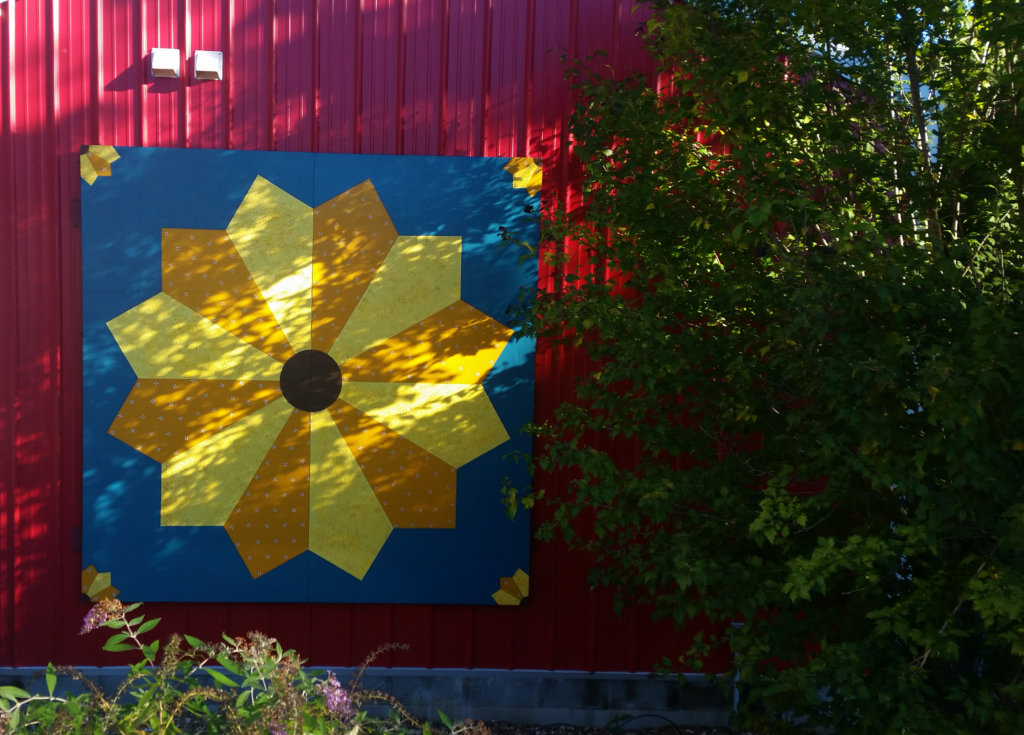
One more thing that enjoyed while visiting Mountain View: the Stone County Quilt Trail. This is a series of hand-painted, large-scale quilt blocks displayed on barns, historic buildings, and homes throughout the county — a rolling, open-air gallery celebrating Ozark heritage and traditional quilting art.
The Ozark Country Inn, where we stayed, has its own “Home” quilt block right on the front porch, and we spotted several more just driving around town.

What I love about this kind of project is that each block usually comes with a story behind it — a family history, a tribute to a relative, a pattern passed down for generations — so it’s not just decoration, it’s a quiet way of preserving local memory in plain sight. If you’re driving through Stone County anyway, it costs nothing to slow down and follow a few of them.
Where to Stay
There’s a campground right at Blanchard Springs, and we’ve stayed there ourselves — a solid, convenient option if you want to be close to the caverns and trails without much of a drive in the morning.
Getting there means crossing a low water bridge, so it’s worth checking conditions if there’s been heavy rain.
The campground has seventeen individual sites plus two group sites, suitable for tents or smaller RVs — there’s no electricity or other hookups at the sites themselves, but water is available on-site, along with restrooms, showers, an outdoor water spigot, and a sewage dump station. Sites run $15 a night and are first come, first served, so it’s worth arriving early if you’re visiting during a busy stretch.
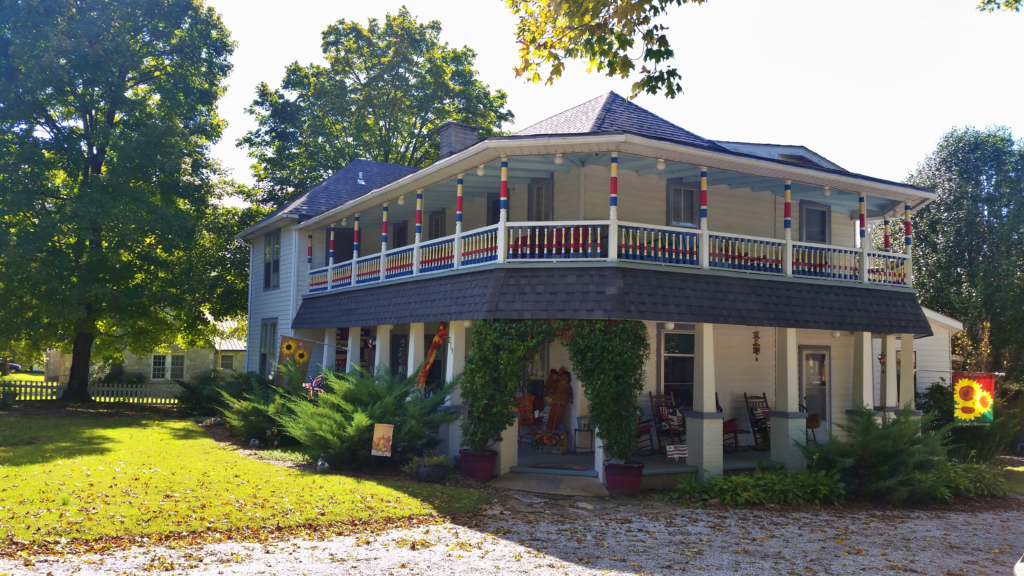
On a later trip, we tried the Ozark Country Inn bed and breakfast, which was a really nice change of pace — a little more comfort, a good breakfast (it was so nice to wake up to the smell of someone else cooking breakfast), and the kind of conversation with other guests that only happens at a B&B.
The inn itself is historic, built in 1906, with a wraparound porch that makes it every bit as charming as it sounds.
There are also several cabins scattered in and around Mountain View if you’d rather have your own space. Between the campground, cabins, and B&Bs, there’s a good range of options depending on what kind of trip you’re interested in.
If you enjoy fishing, the White River is nearby and famous for trout fishing, and considered some of the best fishing in the country.
At the bed and breakfast, we met a couple who’d booked a guided fishing trip on the White River and came back with their catch cleaned and cooked for them — trout for dinner, caught that same day. If that sounds like your kind of afternoon, it’s easy enough to build into a Mountain View stay.
There’s more to do here than just the caverns, too, if you want to extend your stay. The North Sylamore Creek Trail follows the creek for 25 miles and connects into the much larger Ozark Highlands Trail, if you’re looking for serious hiking mileage.
Mountain bikers have their own draw here as well — the Syllamo Mountain Bike Trail covers roughly 50 miles of terrain through the surrounding forest, considered some of the best mountain biking in the state.
Planning Tips Before You Go
- The Dripstone Tour is reservable in advance on recreation.gov — book ahead, especially in peak season
- The Discovery Trail tour typically becomes available after Memorial Day, and involves significantly more walking (nearly 700 stair steps) and dimmer lighting than the Dripstone Tour — pace yourself accordingly
- Want to go further? The Wild Cave Tour is reservation-only, limited to small groups, and takes you into the true undeveloped cave — not for the casual visitor, but an option if you want the full spelunking experience
- The visitor center and caverns are closed Tuesdays and Wednesdays — plan your trip around that
- Bring a light jacket regardless of the season — it’s a steady 58 degrees underground
- Wear shoes with good tread; the paved trails inside stay damp
- Guided tours run May through the end of October for the 2026 season — check ahead if you’re planning outside that window, since the site is closing for renovation after this season
- Tickets are genuinely affordable for what you get — worth every penny for either the Dripstone or Discovery tour
- Visit mid-morning if you can — it’s the best window to beat the crowds, especially in peak summer season (open 9:30am-5pm)
- Campsites at Blanchard Springs are $15/night, first come first served — no reservations, so arrive early during busy periods
- Getting to the campground requires crossing a low water bridge — check conditions after heavy rain
- The campground has 17 individual sites and 2 group sites, suitable for tents or smaller RVs — no electric hookups, but water, a sewage dump station, restrooms, and showers are all available on-site
- Consider a guided fishing trip on the White River if you’re into it — some outfitters will clean and cook your catch for you and serve it to you on the banks of the river
- Want more trail time? The North Sylamore Creek Trail runs 25 miles and connects to the Ozark Highlands Trail; mountain bikers have roughly 50 miles of terrain on the Syllamo Mountain Bike Trail
Blanchard Springs Caverns is the kind of place that stays with you specifically because you had to work a little to find it. No billboard led us there, no exit-ramp sign — just a recommendation passed along by word of mouth, that turned out to be entirely deserved.
If you’re already planning a trip to the Ozarks, or even if you’re not, I’d put this on the list before the 2028 renovation changes it. Between the caverns themselves, Mountain View just down the road, and everything in between, this corner of Arkansas is worth every bit of the effort it takes to get there.