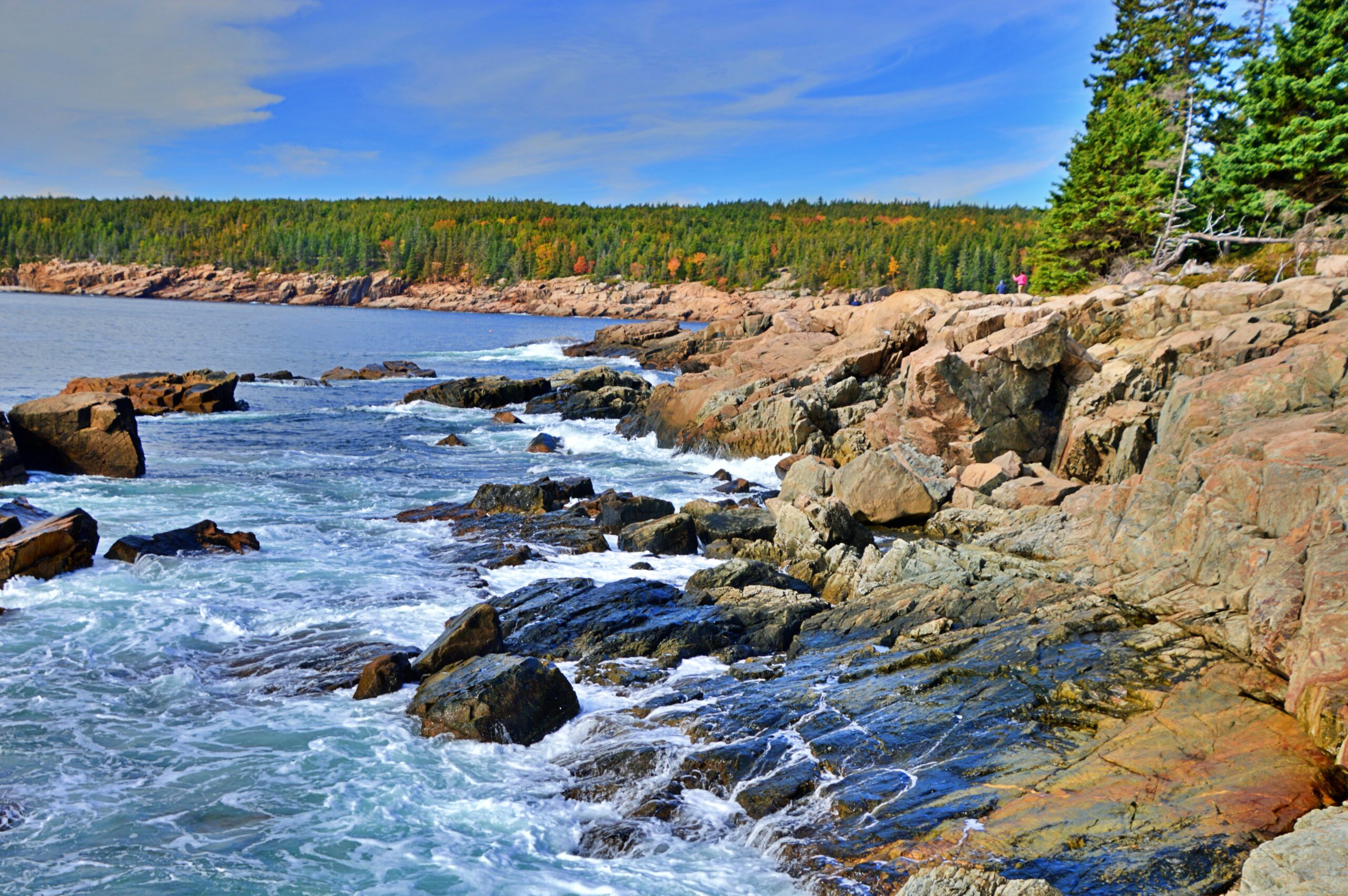
Waves break against layered granite along the Ocean Path near Otter Cliffs — the coastline where Acadia’s story of forested mountains meeting the Atlantic truly begins.
Acadia is a place that reveals itself slowly. Along the edge of the Atlantic, granite cliffs meet open water, while inland, quiet ponds and forested paths create a different kind of stillness. The experience of the park isn’t defined by any one stop, but by the way these landscapes unfold as you move through them.
This guide brings together practical details and observed moments—from where to go and when to visit, to the places that are worth lingering a little longer.
Acadia is a park that can be experienced in different ways, but for most visitors, the Park Loop Road provides the clearest introduction. The drive connects many of the park’s most recognizable coastal and inland landscapes, allowing you to move between them at your own pace.
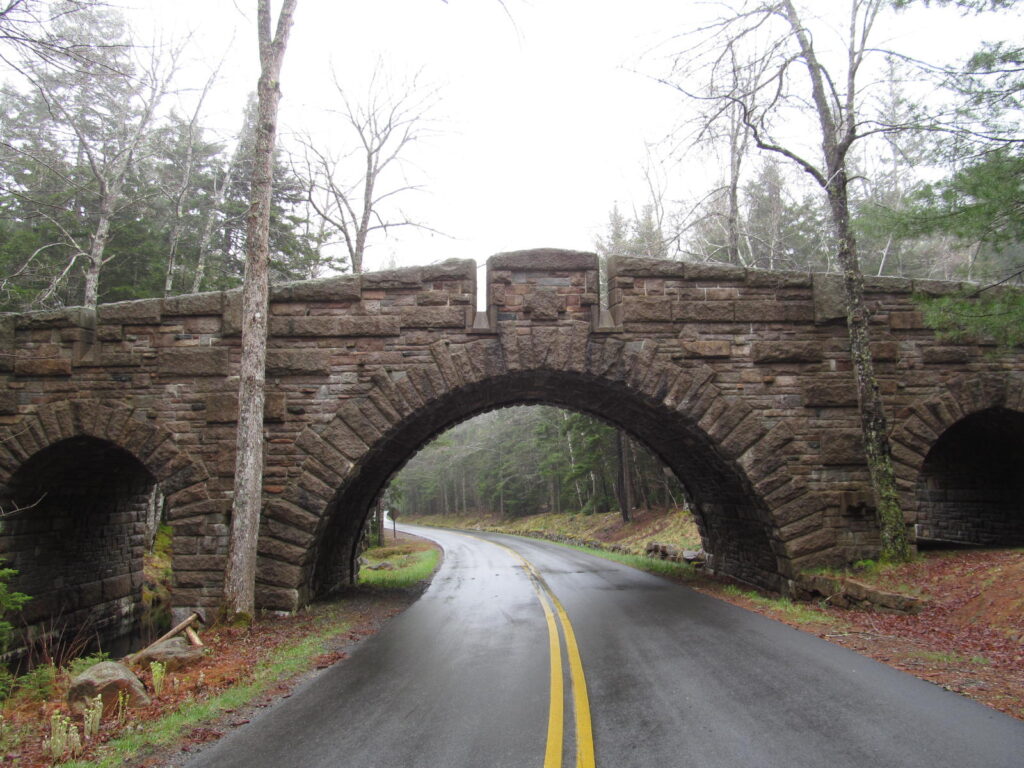
One of Acadia’s historic stone-faced bridges over Park Loop Road, part of the carriage road system built in the early 1900s under John D. Rockefeller Jr. Photo: “Park Loop Road – Acadia National Park – Maine” by Dougtone, licensed under CC BY-SA 2.0, via Wikimedia Commons.
Rather than rushing from stop to stop, the experience works best when you choose a few places to linger. Along the route, the landscape shifts quickly—from open ocean views to quieter, forest-lined stretches—creating a sense of contrast that defines much of the park.
Some of the most notable stops include:
Cadillac Mountain — the highest point on the eastern seaboard, known for its early sunrise views and expansive perspective over Frenchman Bay and the surrounding islands.
Sand Beach — a small but striking stretch of shoreline where the granite landscape meets the Atlantic in a way that feels both exposed and contained.
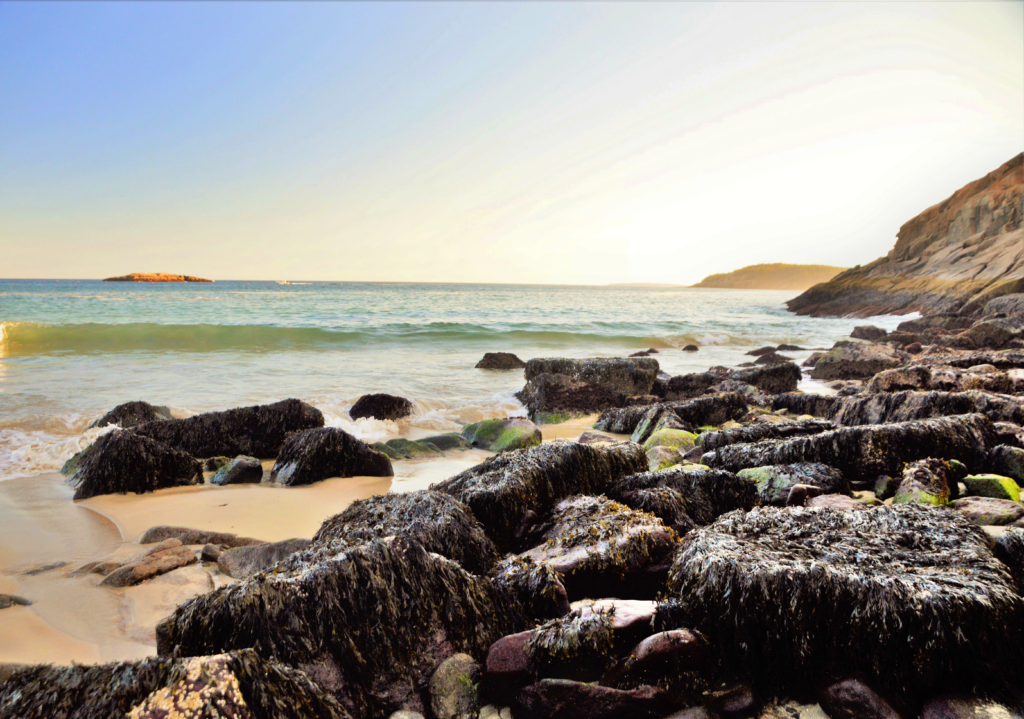
Sand Beach at golden hour, where tide pools and seaweed-draped rocks give way to one of the few sandy stretches along Acadia’s otherwise rocky coastline.
Thunder Hole — a narrow inlet where waves crash with force during high tide, creating a sound that echoes through the surrounding rock.
Otter Cliff — a steep granite face rising above the water, offering wide views of the coastline, particularly in the late afternoon light.
Together, these stops offer a balanced introduction to Acadia, but the experience is less about seeing everything and more about noticing how the landscape changes between each point.
Where to Spend Time
Acadia is not experienced all at once. The park shifts between coastal exposure and quieter inland spaces, and the contrast between the two is part of what defines it.
Along the coast, the landscape feels open and immediate. Waves move against granite formations, and the terrain is shaped as much by the tide as by the land itself. Places like Thunder Hole and Otter Cliff offer a close view of that interaction, where the movement of the ocean becomes part of the experience.
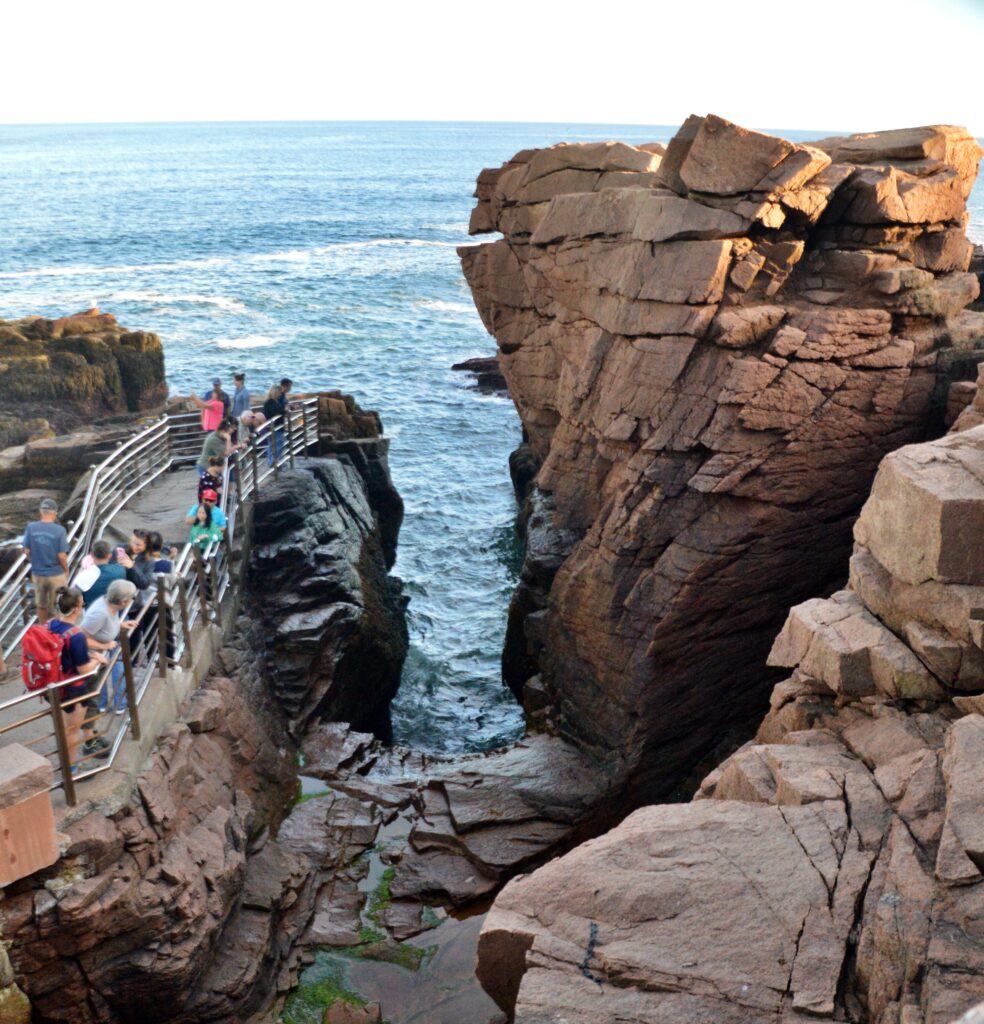
Visitors gather along the railing above Thunder Hole, where the narrow granite chasm channels incoming waves into a dramatic, echoing crash — best experienced an hour or two before high tide.
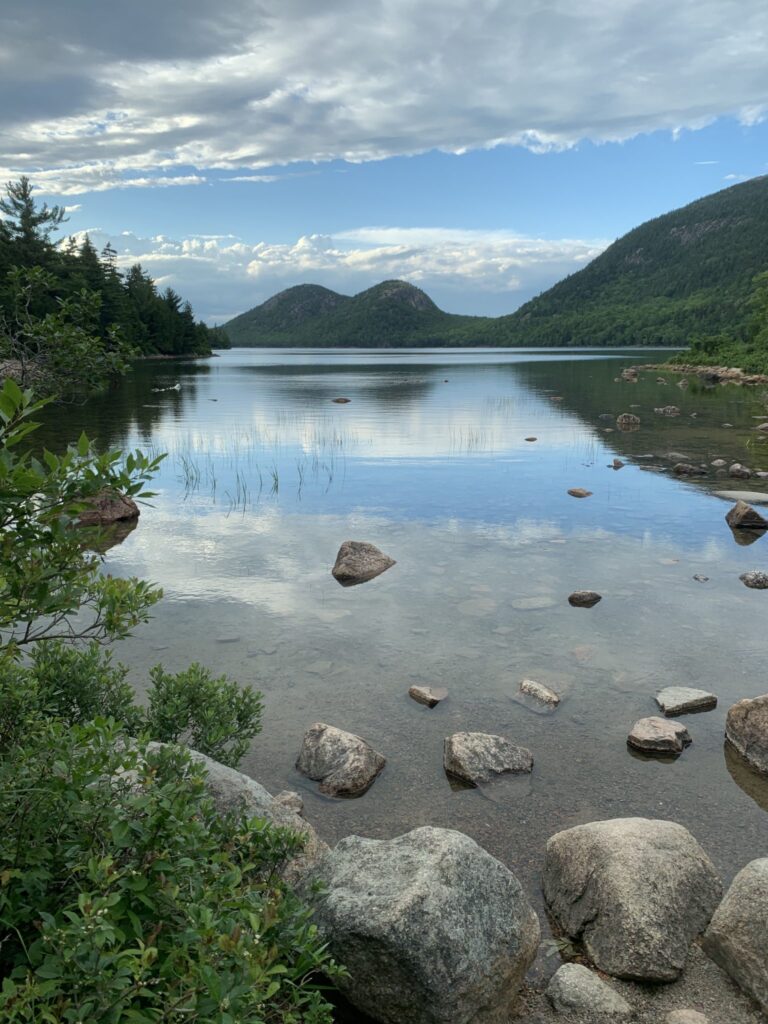
Inland, the pace changes. Jordan Pond, with its clear water and surrounding peaks, offers a more still and reflective setting. The nearby carriage roads extend this quieter experience—winding through forested areas and crossing stone bridges that feel integrated into the landscape rather than placed upon it.
Jordan Pond, the clear water reflecting the Bubbles in near-stillness — one of Acadia’s most photographed views. Photo: “Evening at Jordan Pond at Acadia National Park, Maine” by Ben Greeley, CC0 1.0.
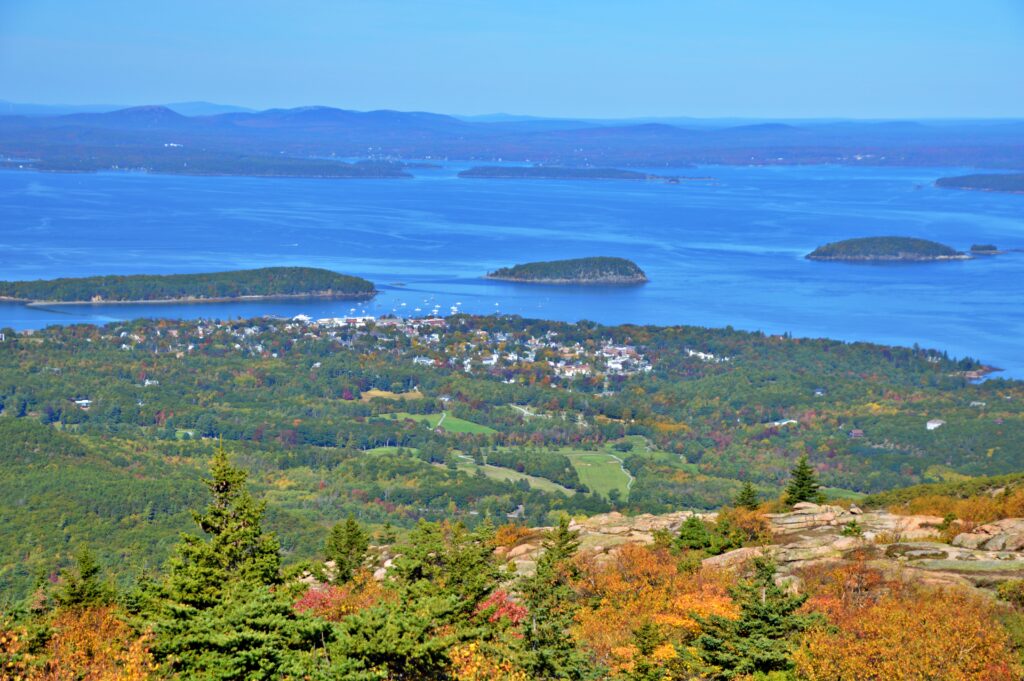
At a higher elevation, Cadillac Mountain offers a different perspective. From the summit, the view opens across the surrounding islands, Frenchman Bay, and the Atlantic. Many visitors make the trip at sunrise, when the light moves gradually across the landscape, but it is also one of the park’s most popular locations and can feel crowded during peak times. Visiting later in the day often provides a quieter experience, while still offering the same sense of scale and openness.
Fall foliage and sweeping views from the summit of Cadillac Mountain in Acadia National Park.
Seeing Acadia From the Water
Not all of Acadia is meant to be walked. A nature cruise with Acadian Boat Tours offers a different vantage point entirely — one where the park’s granite coastline becomes something to look back on rather than stand within.
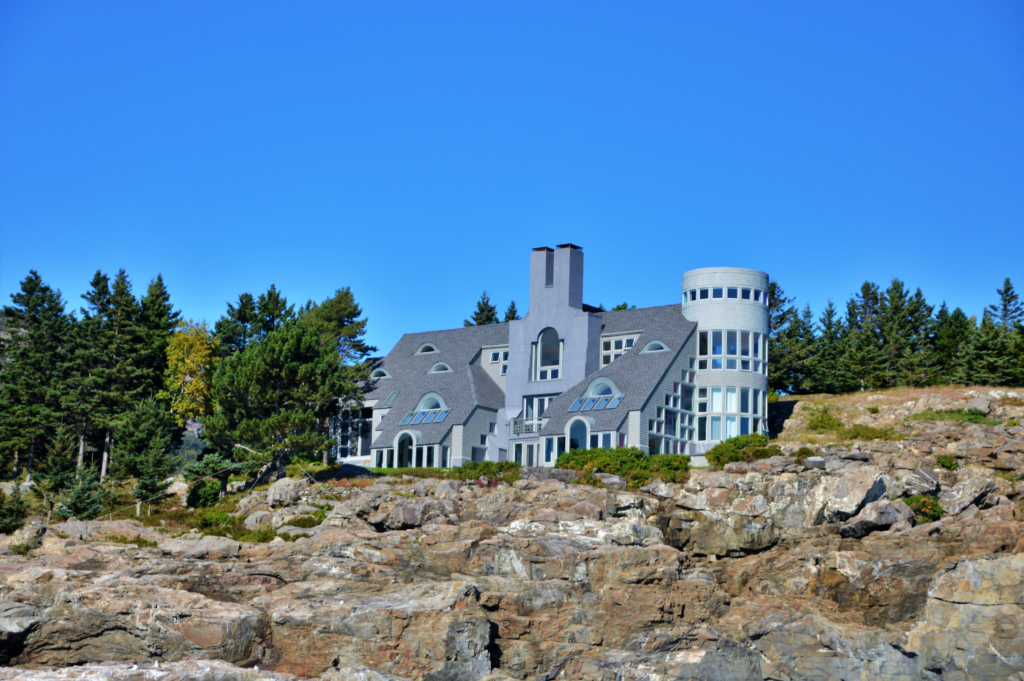
The route we took ran down the west side of Frenchman Bay, where a naturalist guide pointed out the summer “cottages” built by Gilded Age families like the Astors and Rockefellers on Mount Desert Island — grand estates that, in many cases, are still privately held today, now by a newer generation of wealthy owners.
A private estate along Mount Desert Island’s coastline, built in the tradition of the summer “cottages” that first drew wealthy families to Bar Harbor in the late 1800s — many of which remain privately owned today.
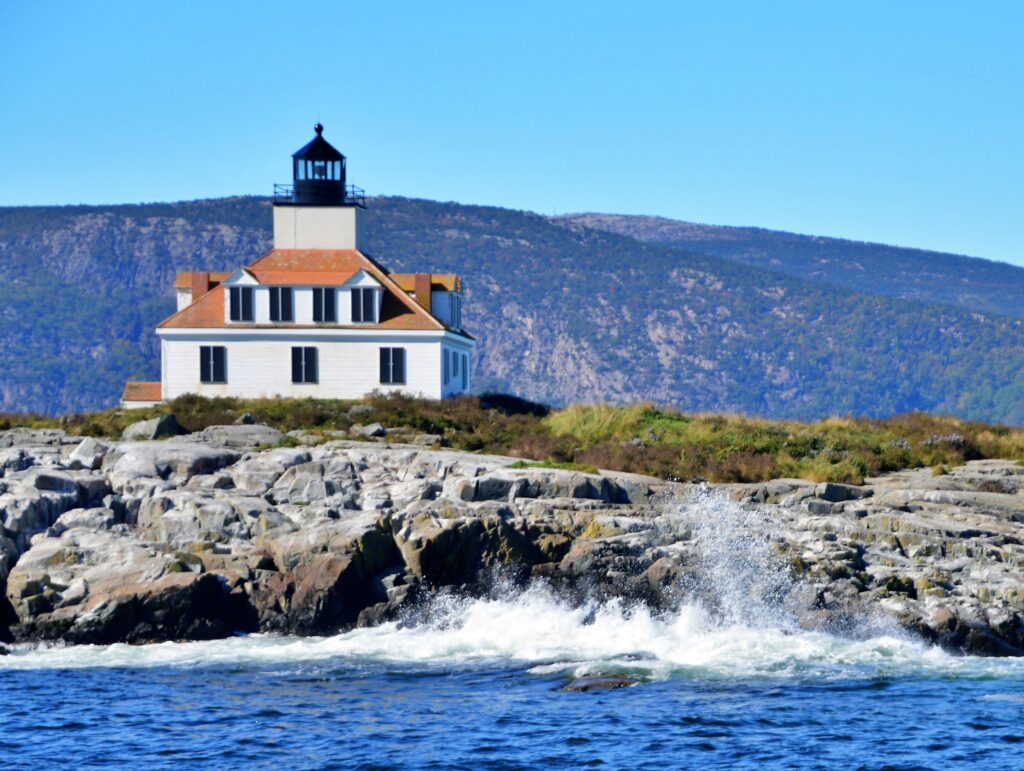
Farther out, the boat circles Egg Rock Island and its lighthouse. We visited at high tide, when harbor seals were bobbing in the water rather than hauled out on the rocks — some floating upside down, which is apparently just how they sleep, waiting out the tide before returning to land.
Egg Rock Lighthouse stands watch over Frenchman Bay, a frequent stop on nature boat tours out of Bar Harbor — especially at high tide, when harbor seals bob just offshore.
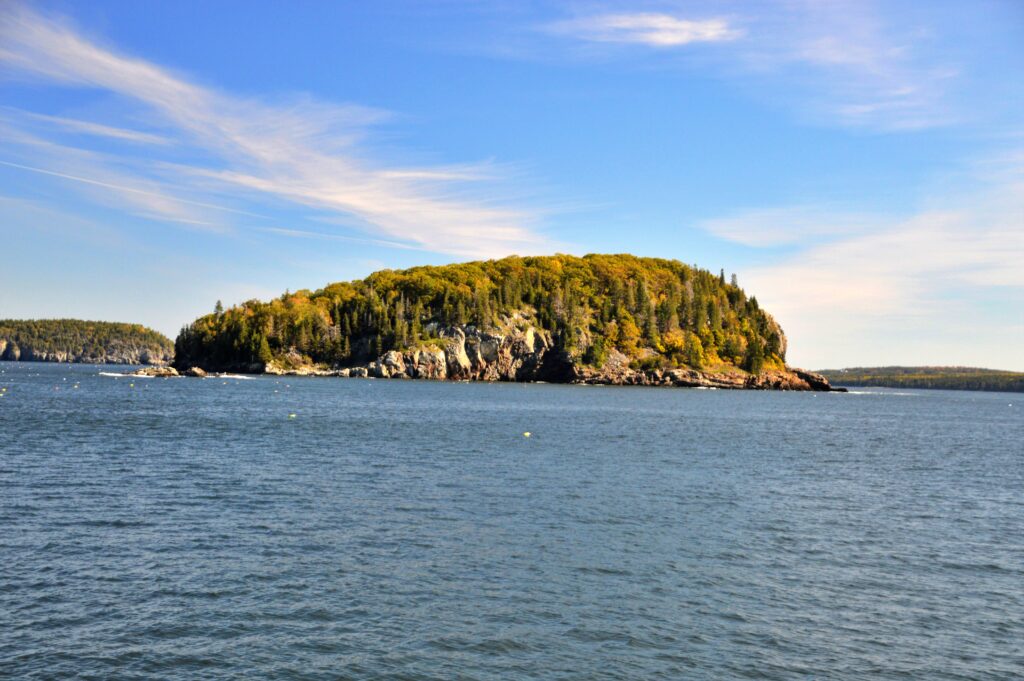
The Porcupine Islands were another highlight, and their shape has a real geological story behind it: as glaciers moved through the area, they sheared the rock face on one side of each island, leaving tall exposed cliffs there while the opposite side stayed low and gradual — giving the islands their low-front, high-back silhouette, and their name.
The distinctive shape of one of the Porcupine Islands in Frenchman Bay — low and gradual on one side, steep and cliff-cut on the other, carved by glaciers that moved through the area thousands of years ago.
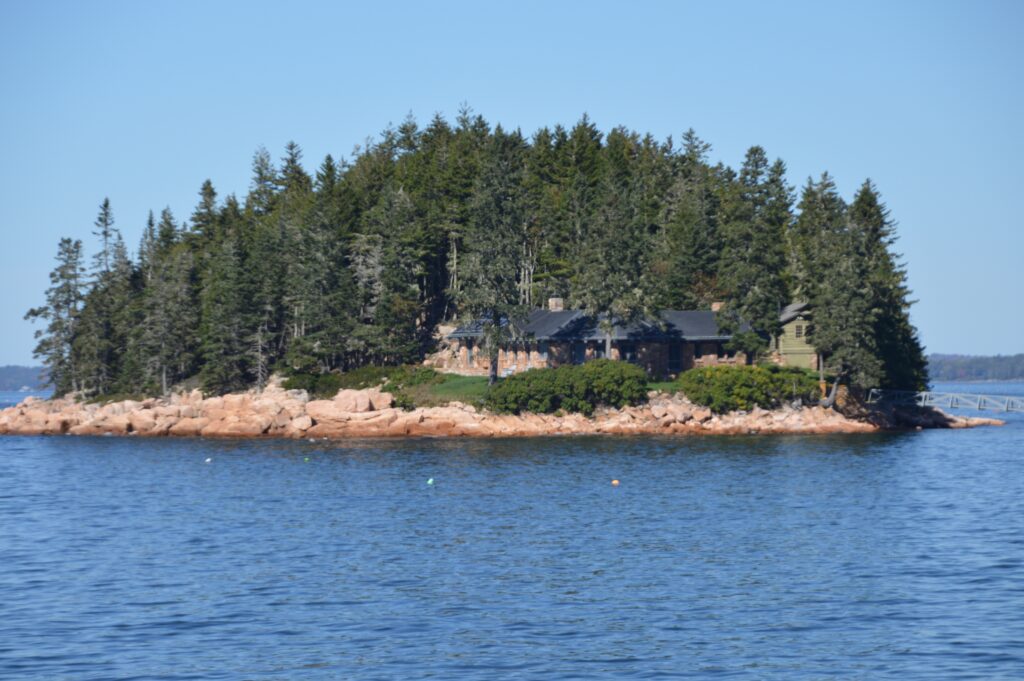
A few of the Porcupine Islands are privately owned like Yellow Island.
Yellow Island, one of several privately owned islands scattered across Frenchman Bay — a quiet reminder that this coastline’s Gilded Age history is still visible from the water today.
Ironbound Island, larger and edged with tall cliffs, is where we spotted a bald eagle, though the boat’s motion made it impossible to get a clean photo.
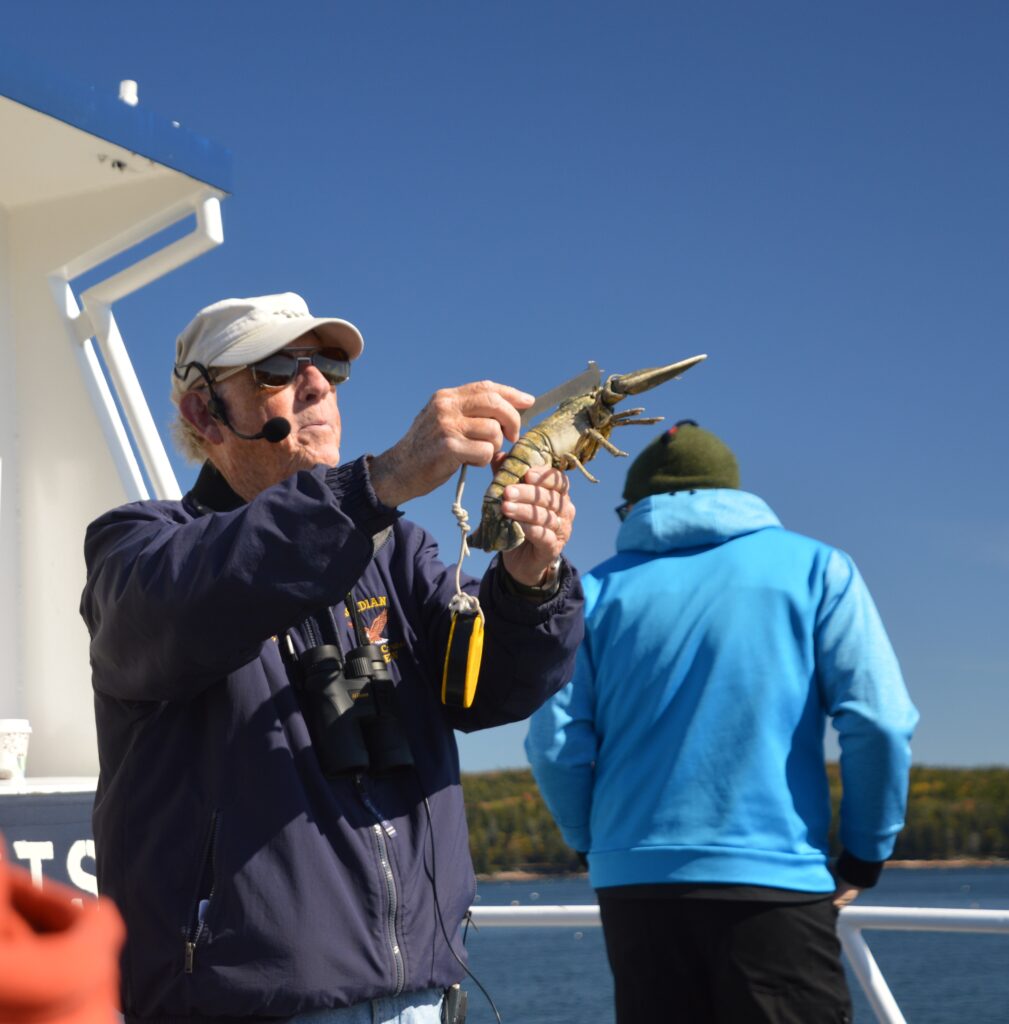
Along the way, we also passed lobstermen working their traps, and the guide walked through how the traps function and how a lobster is measured for legal size — a small, practical detail that adds a lot of context if you plan to order one for dinner later that night.
Our Acadia Boat Tours guide explains how lobster traps work and how a lobster is measured for legal size — a small detail that adds context to a Bar Harbor lobster dinner later that evening.
Closer to the harbor, a double-crested cormorant stood on a rock with its wings fully outstretched — a common sight along this coast, since cormorants lack the oil glands most water birds use to stay dry, and have to air out after every swim.
It’s a different pace than hiking, but no less a part of understanding the park — Acadia’s edges are as much about what happens offshore as what happens on the trails.
Spending time in each of these settings—the water, the coast, the interior, and the higher elevations—creates a more complete understanding of the park, not as a single environment, but as a series of landscapes that unfold gradually.
Hiking
Hiking in Acadia ranges from level, accessible paths to steeper routes that require both attention and confidence. The variety allows for different experiences depending on how you want to move through the park.
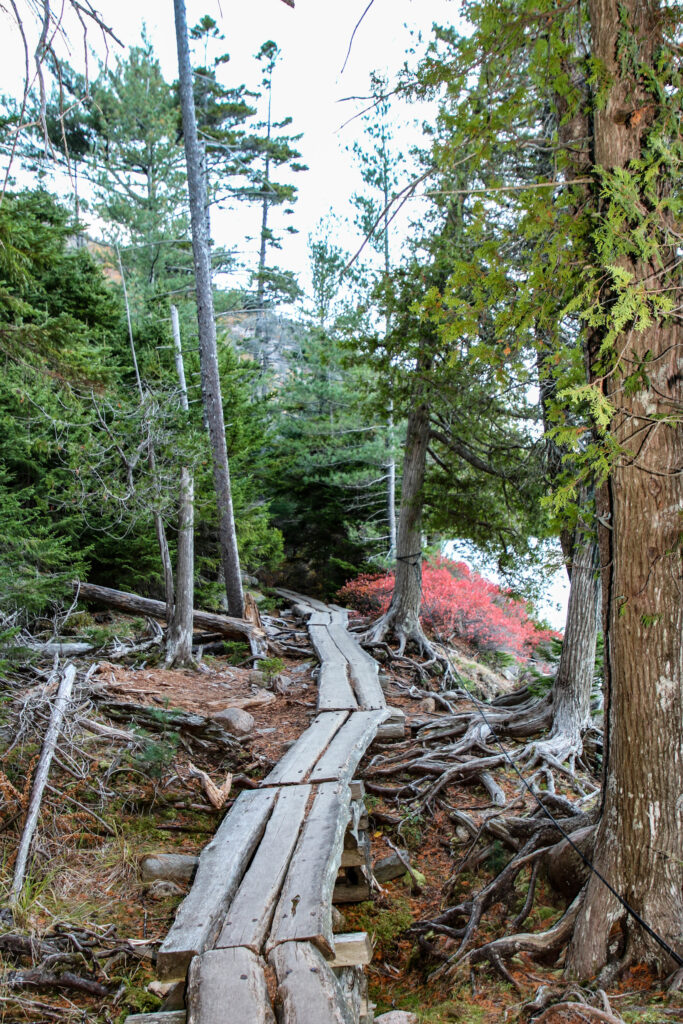
For those seeking something more relaxed, the Jordan Pond Path and Ocean Path provide steady footing and continuous views, making them well-suited for slower exploration.
A boardwalk section of the Jordan Pond Path winds through the forest, protecting tree roots and boggy ground along one of Acadia’s most level, family-friendly trails.
More challenging routes, such as the Beehive and Precipice Trails, follow exposed rock faces and incorporate iron rungs and ladders. These trails offer a more direct interaction with the terrain, but they require preparation and a comfort with height.
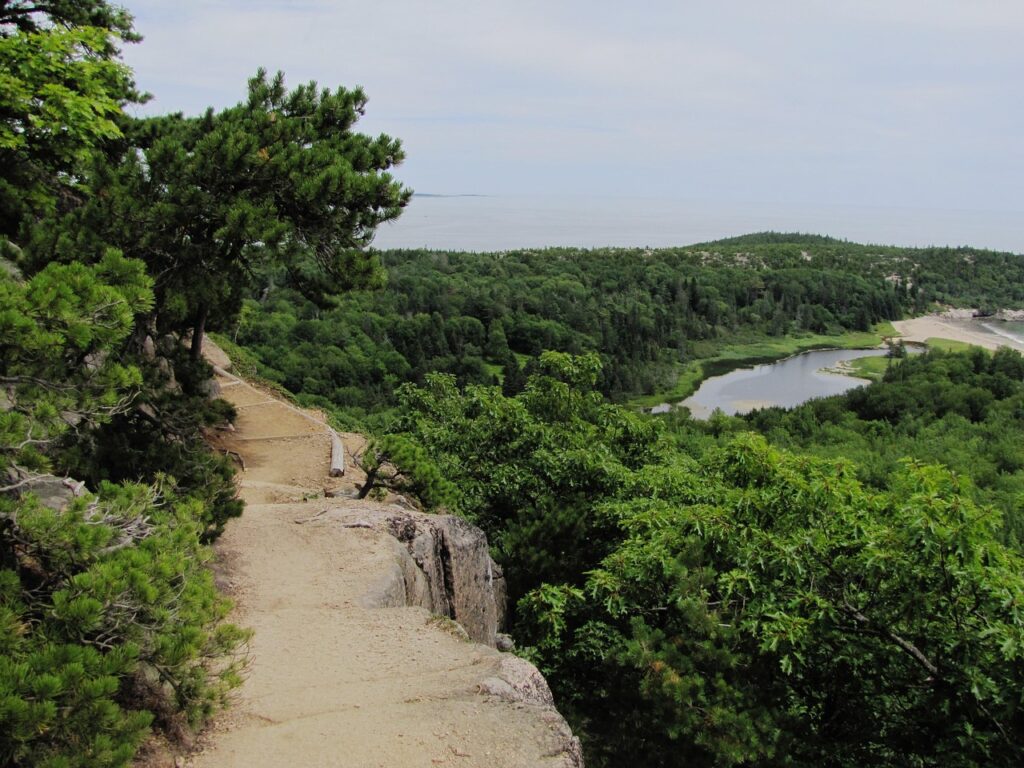
One of the more strenuous trails Acadia is known for, where the path narrows along exposed cliffside with sweeping views of the coast below. https://pixabay.com/users/lperron
Across all trails, conditions can change quickly with weather and season. Taking time to choose the right route—and moving through it without rushing—often shapes the experience as much as the destination itself.
When to Visit
The experience of Acadia changes with the seasons, influencing both the landscape and the pace of the park.
Summer brings longer days and full access to trails and facilities, though it is also the busiest time to visit. Fall offers a quieter alternative, with cooler temperatures and shifting color across the forested areas.
Winter transforms the park into a more secluded environment, where snow and ice limit access but create a sense of stillness rarely found during other seasons. Spring tends to be transitional, with fewer visitors but less predictable trail conditions.
Each season offers something different, and the choice often depends less on what is “best” and more on the type of experience you are looking for.
Practical Tips for Visiting
A few considerations can make a noticeable difference when planning time in Acadia.
Cadillac Mountain requires a vehicle reservation to drive Cadillac Summit Road, in effect from late May through mid-October. These reservations must be purchased online in advance through Recreation.gov — they are not sold at the park, so waiting until you arrive isn’t an option. This applies to any vehicle driving the summit road, not just those visiting for sunrise, so it’s worth booking ahead regardless of when you plan to go.
Parking throughout the park can become congested, especially along the Park Loop Road. The Island Explorer shuttle provides a useful alternative, connecting key locations and reducing the need to navigate crowded parking areas.
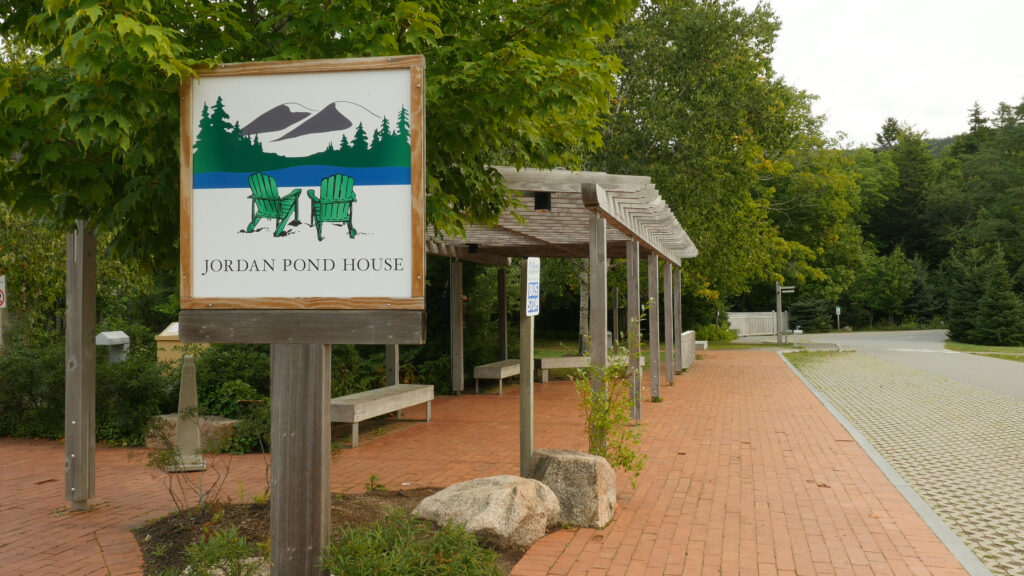
A stop along the Island Explorer route at Jordan Pond House — the free shuttle connects many of the park’s most popular destinations. Photo: NPS, public domain, via Wikimedia Commons.
Timing also shapes the experience. Visiting earlier in the day—or later toward evening—often offers a quieter perspective, particularly at the more popular stops.
Paying attention to conditions, including tides and weather, can also influence what you’ll see and how you experience certain areas.
Staying & Eating Near Acadia
Most visitors base their stay in or near Bar Harbor, which provides easy access to the park as well as a range of lodging and dining options.
Within the park, campgrounds offer a more direct connection to the landscape, though reservations are often required well in advance during peak season.
In Bar Harbor and the surrounding area, accommodations range from smaller inns to larger hotels, allowing for flexibility depending on how you prefer to travel.
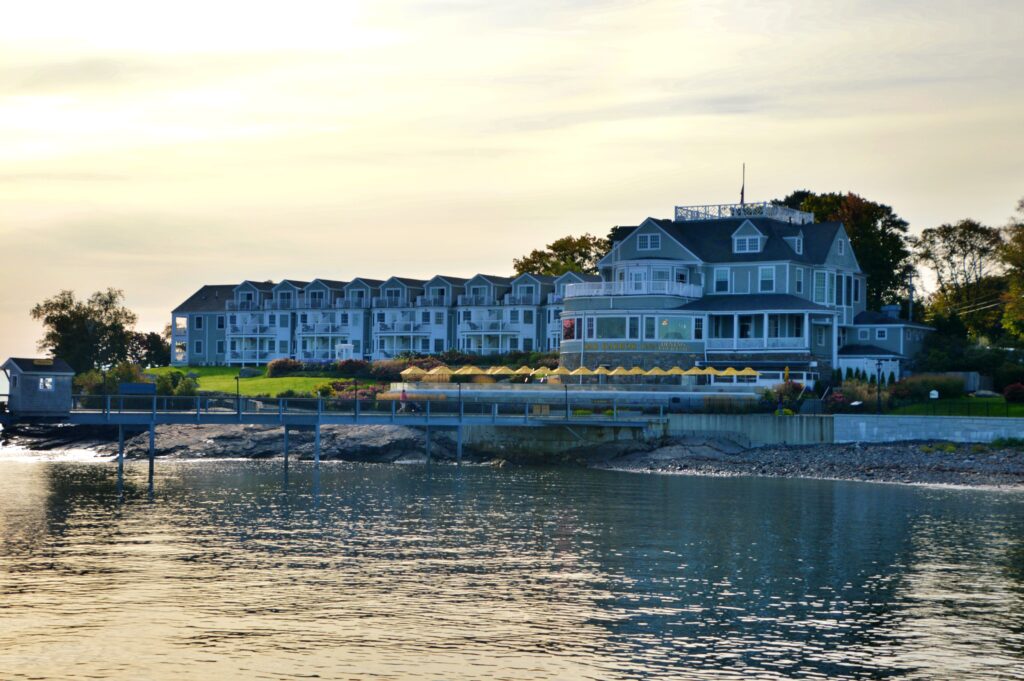
The Bar Harbor Inn sits right on the water’s edge, its wraparound porches and waterfront lawn making it one of the most recognizable stays in town.
Food throughout the area reflects the coastal setting, with simple seafood dishes appearing on most menus. In downtown Bar Harbor, there are many options for a classic Maine lobster dinner, though it’s worth knowing that downtown parking comes at a cost.
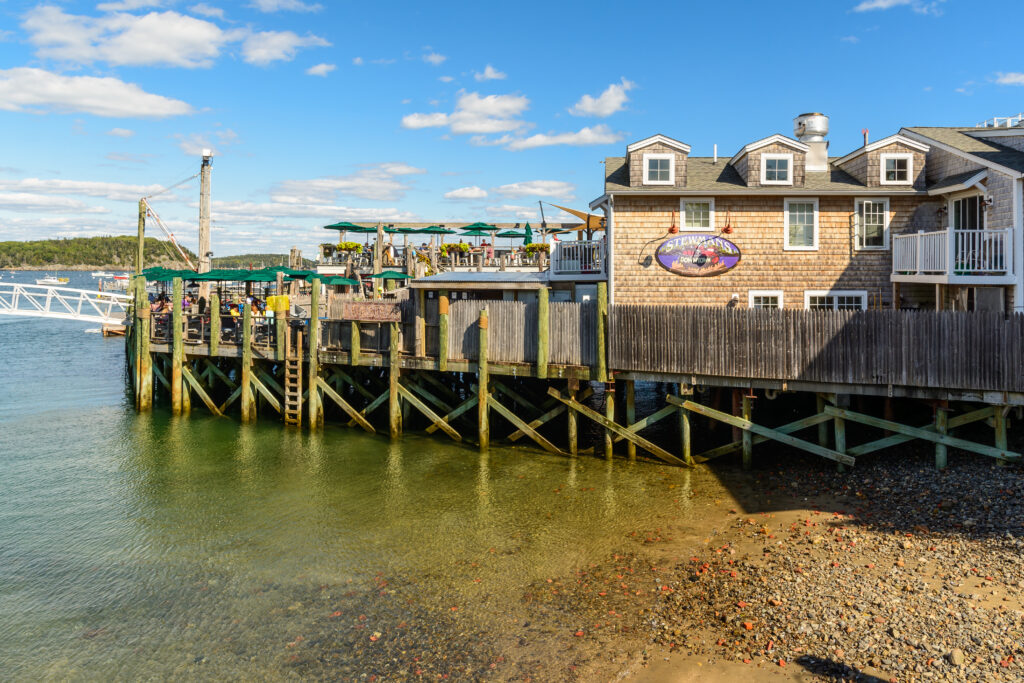
Waterfront lobster dining is easy to find in downtown Bar Harbor, with piers, decks, and harbor views. Photo: “Bar Harbor, Maine, USA” by dconvertini, licensed under CC BY-SA 2.0, via Wikimedia Commons.
A short drive to the outskirts of town, Mainly Meat BBQ was a genuine standout — and free parking there makes it an easy, low-hassle alternative to fighting for a downtown spot. It’s worth venturing a little beyond the main strip; some of the best meals near Acadia aren’t necessarily the ones closest to the water.
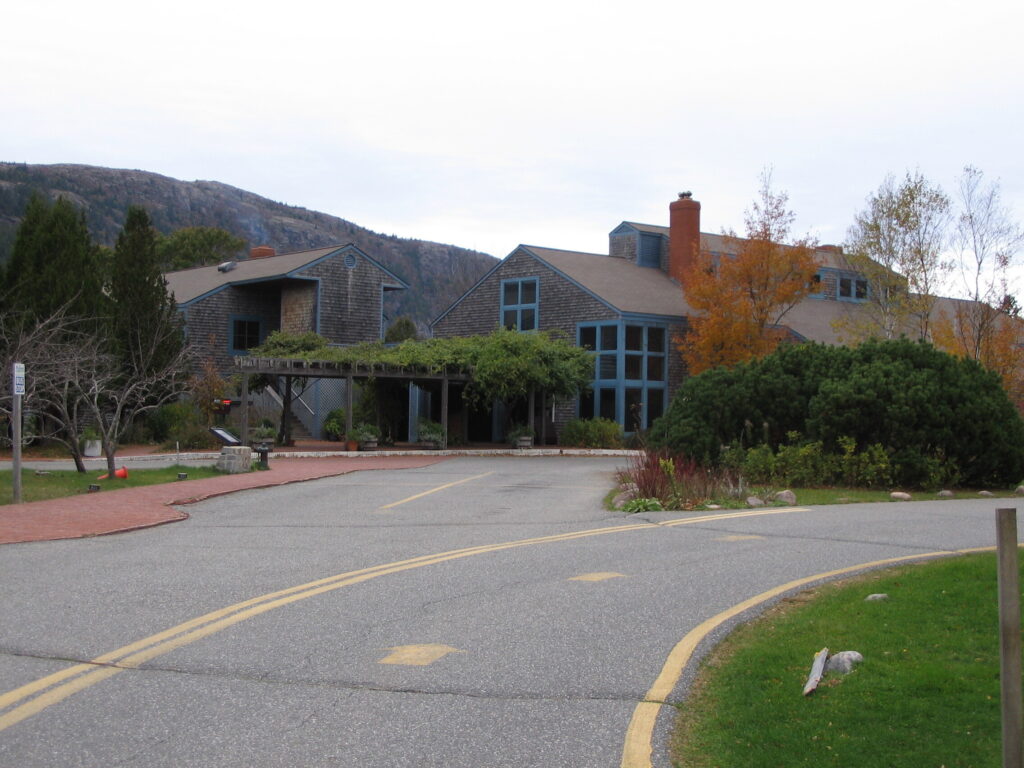
The Jordan Pond House, located within the park, offers a more traditional experience, known for its popovers and views across the water.
The Jordan Pond House, tucked at the base of the mountains, is known for its lawn-side popovers and views — a Bar Harbor institution since the late 1800s. Photo: NPS, public domain, via Wikimedia Commons.
In many cases, the setting—whether along the shoreline or after a day on the trails—becomes as much a part of the experience as the meal itself.
A Place That Unfolds Over Time
Acadia is not defined by a single overlook or destination. It is shaped by the gradual movement between places—coast to forest, elevation to shoreline—and by the moments that occur in between.
What stays with you often isn’t just where you went, but how the landscape made you feel.
Approaching the park with that perspective creates an experience that feels less structured and more personal, allowing the details to emerge naturally over time.